









































































If Amodei, Altman, and Musk actually believe what they're saying about the stakes, the test isn't whether they write an essay or post a tweet. It's whether they support external, binding, independently enforced rules that apply to everyone equally, including the possibility that a genuinely safer path is a slower, smaller AI industry than the one currently raising trillion-dollar valuations.

Bangladesh will begin to escape its cycle when “Look what they did” ceases to be an adequate response to “What have you done?”

We do not need to treat every adolescent as a potential delinquent, nor romanticize their behaviour; we simply need to stop treating their awkwardness, anger, arrogance, and confusion as reasons to abandon them.

Energy security therefore needs to be considered not simply as an energy sector issue, but as an important component of Bangladesh's broader economic security.

In the twenty-first century, the most successful nations will not necessarily be those that simply build higher walls. They will be those that build wiser and wider gates.

We have grotesquely transformed the vibrant, chaotic innocence of childhood into a perpetual, agonizing autopsy table, and the debt of this spilled blood cannot be settled through fleeting expressions of sorrow on social media platforms.
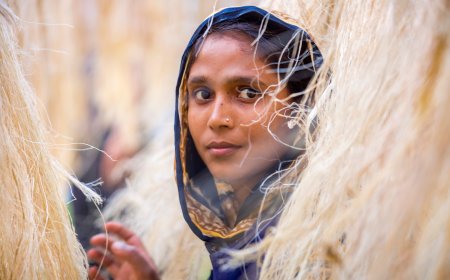
Development has delivered. But its purpose has shifted. We must acknowledge the shift and use the new age of development capital to build solutions that are built by us, owned by us, and that work for us. This is not a dying industry’s last rites. It is a graduation, and we should conduct it like one.

In Episode 10 of The J&J Fireside, Jyoti Rahman and Rubaiyat Sarwar discuss the changing future of development in Bangladesh as traditional aid models decline. The conversation explores the shift toward loans, aid-for-trade, climate finance, and locally owned solutions—and what Bangladesh needs to do to prepare for a new era of development.

That creates a peculiar social paradox: The more accomplished a woman becomes, the more selective the marriage market can become -- not because her value diminishes, but because the available configurations change.

In Episode 06 of Cultural Bourgeoisie, Jyoti Rahman and Ehteshamul Haque examine the cinematic portrayals of Gandhi, Jinnah, and Sheikh Mujibur Rahman. Through these biopics, they revisit the choices surrounding the Partition of 1947 and explore how cinema shapes our understanding of history and political legacies.

Democratic pressure seeks to influence a decision through persuasion. A mob seeks compliance through intimidation. That distinction matters because political purpose does not neutralize coercive method.

Governments across Europe are undertaking open-source software migrations, even though they can easily afford to pay for proprietary software. Bangladesh should also make this transition to save our hard-earned foreign currency.
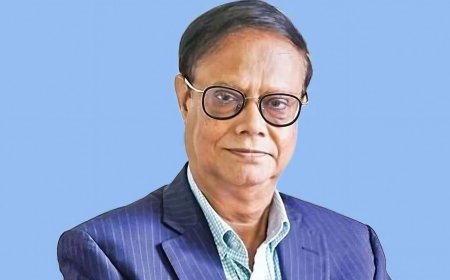
Ahsan Mansur’s reflections extend far beyond central banking. His message is that meaningful reform cannot be achieved through administrative measures alone. It requires political consensus, institutional independence, rigorous accountability, and a commitment to the rule of law.

One missing article does not establish a return to authoritarianism. It does, however, present an opportunity to reject secrecy and reaffirm a principle before uncertainty hardens into distrust.
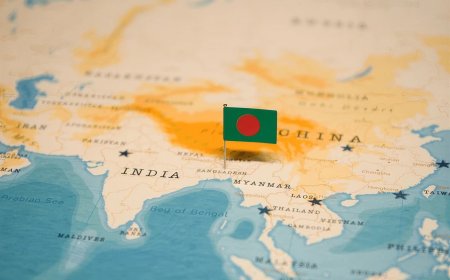
Foreign policy is ultimately not an accounting exercise in who loves us. It is about identifying where interests converge, where they conflict, what each relationship can deliver, what risks it creates, and how those relationships can be converted into bargaining power for Bangladesh.
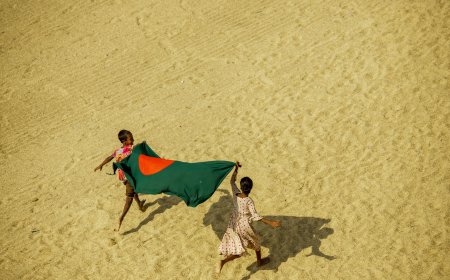
Our historic task is not merely to change who governs Bangladesh, but to change how Bangladesh is governed -- and how we, as citizens, understand our responsibilities to one another and to the nation








