




























































Wait. We Don’t Have a Strategic Petroleum Reserve?
If Bangladesh builds an SPR, it must not repeat either failure mode: Not scarcity through neglect, and not expansion without scrutiny. That, finally, is the real argument for a Bangladeshi reserve. Not a monument. Not another expensive ribbon-cutting exercise. A shield.
I say this as an outsider to the energy world: I assumed we had one. I assumed that a country as exposed as Bangladesh -- flood-prone, import-dependent, forever vulnerable to foreign-exchange stress and shipping chokepoints -- would have built some boring national insurance policy underground long ago.
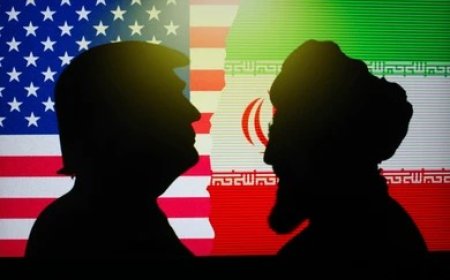
Then the US-Israeli war with Iran tore through the Strait of Hormuz, and Bangladesh began behaving like a country with no real cushion at all: Universities closed early to save electricity and fuel, daily limits were imposed on fuel sales after panic buying, four of five state-run fertilizer factories were shut so gas could be diverted to power plants, costly spot LNG cargoes were sought, and Dhaka started looking for more than $2 billion in fresh external financing just to keep fuel and gas coming.
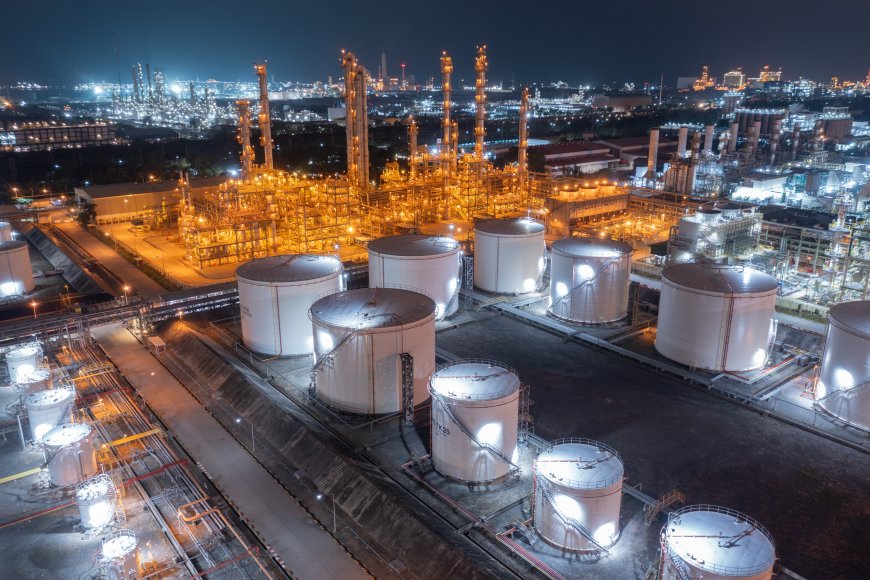
Only then did I learn the distinction that matters. Bangladesh has depots. Bangladesh has working inventory. Bangladesh does not appear to have a clearly ring-fenced strategic petroleum reserve. That is not a semantic difference. It is the difference between logistics and sovereignty. The Daily Star reported this month that Bangladesh has 27 depots and storage capacity that, on paper, could cover 35 to 40 days of demand under normal conditions.
But actual stocks during the crisis fell much lower: Recent BPC figures put fuel cover at roughly 9 to 14 days for major products, and experts described what Bangladesh has as an “operational buffer,” not a strategic stockpile. A reserve is not the fuel already being eaten up by ordinary commerce. A reserve is the fuel that waits for the abnormal day.
And Bangladesh is unusually exposed. Reuters reports that the country imports about 95 percent of its energy needs. Eastern Refinery, built in 1963, can process only about 1.5 million tons of crude a year, while Bangladesh imports roughly 7 to 8 million tons of petroleum products annually. Diesel alone accounts for around 65% of national fuel use. So when supplies tighten, the problem does not stay at the pump. It moves into irrigation, freight, backup generators, industry, aviation, inflation and food.
Look first at our neighbors. India is the most useful comparison because it shows that reserves are not magic, but they are still indispensable. India says its strategic reserves exceed 5.3 million metric tons, with another 6.5 million metric tons under development. The Indian parliament was also told last week that the existing reserve is only 64% full and would last about five days at current consumption.
Even so, New Delhi has had more tools than Dhaka: It has been able to route extra commercial LPG to states, coordinate distribution, and explicitly act against hoarding and black marketing. In a crisis, a reserve does not solve everything. It gives the state more moves.
Pakistan offers the harsher mirror. Faced with the same shock, Islamabad shut schools for two weeks, moved universities online, cut fuel allowances for government departments by half, pulled 60% of official vehicles off the road, reduced in-office staffing, and shifted to a four-day workweek.
That is what a thin-margin state looks like under fuel stress: Not strategic calm, but emergency austerity. Bangladesh should study Pakistan not to feel superior, but to recognize how quickly energy vulnerability turns into social and administrative disruption.
Farther away, the lesson becomes more institutional. The International Energy Agency requires member countries to hold stocks equal to at least 90 days of net oil imports. Japan has already released 15 days of private-sector oil stocks and then a month’s worth from its national reserves. The US Strategic Petroleum Reserve, owned and operated by the Department of Energy, currently holds 416 million barrels against authorized capacity of 714 million.
It can move oil toward the market within 13 days of a presidential decision, with a maximum nominal drawdown capacity of 4.4 million barrels a day. The American lesson is not that Bangladesh needs American size. It is that a reserve is an institution before it is a cavern: Law, rules, logistics, transparency, testing.
Bangladesh has already seen both ways of getting energy policy wrong. Older Bangladeshis remember the blackout years at the end of BNP rule and through the 2007-08 emergency period: Reuters reported in 2007 that chronic shortages had already sparked riots, and that although installed capacity was above 5,000 megawatts, actual production was only about 60% because plants were aging and poorly maintained. In 2008, workers blocked the Dhaka-Sylhet highway over power cuts.
Those years were also shadowed by corruption allegations in national politics. Then came the Awami League era, which undeniably expanded the system: Installed generation capacity rose from less than 5,000 MW in 2009 to more than 30,000 MW in 2025, while electricity access rose from 47% to over 99%. But that expansion also left a governance bill.
The current government has suspended the law that allowed some power-supply contracts to be awarded without tenders; a committee is reviewing contracts signed between 2009 and 2024, including deals with local business groups; and the Anti-Corruption Commission has opened an inquiry into allegations of corruption, embezzlement and money laundering in the Rooppur nuclear project. Allegations are not proof. But they are warning enough. If Bangladesh builds an SPR, it must not repeat either failure mode: Not scarcity through neglect, and not expansion without scrutiny.
That, finally, is the real argument for a Bangladeshi reserve. Not a monument. Not another expensive ribbon-cutting exercise. A shield. And because Bangladesh has limited refining capacity and relies heavily on imported refined products, it should not blindly copy the American crude-only model.
The IEA notes that countries with limited domestic refining tend to hold more refined-product stocks, and that even countries with strong refining systems are advised to keep some product stocks for rapid distribution in emergencies. Bangladesh needs a Bangladeshi reserve, designed for Bangladeshi vulnerabilities.
Here is how to start.
- Pass a law that clearly defines a strategic petroleum reserve as separate from BPC’s day-to-day operating inventory.
- Set a phased target: 30 days of priority fuel cover first, then 60 days on a fixed timetable.
- Start with diesel, because diesel keeps freight, irrigation, backup power and much of the real economy running.
- Hold a mixed reserve of refined fuels first -- especially diesel and jet fuel -- instead of pretending Bangladesh can rely mainly on crude storage with only one limited refinery.
- Build storage across multiple coastal and inland locations so one port, depot or transit bottleneck cannot cripple the system.
- Create a dedicated reserve authority or ring-fenced unit with professional management, parliamentary oversight and annual independent audits.
- Require open competitive tender for all SPR contracts, publish beneficial ownership of contractors, and ban blanket indemnities and off-budget sweetheart arrangements.
- Publish weekly stock-cover numbers and pre-announced release triggers so rumors, hoarding and denial do not govern the market in a crisis.
- Finance the reserve with a variable energy-security levy in softer price periods, backed by concessional and multilateral financing for storage infrastructure.
- Bar the government from treating the reserve as a fiscal piggy bank. The SPR must be for emergencies, not patronage, not budget patchwork, and not another oligarchic feeding trough.
An outsider should not have been shocked to discover this gap. That is the indictment. Bangladesh has watched India deploy layers, Pakistan deploy austerity, Japan deploy reserves, and the United States deploy institutions. We, meanwhile, have rationed, borrowed, improvised and hoped. Hope is not a fuel policy.
And if we build a strategic petroleum reserve the way we have too often built other things in Bangladesh -- too late, too opaquely, too politically -- then we will simply reproduce the two failures we already know by heart: BNP-style neglect and Awami League-style expansion shadowed by allegations of capture. The whole point of a strategic reserve is to break that cycle.
Omar Shehab is a theoretical quantum computer scientist at the IBM T. J. Watson Research Center, New York.