


























































Theatre of the Streets: How Bangladesh Mistakes Performance for Governance
Albert Camus wrote that we must imagine Sisyphus happy but for those caught in Bangladesh’s cycles of performative governance, happiness is not the point. Each new deadline, each “operation,” each raid is a boulder pushed up the hill. The problem rolls back down, and we begin again.
In Satyajit Ray’s Nayak, the matinee idol performs even when no camera is present -- the practiced smile, the humble gesture, the speech crafted for applause. He cannot stop because the performance has become his identity. Watch the state in Bangladesh, and you see a similar compulsion.
Every few months, a government official holds a press conference, a deadline is announced, a mobile court rolls out, a demolition unfolds under television lights. Then, quietly, the cameras leave. The problem remains. But the performance has been delivered.
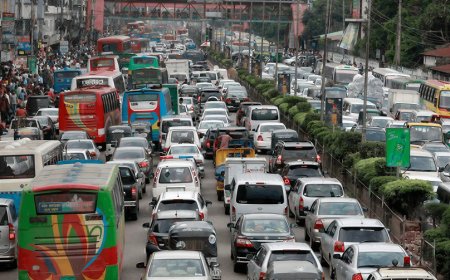
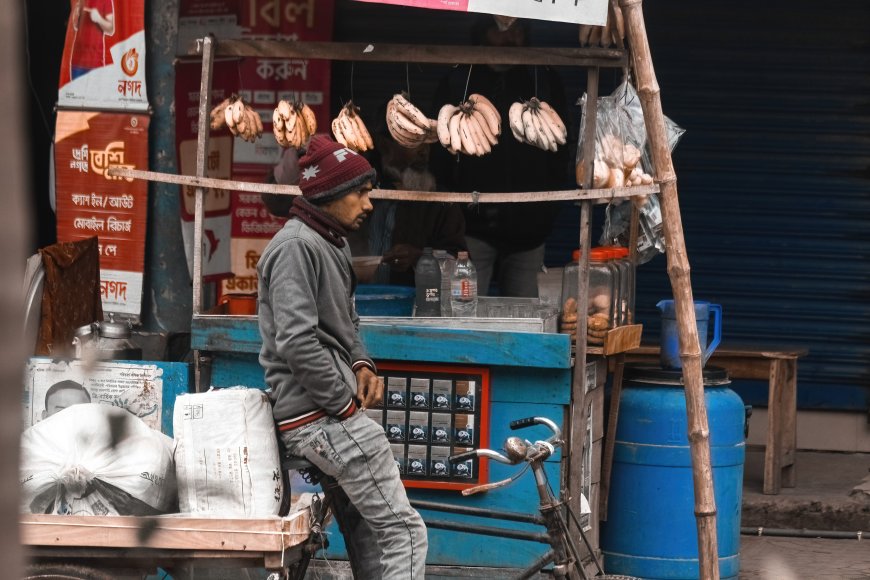
On March 23, the Dhaka Metropolitan Police delivered its latest performance. A public notice gave shop owners encroaching on footpaths until March 31 to clear out. From April 1, mobile courts would begin: Fines, imprisonment, confiscation. Pedestrian safety and traffic flow were cited -- legitimate concerns.
But the notice offered no alternative vending spaces, no infrastructure plan, no distinction between a small vegetable seller and a politically connected concrete extension. It was governance as press release: A deadline as a solution.
This is performative governance -- the substitution of visible, dramatic action for patient, structural reform. Here, a notice becomes policy, a raid stands for regulation. The performance is the point. And Bangladesh has mastered the art.
Exhibit 1: The Footpath Ultimatum
The DMP’s March 31 deadline is a classic performance. The lead‑up: A public notice, a clear villain (“illegal encroachment”), a promise of retribution. The set pieces: Mobile courts led by special magistrates, the threat of confiscation.
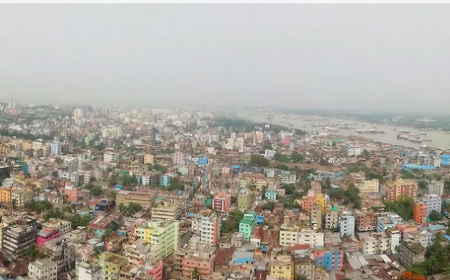
But the underlying problems -- Dhaka’s footpath‑to‑population ratio, one of the world’s lowest; the informal economy absorbing millions; the war in West Asia squeezing remittances and raising food prices -- go unmentioned.
Pedestrians will still dodge utility poles and parked cars. Vendors will eventually return, or new ones will take their place, because there is nowhere else to go.
Exhibit 2: Operation Clean Sweep
In October 2025, Dhaka North City Corporation launched “Operation Clean Sweep.” The target: Illegal billboards and signboards. Executive magistrates fanned out across Mirpur Road, Begum Rokeya Sarani, Airport Road.
The mayor personally supervised. Hundreds of billboards were dismantled in a day, with television cameras rolling. The message: Visual pollution will not be tolerated.
Weeks later, the billboards were back. Advertising agencies, many of which pay informal fees to city officials, reinstalled signs overnight. No licensing system was introduced. No designated zones were created.
The performance was over; the underlying economy of illegal signage, worth millions in unregulated revenue, continued undisturbed.
Exhibit 3: The Annual Brick Kiln Ritual
Every winter, when Dhaka’s air quality index climbs past “hazardous” and into the realm of public health emergency, the government announces a crackdown on illegal brick kilns.
In early 2026, the Department of Environment obliged. Mobile courts sealed a few kilns in Dhaka, Gazipur, and Narayanganj. Owners were fined. Officials declared “zero tolerance”.
It is an annual ritual, as predictable as the smog. The kilns that are sealed are small, often unconnected. The larger ones -- the ones with political patrons -- continue operating, their chimneys feeding the city’s toxic haze.
No systemic transition to cleaner technology, no enforcement of zoning laws. Air quality in Dhaka remains among the worst in the world. The performance, however, is always camera‑ready.
Exhibit 4: Ramadan Market Raids
With the arrival of Ramadan 2026 (beginning March 11), the Ministry of Commerce and district administrations launched the obligatory campaign against “unfair pricing” and “hoarding”.
Mobile courts raided kitchen markets, fined a handful of wholesalers, and published daily raid logs in newspapers. The Prime Minister’s Office reportedly monitored the campaign.
It happens every year. The raids are theatrical -- magistrates in high‑visibility vests, bags of overpriced onions displayed for the press.
By the second week of Ramadan, prices rise again, driven by import dependency, syndicates, and weak competition. The syndicates remain untouched. The performance is repeated next year, same lines, same cast.
Exhibit 5: Hatirjheel’s Eternal Clearance
Hatirjheel is perhaps the most performed public space in Dhaka. Since its inauguration, it has been “cleared” of encroachments at least three times. The latest, in April 2025, was a joint operation by RAJUK, DMP, and the Bangladesh Army.
Makeshift food stalls, fishing nets, and small vendors were removed in a daylong demolition. Officials promised the lake area would remain “permanently free”.
Within months, the vendors returned -- not because they are lawless, but because they have no other place to earn a living. The army‑assisted demolition created a spectacle of decisive governance.
The return of the vendors, quiet and piecemeal, created the reality of unmet need. The performance and the reality exist in parallel, never intersecting.
The Sisyphus Cycle
Albert Camus wrote that we must imagine Sisyphus happy -- the man condemned to roll a boulder uphill only to watch it fall again. But for those caught in Bangladesh’s cycles of performative governance, happiness is not the point. Each new deadline, each “operation,” each raid is a boulder pushed up the hill. The problem rolls back down, and we begin again.
These cycles are not failures; they are features. Performative governance, as theorized by urban scholar Ananya Roy, creates a state of permanent exception where the poor are always vulnerable to discretionary enforcement, while those with political connections remain protected.
The spectacle of action substitutes for the hard work of planning, investment, and inclusive policymaking.
The March 31 footpath deadline will come and go. Mobile courts will issue fines. A few vendors will lose their goods. The headlines will declare success. And then, slowly, the vendors will return. The footpath will remain a compromise between survival and spectacle.
The question is not whether the government can perform governance -- it clearly can. The question is whether it can do governance: Build footpaths, design vending zones, protect livelihoods, break the cycle.
Until then, the theatre continues. The curtain rises. The same play, different season.
Zakir Kibria is a Bangladeshi writer, policy analyst and entrepreneur based in Kathmandu, Nepal.