






























































Where Is the Plan to Revive the Economy?
Bangladesh now needs a clear economic roadmap and renewed emphasis on economic and energy diplomacy.


As Bangladesh’s economy faces mounting pressure, slowing industrial activity, and growing uncertainty among investors, a fundamental question is increasingly being raised: Where is the government’s plan for economic revival?
Nearly two years after the political transition associated with the Yunus administration, and even after the formation of the current government under Prime Minister Tarique Rahman, a clear and credible strategy for economic recovery is still not visible.
Various actors in the political arena appear to remain primarily occupied with defining political positions and recalibrating power equations. However, the urgent task of revitalizing the economy has yet to receive the strategic attention it deserves.
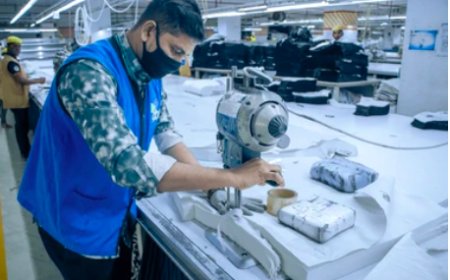
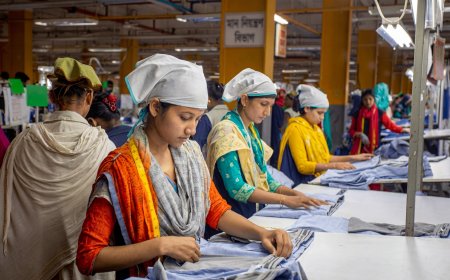
Over the past several decades, Bangladesh’s economic success has largely been built on industrial expansion, export growth, and regional economic cooperation. But that foundation is now under considerable strain. Reports suggest that over the last two years many factories across different sectors have either shut down or significantly reduced their operations.
Thousands of workers have reportedly lost their jobs. As a result, not only is industrial production declining, but domestic demand is also weakening.
At the same time, export earnings -- one of the strongest pillars of Bangladesh’s economy -- are facing new challenges due to changing global economic conditions.
Despite these developments, a comprehensive national roadmap for economic recovery has not yet been presented. This naturally contributes to uncertainty among both domestic and foreign investors.
One of the most notable gaps in the current policy landscape is the absence of a strong economic diplomacy strategy. In today’s globalized economy, economic diplomacy has become one of the most powerful tools for development.
Many countries across Asia, the Middle East, and Southeast Asia are actively using diplomatic initiatives to attract foreign investment, expand market access, strengthen their position in global supply chains, and build strategic economic partnerships.
In Bangladesh’s case, however, economic diplomacy appears to have slipped down the list of priorities at precisely the time when it is most needed.
No major diplomatic initiative aimed at attracting large-scale foreign investment, expanding trade, or strengthening the country’s role in global manufacturing networks is yet clearly visible.
This comes at a time when many multinational companies are actively restructuring their supply chains and searching for new production locations.
Closely related to economic diplomacy is another crucial area -- energy diplomacy.
Energy security is one of the fundamental pillars of industrial development and economic growth.
In an era marked by geopolitical competition, volatility in energy markets, and rising global energy demand, many countries are actively pursuing diplomatic initiatives to secure long-term energy partnerships.
For Bangladesh, strengthening regional energy cooperation and ensuring a stable and affordable energy supply is essential. Without a clear energy diplomacy strategy, it will be difficult to advance industrial recovery and sustain long-term economic growth at the desired pace.
Another deeply concerning issue is the closure of thousands of factories and the loss of employment for hundreds of thousands of workers.
Factory closures do not merely reduce industrial production; they also negatively affect the broader investment climate.
When factories shut down and workers lose their jobs, the effects ripple throughout the economy -- consumer spending declines, and small and medium-sized enterprises begin to struggle as well.
Addressing this challenge will require more than short-term administrative measures. What is needed is a targeted industrial recovery program that can help reopen viable closed factories, provide support to affected workers, and encourage new investment.
Regional trade and connectivity also play an important role in the current economic context. During the previous Yunus administration, tensions related to trade routes and transit arrangements with neighboring India reportedly disrupted certain aspects of regional trade.
Some analysts believe that the restriction or closure of specific land ports and transshipment facilities caused significant economic losses. According to several observers, the suspension of these facilities may be costing Bangladesh thousands of crores of taka every month.
At a time when cross-border connectivity and regional trade are becoming major drivers of economic growth across Asia, revitalizing regional economic cooperation is critically important.
Questions have also been raised about certain commercial arrangements concluded with the United States during the previous administration. Critics argue that some provisions of these arrangements may have affected Bangladesh’s economic autonomy and could potentially result in an annual revenue loss of around Tk 1,327 crore.
Given the rapidly evolving global trade environment, experts have suggested that such agreements should be reviewed. The recent ruling of the U.S. Supreme Court concerning tariff policies under the Trump administration may also create an opportunity to revisit these arrangements.
The key question now is whether the government led by Prime Minister Tarique Rahman will seize that opportunity.
Finally, investor confidence remains a crucial issue. Although the law and order situation may have improved somewhat compared to earlier periods, investor confidence has not yet fully returned. Both domestic and international investors are looking for policy stability, credible economic leadership, and a clear reform agenda.
The formation of a capable and dynamic economic management and investment promotion team could play an important role in rebuilding this confidence. Without new investment and without reopening closed factories, job creation will remain limited.
Bangladesh today stands at an important economic crossroads. In the past, the country has demonstrated remarkable resilience -- building a strong export sector and achieving significant development progress. However, sustaining that progress now requires renewed strategic vision and decisive policy action.
What the country urgently needs is a coordinated economic revival strategy -- one that integrates industrial recovery, increased investment, expanded trade, and energy security within a coherent national framework. At the center of this strategy must be strong and proactive economic diplomacy.
The government led by Prime Minister Tarique Rahman now has the opportunity to present a clear and forward-looking economic roadmap that can restore investor confidence and inject new momentum into the economy.
For many observers, however, the central question still remains:
When will that plan finally be presented?
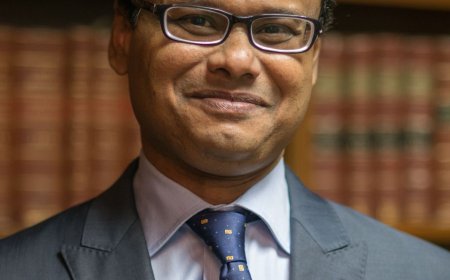
Dr. Khalilur Rahman, PhD, is a Former Ambassador and Secretary.