


















































An Exciting New Start
Bangladeshis need to understand who they are and develop the self-confidence necessary to chart their future destiny. Bangladesh is the eighth-largest country in the world by population, it is the 26th-largest economy by GDP-PPP at approximately $1.9 trillion, and one of South Asia's fastest-growing economies -- with GDP per capita projected to reach $10,850 by the end of 2026.

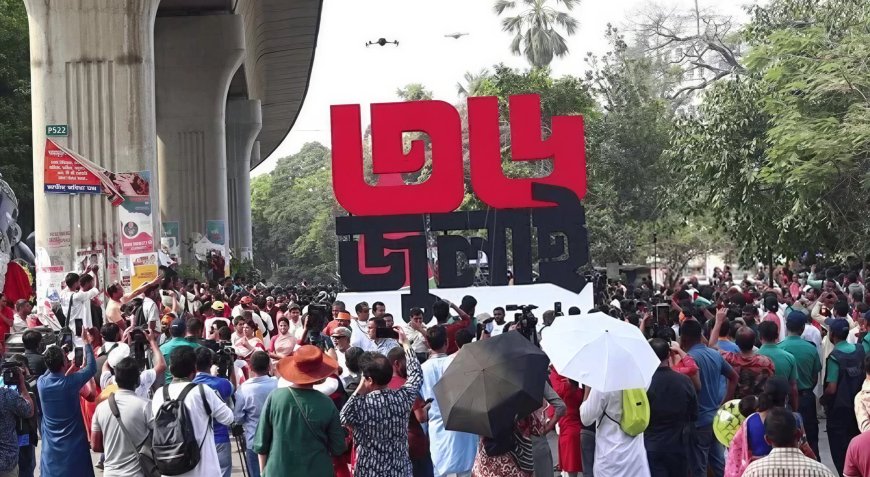
It was both an exciting and nostalgic journey for two longtime "Friends of Bangladesh" who visited Dhaka last week.
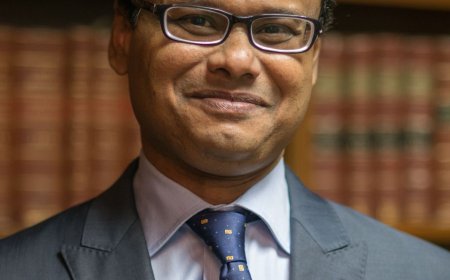
Jon had served three diplomatic tours in Bangladesh, most recently as US Deputy Chief of Mission, and Imran had led USAID development initiatives in the country between 1998 and 2013. Together, we brought decades of shared history with a nation that continues to surprise and inspire.
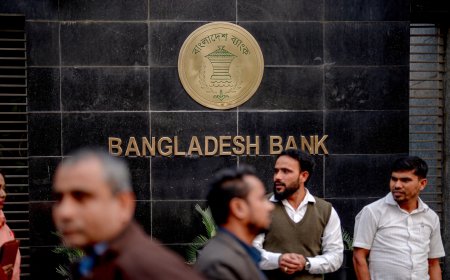
What we found was a country unmistakably on the move following February 2026 elections. Yet alongside the energy and optimism, there are real pitfalls to navigate. The patience of the Bangladeshi people is wafer-thin after years of repression and eighteen months of an interim government during which major economic activity stalled. The new leadership knows this, and the clock is ticking.
A Generational Transition at the Helm
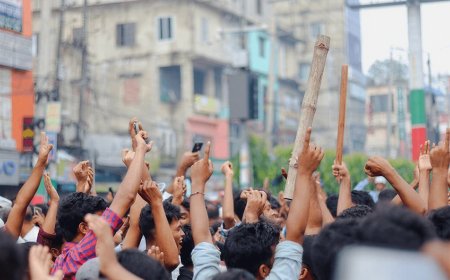
The new government's most immediate challenge is bridging the generational divide within the country at large and within its own party. One cannot forget that it was Generation Z that made tremendous sacrifices to topple the previous regime in the summer of 2024 and enabled the process which gave the current regime a chance to return to power after almost two decades.
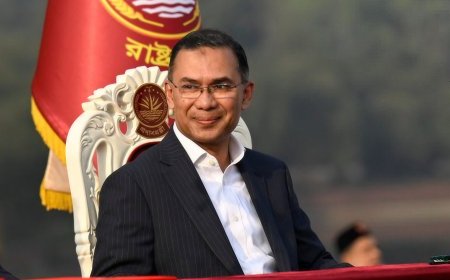
Prime Minister Tarique Rahman has made one particularly smart move in response: appointing both experienced "old guard" Ministers while complementing them with a number of newer and younger Ministers of State. The PM has further reinforced this by surrounding himself with an impressive cadre of advisors in his own office. The result is a deliberate, structured grooming of the next generation of leadership -- and it shows. A similar phenomenon can also be seen in the Parliamentary Opposition parties.
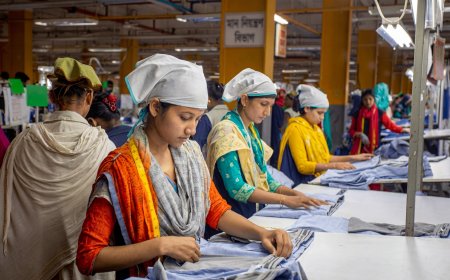
Many members of the old guard have visibly aged, but bring both experience and credibility gained through decades of struggle. The younger cohort -- a number of whom remained close to the PM during his years in exile -- are bright, energetic, and may end up driving the agenda. This generational shift extends beyond politics: Across Bangladesh's business elite, nongovernmental sector, media, and professions, leadership is being handed to the next generation, and notably, many of those successors are women.
Bangladesh First: A Unified Vision
A clear and unified foreign policy vision has also emerged from the PM and his team -- Bangladesh First.
This is not mere slogan-making. The vision is centered on economic advancement within a framework that invites all stakeholders across factional lines. It includes a desire to work constructively with all regional neighbors -- including India, accepting India's weight at the table while firmly resisting the return to any arrangement where India dictates terms of engagement.
Positive and productive relations with Pakistan are also espoused, despite the lingering memories of 1971.
Relations with both India and Pakistan are also part of a broader desire by the Prime Minister to fulfill his father’s vision of a South Asian community. This approach to foreign policy also reflects a careful approach to domestic politics: Beginning a process that may ultimately enable a reformed Awami League to re-enter the political system gradually through local elections.
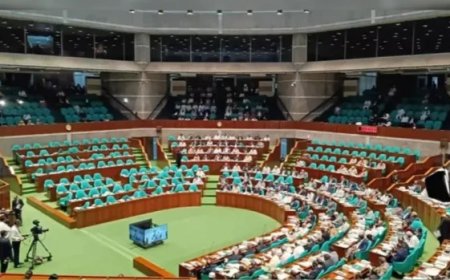
Finally, there is a sober recognition of both the opportunities and the risks inherent in the BNP holding a two-thirds parliamentary majority, particularly as it applies to the reform agenda that emerged from the interim period in the form of the July Charter -- which was adopted via referendum with a comfortable majority.
On this last point, the BNP itself appears to understand that politics has fundamentally changed since July 2024. Ideological loyalty to any single party has diminished considerably, and the Bangladesh Jamaat Islami led opposition (which also includes the student led National Citizens Party) remains watchful.
There is a fear that they could return to the streets if any party overplays its hand, even as they profess a commitment to working within Parliament. Again, the risks and opportunities presented by the relations between Treasury and Opposition remains a healthy check on power.
Structural Challenges
The new government inherits a precarious fiscal situation, made worse by global events. Rising oil prices, threats to remittances, and other negative spillover effects could result in the new government being blamed for economic pain almost immediately after assuming power, regardless of their actual policy choices. There is broad awareness of this trap within the leadership, but awareness alone does not defuse it.
Resource mobilization options are limited, and populist campaign promises made during the transition period have raised public expectations that will be difficult to meet -- particularly as the broader South Asian region also remains mired in geopolitical uncertainty and conflict.
The decline in international development assistance is a frequent topic of conversation among Dhaka elites. Yet when examined closely, the $100 million reduction in development assistance is modest relative to Bangladesh's approximately $500 billion economy. The more important conclusion is this: Bangladesh must move decisively beyond ODA dependence and build a new development paradigm -- one grounded in self-reliance, which leverages the private sector, and benefits from deep regional integration.
A New Regional Paradigm
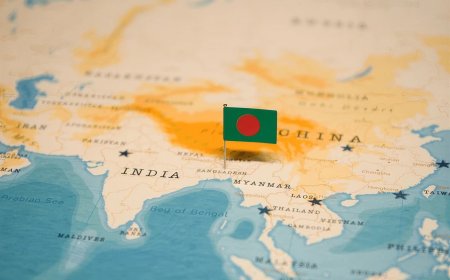
Bangladesh's path forward lies not just within its own borders but across the wider neighborhood of South and Southeast Asia. Intraregional trade in South Asia currently sits at around five percent of total trade -- the lowest of any region in the world. This is both a failure and an opportunity.
Bangladesh and its neighbors can leverage each other's development models, pool expertise, and build the kind of economic integration that transforms regions. The vision of a more connected, cooperative subregion is no longer abstract -- it is increasingly a strategic necessity.
The South Asian diaspora communities in the North America, the Middle East, and Europe can also contribute beyond the remittances they send to those back home.
A Nation That Should Know Its Own Strength
One of the more striking themes of our visit was the gap between Bangladesh's actual achievements and its own self-perception. Bangladeshis need to understand who they are and develop the self-confidence necessary to chart their future destiny. Bangladesh is the eighth-largest country in the world by population, it is the 26th-largest economy by GDP-PPP at approximately $1.9 trillion, and one of South Asia's fastest-growing economies -- with GDP per capita projected to reach $10,850 by the end of 2026.
Its development record is remarkable by regional standards. While India has 65 million out-of-school children and Pakistan 26 million, Bangladesh has reduced that number to just under one million. Similar achievements hold across women's empowerment, microfinance, and financial inclusion. Bangladesh has earned the right to carry itself with confidence.
Again, the experience in July 2024 -- when Bangladeshi citizens fought to reclaim their freedoms and their democracy -- should remain a source of pride and a reminder of their own agency.
Cautious Optimism
We both left Dhaka feeling genuinely encouraged -- primarily because of the way the new leadership is thinking and behaving mature, inclusive, and practical. The national mood mirrors this: cautious optimism, high energy, and a real openness to structured engagement, tempered by clear-eyed realism about the road ahead.
God speed, Bangladesh!
Jon F. Danilowicz is a retired American diplomat of the Department of State and Imran Shauket a social entrepreneur, development worker, diplomat, businessman and farmer. A version of this article was originally published in the Daily Times in Pakistan.