

























































Dhaka Will See You Now, Mr Prime Minister
You have to heal those it hurt, reassure those who hurt on its behalf, and do all of this under the watchful eye of a public that has very little forgiveness left in the tank. You are blamed for problems you inherited and applauded cautiously for small, unsexy fixes that don’t photograph well.


We are a cynical people, and frankly, we’ve earned that right. We have seen too many “new dawns” that turned out to be load‑shedding with better branding.
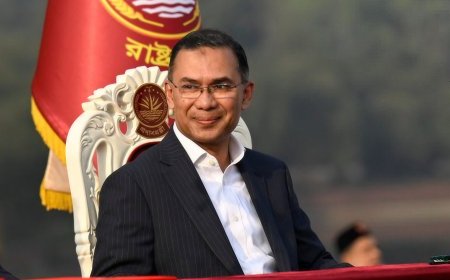
But even through the cynicism, there is something darkly endearing about this moment: A man who spent years as an exile, a defendant, and a meme is now prime minister of a country he has mostly viewed through Zoom, WhatsApp forwards, and news alerts.
Tarique Rahman is now tasked with governing a country whose worst traffic he has mainly experienced as something his security detail calls ahead about.
That gap is not just anecdotal; it’s political. Most Bangladeshis know this country by the texture of its inconveniences: The sweat in a stalled bus at Bijoy Sarani, the smell of overboiled fuel at a CNG stand, the dead stare of a clerk when you arrive without “boro bhai” behind you.
Our prime minister, until very recently, knew it as a place that produced case numbers, headlines, and the occasional hashtag. Sympathy for him begins with admitting that he is being asked to govern a Bangladesh he is still learning to physically inhabit.
I say this as someone who has seen, from inside the 2024-26 interim government, how unforgiving the state is even to people who arrive with good intentions. We sat in rooms talking about “resetting the republic” while the republic quietly rolled its eyes.
On paper, our plans were bold. In practice, the state behaved like an elderly relative: It listened politely, forgot selectively, and tried every time to carry on doing things the way it always had. Files that threatened powerful interests developed rare, exotic diseases that prevented them from moving. Middle‑ranking officials mastered the art of the respectful stall. You cannot coax a 50‑year‑old bureaucracy into virtue with workshops and sternly worded circulars.
Tarique Rahman has walked into something even trickier: Not a pause between regimes, but the smoking aftermath of an uprising and a landslide. He gets the moral mandate, the romantic slogans, the “new Bangladesh” playlists. He also gets an economy that wheezes when oil prices sneeze, a security apparatus trained to view dissent as sedition, and a public that no longer believes in honeymoon periods. Oh, and every time he so much as frowns, half the country reads it as psychological evidence: Has he changed? Is he still that guy? Is he his mother’s son, his father’s heir, or a different creature entirely?
In this circus, I have to confess a small, unproductive pleasure: I like the idea of Tarique Rahman stuck in traffic.
Not in a cruel sense, no one deserves the full Mirpur‑to‑Motijheel experience on a weekday with light rain, but as a civic exercise. There is a kind of political education you cannot get from intelligence briefings.
You get it from sitting in a car that hasn’t moved for 25 minutes, watching a policeman wave through a VIP convoy while everyone else silently curses. You get it from watching a mother negotiate with a bus helper who insists there is “space” while her child hangs halfway out the door. You get it from seeing a motorbike clip your side‑mirror and knowing that no insurance form will ever be filled.
If the prime minister is going to “feel the pulse of the city,” that pulse is not in the speeches. It is in Farmgate at 6pm when the sky is the colour of frustration. It’s in the moment when the traffic light goes green and nobody moves because three different streams of vehicles have already decided the rules are optional.
BNP’s early instinct has been to stretch the calendar, to replace the tired “100‑day scorecard” cliché with a 180‑day action plan. Intellectually, that makes sense. You cannot untangle this much wreckage on a media cycle. But the traffic does not care about your 180‑day horizon. The grocery queue does not care. For the citizen pressed into a bus door, time is measured in sweat and kilo prices, not phases of reform.
Here again, my interim‑government reflex kicks in. We once believed that if we crafted the right policy, the system would adjust out of sheer reasonableness. Instead, we discovered that the system responds to incentives, not adjectives. A thana will treat citizens differently when officers know their careers depend on complaint resolution, not ruling party recommendations. A licensing office will move faster when slowness stops being lucrative. Until then, all the “priority” labels in the world will simply make the folders thicker.
The PM is now in the unenviable position of having to hack these incentives while learning, in real time, how they feel on the ground. On rights and accountability, his government has said many of the right things. There is new language about reviewing draconian laws, about disciplining notorious units, about listening to victims.
But the more important shift is not in the law ministry; it’s in the informal calculus inside a police line office. Does that officer still believe his job is to protect “the government” from its citizens, or the other way round? I cannot help but sympathize with the scale of the task. Imagine spending years as the state’s favourite villain, only to wake up one morning and discover that you are now its chief therapist.
You have to heal those it hurt, reassure those who hurt on its behalf, and do all of this under the watchful eye of a public that has very little forgiveness left in the tank. You are blamed for problems you inherited and applauded cautiously for small, unsexy fixes that don’t photograph well.
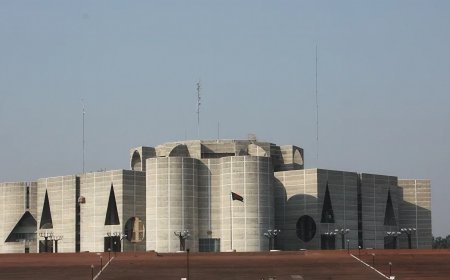
Parliament, at least, has regained its noise. There are walkouts, genuine arguments, some delightfully off‑script moments. That in itself is an upgrade from the theatre we called “sessions” for years. But the gravitational pull of old habits is still strong. Tarique is both the symbol of a break and the avatar of continuity.
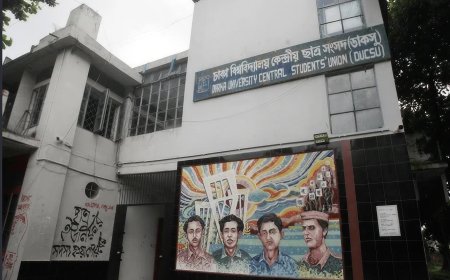
He has the rare chance to widen the tent -- to bring the kids who led human chains and dodged tear gas into the policymaking process, to move beyond the same 200 faces that rotate through our political class. He also faces the strong temptation, reinforced daily by the bureaucracy, to stick with “known quantities” who know where the levers are.
If I’m generous and for once, I am trying to be; there is a case for caution. Push too fast, and the system can stage its own version of a shutdown: Quiet non‑cooperation, bureaucratic sabotage, whispered panic about “anarchy.” We have seen that movie. We may even have appeared in it. But caution cannot become an identity. You cannot surf the moral energy of an uprising forever while governing like it’s just another rotation of elites.
This is why I keep coming back to traffic. I want the prime minister to be forced, occasionally and safely, to experience his own city without the siren‑cleared corridor. I want him to sit in a car where the driver curses under his breath when he hears a convoy is passing. I want him to see the way people’s faces harden at the sight of yet another road being cleared “for security.” It’s not schadenfreude; it’s field research. If he feels that discomfort in his bones, policies about public transport, urban planning, and policing will land differently.
My time in the 2024-26 interim period taught me one unforgiving lesson: Good intentions at the top are necessary, but not sufficient. The state has muscle memory. It will try to domesticate anyone who sits in the big chair. The only real counterweight is a leader who allows the daily frustrations, small humiliations, and stubborn hopes of ordinary citizens to invade his comfort zone.
BNP’s first days have not been miraculous, but they have not been meaningless either. We have seen some bad habits broken but we have not yet seen the deeper rewiring of incentives that would change how a constable behaves in a lane or how a clerk treats someone without connections.
In that gap stands a prime minister who is, whether he admits it or not, learning Dhaka in real time. I find myself oddly rooting for him to be inconvenienced not out of malice, but out of a belief that only when power is forced to taste the city as it is, will it stop mistaking press conferences for progress.
The next few days will not tell us everything about BNP’s future, but they might tell us whether Tarique Rahman lets the old state slowly shape him into just another occupant of the PMO, or whether he allows the chaotic, infuriating, magnificent city outside his window to finally get under his skin.
Apurba Jahangir is a writer, political analyst, and former deputy press secretary to the Chief Adviser of the Interim Government of Bangladesh.