



































































Dhaka has deepened military ties with Turkey while normalizing relations with Pakistan. This commitment towards strategic autonomy unsettles security planners in New Delhi, who view the accumulation of these moves as a potential erosion of Indian influence in the Bay of Bengal.

Perhaps we have placed shame in the wrong place. We shamed the body instead of violence. We questioned the survivor instead of the aggressor. We taught embarrassment where we should have taught consent. And we said: Hush. We do not speak of these things.

The silence at dawn in Tipra Para is not the silence of an empty forest. It is the quiet of a community whose presence has survived successive rounds of leases, surveys, forest classifications and conservation measures.

The future will depend not simply on how intelligent machines become, but on whether society remains committed to nurturing emotionally healthy, critically thoughtful, and socially connected human beings.
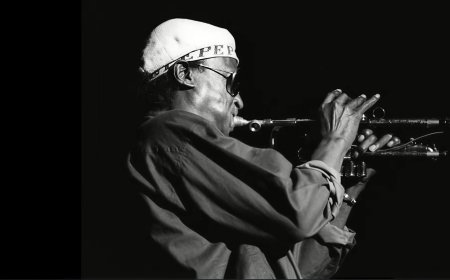
A birthday tribute to Mr. Miles, the one who could translate the entire humanscape into music, the chaotic cacophony of noisy human affairs could be syncopated into high art

The woman does not remain because she is foolish. She may be trapped inside a psychologically destabilizing pattern in which exceptional moments of tenderness are interpreted as evidence that the relationship can still be saved.

Literature resides in the public domain of human consciousness. It resists those who aim to claim an exclusive license over it

Whereas Khwaja Usman’s lineage was swept into the sidelines of history, Raja Subid Narayan’s descendants gained prominence in the nation.
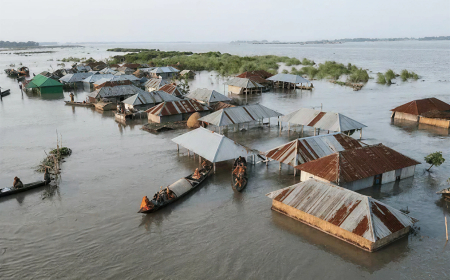
Climate mobility should not be viewed exclusively through the lens of loss and displacement. When supported by effective policies, mobility can contribute to economic development, strengthen resilience, and expand opportunities for affected populations.
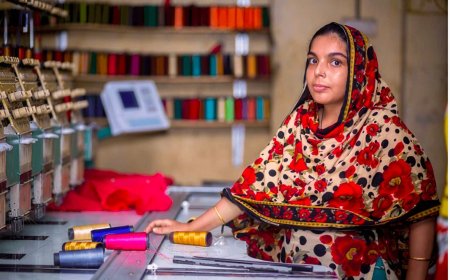
A financially free woman is not simply one who earns. She is one whose contribution is recognised, who has meaningful control over economic resources, and who has genuine freedom to decide how her time, work and money are used.
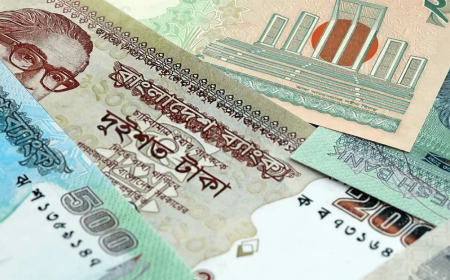
The next government will also be tempted to inherit the same bargain: Loyalty in exchange for protection, administrative convenience in exchange for silence. Reform begins when a government chooses to give up that convenience. Until then, ministers will continue to fall while the permanent government learns to serve, and outlast, whoever replaces them.
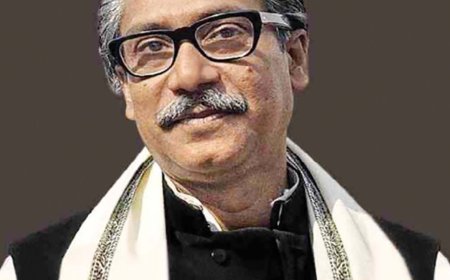
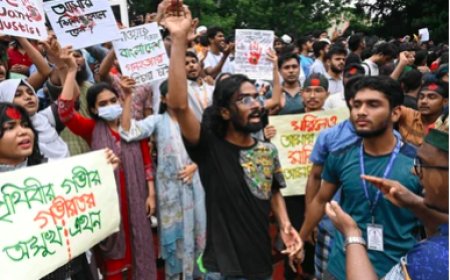
To be exact about what happened and what didn't: Bangladesh was not reborn in August 2024. A country is born once. What happened in 2024 was not a second birth but a reckoning.
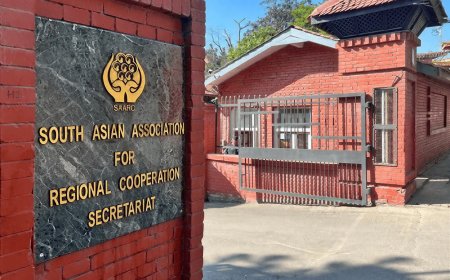
The moment may have arrived for Dhaka to turn India’s need for regional legitimacy into an opportunity to reset the relationship on a more balanced and multi-lateral footing.

When a rigorous nationwide poll challenges the political narratives favored by commentators and newsrooms, the proper response is scrutiny, not silence.
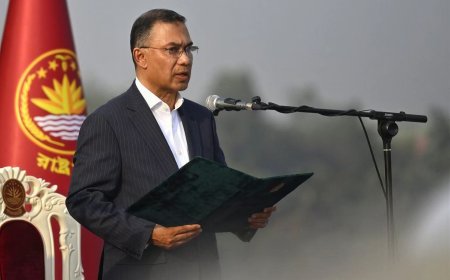
Public confidence in the future is still stronger than satisfaction with current delivery. That “expectation premium” is a political asset -- but a time-limited one.

A formal apology may not lead to concrete changes. Instead, pursuing reparations could help reimagine the project of social justice in India.