



























































Why the New Government Must Kill the Power Oligarchy to Save the Republic
By erecting solar canopies over these historic arteries, we can generate thousands of megawatts of clean energy while providing the shade necessary to preserve our water levels. Beneath these canopies, the state must build structured aquaculture systems, renting them back to local farmers.
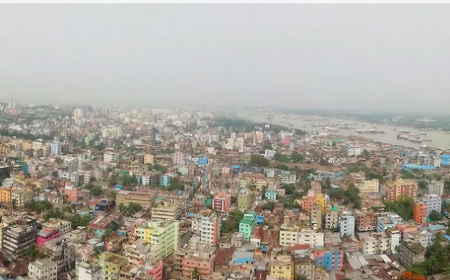
The air in Dhaka at the twilight hour holds a specific, heavy weight -- a thick tapestry of exhaust, humidity, and the quiet, flickering hope of millions. For years, we were told this flickering was a symptom of a nation in labor, a sensory proof of a country stepping out of its underdeveloped past.
But as the lamps dim in 2026 and the discordant hum of diesel generators becomes the new national anthem, we must confront a chilling truth: This darkness is not a failure of engineering. It is a masterpiece of extraction.
The final report of the National Review Committee (NRC), released on January 20, 2026, has finally pulled back the curtain on a decade of "contractual kleptocracy." It confirms that our energy crisis is not a tragedy of scarcity, but a catastrophic overabundance of the wrong kind of production.
We have "overfilled" our pipeline with nearly 9,500 MW of idle ghost capacity -- enough to light a second Bangladesh -- yet we pay for it as if it were running at full tilt. Why? Because the state enablers did not build a grid; they built a vacuum.
The $10 Billion Ransom and the "Import Trap"
To understand the scale of this betrayal, one must look at the "Capacity Charge" -- a term that has become a synonym for taxpayer extortion. Since 2009, we have funneled over Tk 1.05 trillion ($10 billion) into the pockets of the oligarchies for electricity they never generated. For the 2025-26 fiscal year alone, this bill has surged to a record Tk 420 billion ($3.5 billion).
The most damning evidence of this unison between the state and the oligarchies is our current fuel mix -- a deliberate blueprint for insolvency. We have been tethered to an engineered reliance on high-cost imports:
- The Gas Trap: We spend 51 times more on importing expensive LNG than on domestic gas exploration.
- The Coal & Oil Stranglehold: Over 45% of our capacity is now locked into coal and furnace oil -- fuels chosen not for efficiency, but for the "commissions" they generate during procurement.
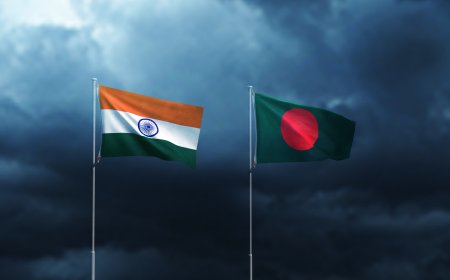
- The Unit Price Crisis: This wrong mix means Bangladesh now pays roughly 70% more per unit of bulk electricity than India. While India’s market-driven solar and domestic coal have driven costs down to Tk 7.20, our negotiated "special" deals have shackled us to Tk 12.35.
The Architects of the Void
The accountability for this vacuum lies with the men who held the pens -- the "Power Sector 8" who represented the interests of the oligarchies from within the halls of power. They include:
- Nasrul Hamid: The former State Minister who killed competition to fast-track "unsolicited" deals.
- Tawfiq-e-Elahi Chowdhury: The policy mastermind who insulated this vacuum from transparency.
- Ahmad Kaikaus & Habibur Rahman: The secretaries who facilitated the administrative bypass of technical committees.
- Monowar Islam: Who oversaw the endless extensions of inefficient "Quick Rental" plants far past their expiration.
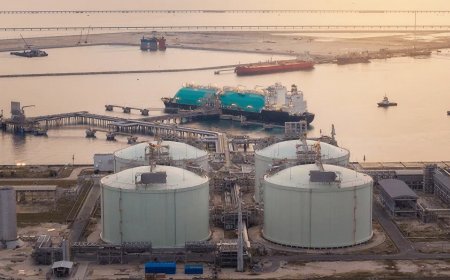
These enablers ensured the geography of failure was set in stone. At Meghnaghat and Bibiyana, massive gas-fired units built for the oligarchies sit as silent monuments to greed, rendered unusable by the very "gas shortages" the government manufactured.
At Banshkhali, the most expensive coal deal in our history stands ready, yet its output is throttled by a grid that cannot handle the load. These plants were never meant to run; they were meant to exist so the capacity charges could flow.
A Legacy Reclaimed
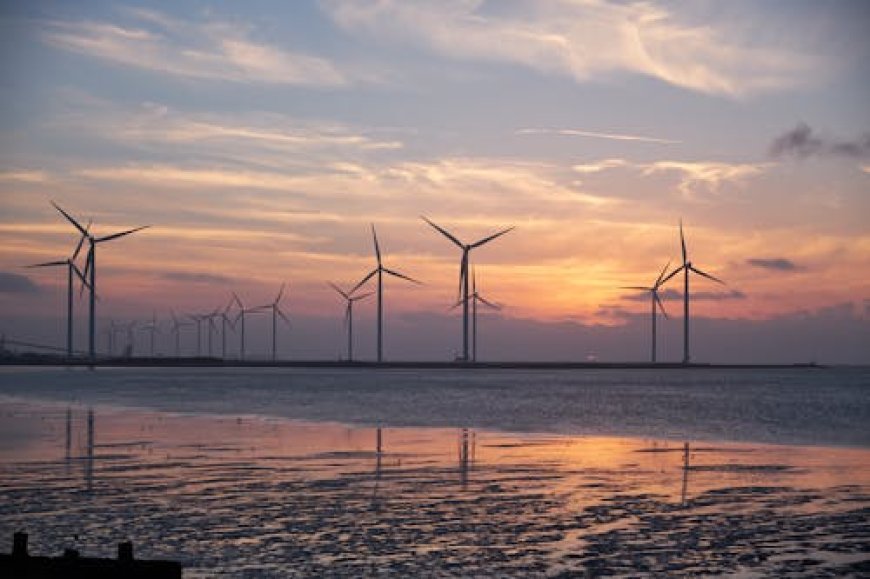
The enablers suppressed renewables -- which sit at a pathetic 3.7% of our mix -- because you cannot skim a commission from the sun. Our solution must be a multi-layered system of Solar Canopies and Integrated Fish Farming across the 26,000 miles of canals dug by the visionary hands of Ziaur Rahman.
By erecting solar canopies over these historic arteries, we can generate thousands of megawatts of clean energy while providing the shade necessary to preserve our water levels. Beneath these canopies, the state must build structured aquaculture systems, renting them back to local farmers.
This transforms a commission-heavy import model into a community-heavy production model. The canopies provide the power, the water remains cool for irrigation, and local farmers gain a modern livelihood through fish farming.
It is the poetic justice of our age: The very canals dug to feed the nation through agriculture, now saving the republic through a synthesis of energy and food security.
A Call to Action
To the incoming administration, the mandate is clear. You are not inheriting a struggling utility; you are inheriting a crime scene. Your first 100 days must be a season of reckoning:
- Abolish "Take-or-Pay": Move unilaterally to a "Take-and-Pay" model. We only pay for the light we use.
- International Arbitration: Move to the Singapore tribunals to annul the most egregious mega-contracts on the grounds of fraud.
- The "Integrated Canal" Mandate: Immediately launch a pilot program to cover the Ziaur Rahman canals with solar canopies and fish-farming units to crash our generation costs and restore our sovereignty.
- Prosecute the Enablers: The "Power Sector 8" must face the full weight of the law for the MOUs they signed.
The lights are flickering, but they haven't gone out yet. Will you be the leaders who restored the light, or the ones who watched the last lamp die?
Kawsar “KC” Chowdhury is an entrepreneur, commentator, and Co-Chair of the Global Bangladeshi Alliance. He works closely with the Bangladesh Caucus in the US Congress, helping shape diaspora-driven policy, trade, and education initiatives.