




































































Bangladeshis Have Chosen to Temper Government Power. And That's a Great Thing.
No one can predict exactly what Bangladesh's constitutional architecture will look like by year's end. The process will be messy, contentious, and imperfect. But the direction is clear. Two-thirds of voters have chosen a path away from capricious rule toward a system where power is tempered.


When I first met Martin Krygier at the Sydney Writer's Festival in May 2006, he was already recognized as one of the world's preeminent thinkers on the rule of law.
As Martin began his recently completed magnum opus, Tempering Power: Beyond the Rule of Law (https://www.amazon.com/Tempering-Power-Beyond-Rule-Law/dp/1009775308), he realized that focusing on the rule of law distracted from what he -- and his family and colleagues who'd escaped the Nazis and Stalinists -- really cared about.
What makes the rule of law precious is not its features. Accountability, laws that are clear, publicized, stable and applied evenly, etc but -- its purpose. That purpose is to 'temper' power.
Krygier chooses the word "temper" power to describe the rule of law's purpose because it captures both the moderating and strengthening dimensions of what law should do to power. Rather than simply weakening or shackling power, which would be counterproductive -- tempering involves a more sophisticated approach that channels power appropriately while enabling it to function effectively.
Bangladesh now faces one of those rare moments when a country can alter not only who governs, but how it is governed. Yesterday, two-thirds of Bangladeshi voters approved constitutional reforms derived from the July Charter, reforms designed to end the winner-takes-all politics that turned the Awami League into a monster removed by people power in July and August 2024. They chose to temper power.
What the Vote Means
Both the parties that will form the government and the opposition have signed the July Charter, including this provision:
"For the purpose of implementing the decisions recorded in the July National Charter 2025 concerning comprehensive reforms of Bangladesh’s overall state structure including the Constitution, electoral system, judicial system, public administration, policing system, and anti-corruption mechanisms, we shall undertake all necessary constitutional amendments, additions, revisions of existing laws or enactment of new laws, as well as the formulation, modification or amendment of the required rules and regulations."
The Interim Government was aware of widespread fears that once in power the elected government might ignore their earlier pledges to implement the elements of the Charter. The referendum, which was approved with supermajority of the vote, amounts to a highly visible political insurance policy that the parties will make good on their earlier promises.
The referendum was not a policy preference poll but something more fundamental: A decision that no government, however popular, should exercise power without limits. This matters because capricious power; power exercised without constraint or predictability -- undermines the security and dignity of every citizen subject to it.
When you cannot predict whether the state will protect your property or seize it, honour your contract or void it, respect your liberty or curtail it based on whoever holds office, you cannot plan your life.
You cannot invest in your business, educate your children with confidence, or speak your mind without calculating the personal cost. You live in permanent uncertainty, dependent not on rights but on the good graces of the powerful.
However little most Bangladeshis understand the Charter's detail, they know it offers an architecture for change: A caretaker government mechanism for elections, proportional representation in an upper chamber, strengthened constitutional bodies with real independence, limits on executive tenure, and judicial appointments insulated from partisan interference.
These are load-bearing walls designed to prevent any single faction from treating the state as private property.
The Work Ahead
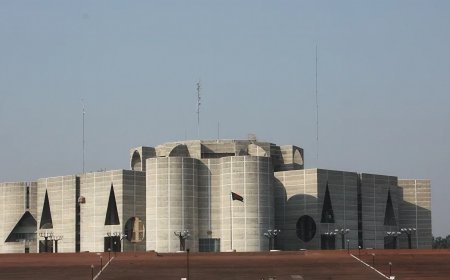
The newly elected parliament will convene as a constitutional reform council with a mandate to translate the July Charter's principles into concrete amendments within 180 to 270 days. This process won't be tidy.
Elements will be debated intensely, contested, revised, perhaps even rejected in their current form. The new MPs will arrive with different interpretations of what voters approved. This is not only inevitable but appropriate. The referendum gave parliament a directive and deadline, not a finished blueprint.
The test will be whether the outcome makes it materially harder for any future government to behave capriciously. Can the next ruling party sideline the opposition with impunity? Pack the courts, manipulate electoral machinery, intimidate the press, and redirect state resources without consequence?
If the answer after this reform process is still yes, the Charter will have failed; if it achieves its intent by other means, it will have succeeded.
Security and Dignity
Martin Krygier's insight is that the rule of law matters because ordinary people need it to live with dignity. Dignity requires predictability -- not of never facing hardship, but of knowing the state operates within boundaries it cannot cross on a whim.
By an overwhelming margin, Bangladeshi voters have said they want that security. They prefer a system where power is tempered, even if it means their preferred party governs with less freedom of maneuver.
The uprising demonstrated what happens when a government stops feeling constrained. The referendum demonstrates a collective commitment not to return to that condition.
Holding the Line
There will be pressure in coming months to dilute, delay, or selectively implement the July Charter. Some will come from parties worried about electoral prospects under new rules, some from bureaucrats uncomfortable with enhanced oversight, some dressed as pragmatism, arguing certain reforms are premature.
These arguments must be evaluated against one standard: Does the proposed change advance or undermine the tempering of power? Parliament is not being asked to debate whether power should be tempered; voters answered that. Parliament must determine how.
The risk is that the animating principle gets lost in negotiation. Bangladesh has been here before -- moments of hope after an autocrat's fall, followed by gradual return to old arrangements as urgency fades. The referendum creates an obligation to break that pattern.
The Uncertain but Hopeful Part
No one can predict exactly what Bangladesh's constitutional architecture will look like by year's end. The process will be messy, contentious, and imperfect. But the direction is clear. Two-thirds of voters have chosen a path away from capricious rule toward a system where power is tempered -- appropriately channeled and enabled to function properly.
If they succeed, Bangladesh will have done something rare: Used a moment of crisis to change not merely who governs, but how governance works. If they fail, it will not be because voters lacked the will to temper power, but because those entrusted with implementation forgot what two-thirds of the country chose to remember -- that dignity and security require boundaries that the caprice even of the most powerful will not cross.
Whit Mason is a British/Australian/American political communications advisor and analyst on conflict, governance, and the rule of law, with decades of international experience including, since December 2024, Bangladesh.