



































































The Growing Gap between Degrees and Employability
Bangladesh’s higher education story is often told as one of expansion and access. It is time to tell the other half of the story, the one about relevance, rigor and responsibility. Degrees alone do not build nations. Skills do.


Over the past two decades, Bangladesh has witnessed an impressive numerical expansion of higher education. Universities have mushroomed across the country, campuses have multiplied, and enrollment figures have surged in a way that would once have been unimaginable. According to the 50th annual report of the University Grants Commission, Bangladesh now has 53 public and 110 private universities, enrolling around 5.2 million students. At a glance, this looks like a success story of access, aspiration and demographic promise. But beneath the celebratory numbers lies an uncomfortable truth. Bangladesh has been producing graduates faster than it has been producing skills.
The scale of expansion itself is striking. In 2014, there were about 2.85 million students in public universities and their affiliated institutions. A decade later, that figure has almost doubled to more than 4.82 million. Private university enrollment has also grown, reaching over 358,000 students. Higher education has clearly ceased to be an elite privilege and has become a mass phenomenon. Yet massification without commensurate quality control has consequences, and Bangladesh is now grappling with those consequences in the labor market.
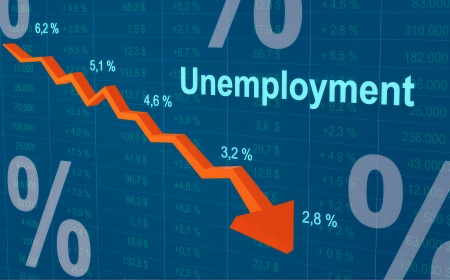
The most telling evidence lies in unemployment data. According to the Bangladesh Bureau of Statistics Labor Force Survey 2023, the number of highly educated unemployed people stands at 906,000. Just one year earlier, that number was 799,000. In other words, more than 100,000 new highly educated people joined the ranks of the unemployed in a single year. Over the last decade, the number of unemployed graduates has increased roughly eightfold. This is not a cyclical blip but a structural problem.
The Task Force on Formulating and Redesigning Economic Strategies and Mobilizing Necessary Resources for Sustainable Development without Discrimination paints an even starker picture. It notes that 28 out of every 100 unemployed people in Bangladesh now have higher education. Unemployment at the tertiary level rose from 4.9% in 2010 to 12 percent in 2022. In a country where education is often seen as the surest escape from poverty and insecurity, this is a deeply unsettling trend.
At the heart of the problem is a growing mismatch between what universities produce and what the economy demands. At least 130 universities are reportedly suffering from chronic issues such as teacher shortages, weak governance, inadequate research facilities and poorly equipped laboratories. Many institutions struggle to maintain even basic academic standards, let alone cultivate advanced analytical, technical and soft skills. When quality assurance mechanisms fail, degrees become credentials of attendance rather than indicators of competence.
International benchmarks reinforce this concern. In the Times Higher Education World University Rankings 2026 and the QS World University Rankings 2026, no Bangladeshi university features in the top 500. Rankings are not perfect measures of quality, but their consistent message should not be ignored. They reflect weaknesses in research output, teaching quality, global engagement and academic reputation, all of which directly influence the skill ecosystem within universities.
Perhaps the most sobering assessment comes from the QS World Future Skills Index 2025. Based on the opinions of around five million employers worldwide and a range of academic and economic indicators, the index evaluates how well countries prepare graduates for the future job market. Bangladesh scored 39.1 out of 100 in producing graduates with employer-demanded skills, ranking 67th out of 81 countries. Its score for future-proof academic preparation was 65.7, while future labor market preparedness stood at just 42.6. Bangladesh did not even receive a score for economic transformation due to insufficient data. The final composite score was 49.1, a clear signal that the country is at risk of being left behind in a rapidly evolving global economy.
These numbers matter because skills today are no longer static. Employers increasingly value adaptability, problem-solving, digital literacy, communication and the ability to learn continuously. Many Bangladeshi graduates, however, emerge from universities with theoretical knowledge divorced from practice, limited exposure to research or industry, and little confidence in applying what they have learned. The result is frustration on both sides. Graduates feel betrayed by an education system that promised mobility, while employers complain about a shortage of job-ready candidates.
The contrast with regional peers is also revealing. CEO World Magazine’s 2024 ranking of countries with the best performing education systems included India, Pakistan, Sri Lanka and Maldives among South Asian nations. Bangladesh was absent from the list. The ranking drew on surveys of nearly 200,000 respondents, expert assessments and data from global institutions such as UNESCO, the World Bank, the Economist Intelligence Unit and major university ranking bodies. While such rankings can be debated, Bangladesh’s absence points to a persistent perception problem that mirrors domestic realities.
Defenders of the current system often argue that higher education cannot be judged solely by employability. Universities, they say, are meant to foster critical thinking, citizenship and intellectual growth, not just produce workers. This argument has merit, but it rings hollow when graduates lack both employable skills and broader intellectual depth. Moreover, in a lower-middle-income country with limited social safety nets, the economic function of higher education cannot be dismissed as secondary.
The University Grants Commission has acknowledged these challenges and points to ongoing reforms. Outcome-based curricula, greater emphasis on research, and stronger industry-academia linkages are frequently cited as solutions. These are steps in the right direction, but their impact so far remains limited and uneven. Curriculum reforms often exist on paper but are poorly implemented due to a lack of trained faculty and resources. Industry linkages are frequently ceremonial, consisting of memorandums of understanding rather than sustained collaboration. Research incentives are weak, and funding remains inadequate, particularly outside a handful of top public universities.
There is also a deeper cultural issue at play. For many students and families, a university degree is still valued more as a social symbol than as a process of skill acquisition. This fuels demand for degrees at any cost and discourages difficult conversations about aptitude, vocational alternatives and labour market realities. Universities, especially private ones operating in a competitive market, have little incentive to challenge this mindset if enrollment numbers remain strong.
Bangladesh stands at a crossroads. Its demographic dividend will not last forever. If the current cohort of young graduates enters the workforce under-skilled and under-employed, the dividend risks turning into a demographic burden. The cost will not only be economic but social and political, manifesting in frustration, brain drain and eroding trust in institutions.
Reversing this trajectory requires more than policy declarations. It demands strict enforcement of quality standards, rationalization of university numbers, serious investment in faculty development and research infrastructure, and a candid reassessment of what higher education should achieve in a rapidly changing world. It also requires aligning national economic planning with education policy so that universities are not producing graduates for jobs that do not exist.
Bangladesh’s higher education story is often told as one of expansion and access. It is time to tell the other half of the story, the one about relevance, rigor and responsibility. Degrees alone do not build nations. Skills do. Until universities internalize that truth and act on it decisively, the paradox of educated unemployment will continue to haunt Bangladesh’s development aspirations.
H. M. Nazmul Alam is an Academic, Journalist, and Political Analyst based in Dhaka, Bangladesh. Currently he teaches at IUBAT. He can be reached at [email protected]