






























































But Why Didn’t She Leave?
The woman does not remain because she is foolish. She may be trapped inside a psychologically destabilizing pattern in which exceptional moments of tenderness are interpreted as evidence that the relationship can still be saved.

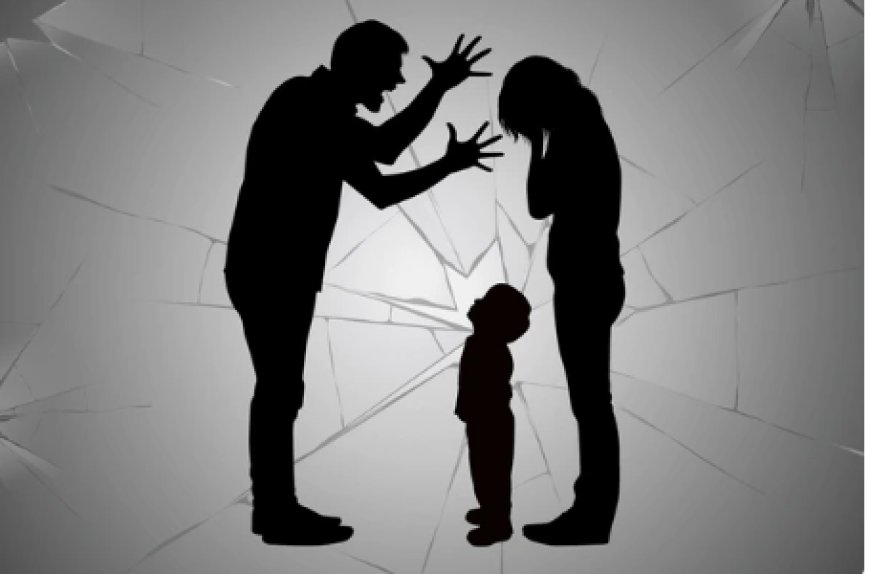
One of the most dangerous sentences in a violent marriage is often not an insult, or even a threat. It is this:
“One day, everything will be fine.”
That hope can keep women trapped for years in relationships where fear has replaced love, surveillance has replaced intimacy, and endurance has replaced companionship.
Whenever a woman is seriously harmed or killed in the context of an abusive relationship, a familiar question returns: “If she was afraid, why didn’t she leave?”
At first glance, the question sounds rational. In reality, it often reveals how poorly we understand intimate partner violence.
Because the more important question is not: “Why didn’t she leave?”
It is: “What made leaving so difficult, so costly, or so dangerous?”
Those are not the same questions.
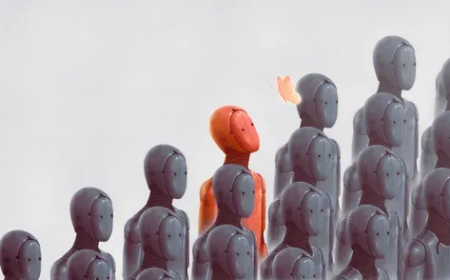
The first places the woman’s judgement on trial. The second examines the structure of power around her. And feminist analysis has always insisted that we ask the second.
We often talk about abusive relationships as though leaving them were as simple as stepping out of a taxi: If the journey becomes unpleasant, open the door and get out. But intimate partner violence rarely works like that.
Abuse does not only happen to the body. It gradually penetrates confidence, social relationships, economic security, decision-making, self-trust, and even a person’s understanding of what is normal.
A controlling partner does not usually begin by announcing: “I intend to take away your freedom.”
Control often enters wearing the language of love.
“Why do you talk to that friend so much?”
“I worry because I love you.”
“Why do you need that job?”
“Am I not enough for you?”
“Your family interferes too much in our marriage.”
“You know what I become like when you provoke me.”
Over time, the woman may realize that she has fewer friends, less contact with family, less control over money, and less confidence in her own decisions. She may have left a job, given up opportunities, or become increasingly dependent on the very person who frightens her.
The most disturbing stage may come when she begins to ask herself: “Am I the problem?” That is the power of coercive control.
Violence is not confined to physical assault. It can include regulating whom a partner speaks to, where she goes, what she wears, whether she works, how she spends money, how she parents, whether she can see family, and how much privacy she is permitted.
Control works most effectively when it becomes ordinary.
And fear is not always the only mechanism holding someone inside that structure. Sometimes love does too.
This is why discussions of trauma bonding can be useful, although the term should not be used casually. Abusive relationships are often not uniformly cruel. Violence may be followed by remorse. Threats may be followed by tenderness. There may be apologies, promises, gifts, tears, extraordinary affection, and declarations that “it will never happen again.”
Then the cycle begins again. This unpredictability matters psychologically. Behavioural science describes a related process as intermittent reinforcement: when reward is inconsistent and unpredictable, people can become even more invested in waiting for the next positive outcome.
The woman does not remain because she is foolish. She may be trapped inside a psychologically destabilizing pattern in which exceptional moments of tenderness are interpreted as evidence that the relationship can still be saved.
“He is not really a bad person.” “He is under enormous stress.” “He loves the children.” “He was not always like this.” “Maybe this time he really will change.”
These statements are not necessarily stupidity or denial. Sometimes they are survival narratives: Ways of making an intolerable reality emotionally bearable.
But in South Asian societies, and certainly in Bangladesh, another institution reinforces this cycle: The moral ideal of “saving the marriage.”
We often treat the preservation of the household as more important than the health of the people inside it.
Women are told: “Every marriage has problems.” “Men get angry.” “Think about the children.” “Where will you go?” “What will people say?” “Try to adjust a little more.”
Notice what happens here. The burden of abuse quietly shifts from the perpetrator to the survivor. Instead of expecting the husband to regulate his anger, the wife is taught techniques for managing it.
Instead of telling him not to humiliate her, she is told not to answer back. Instead of asking why he becomes violent, people ask what she said to make him angry.
Eventually, even responsibility for preventing his abuse becomes part of her emotional labour.
This is one of patriarchy’s most sophisticated achievements: A woman is not only expected to survive violence, but is often made to feel morally responsible for failing to manage the man who inflicts it.
Families can reinforce this dynamic. Marriage in our culture is still frequently treated not simply as a relationship between two individuals, but as a social project linking families, reputations, class status, kinship networks, and notions of honour.
When a woman returns from an abusive marriage, some families do not see only a daughter in distress. They see social embarrassment, financial burden, possible custody disputes, relatives’ questions, and the stigma of divorce.
So the woman’s bruises remain “private,” but her decision to leave becomes public.
What an extraordinary contradiction. Violence is treated as a family matter. Divorce becomes a matter of social honour. This contradiction lies at the heart of our cultural response to domestic abuse.
Class also matters. For a financially dependent woman, the barriers are brutally concrete: where will she live? Who will pay rent? Who will support the children? How will she afford legal representation? What happens if her family refuses to take her back?
But society becomes particularly unforgiving when the woman is educated or professionally successful. “She was a doctor.” “She had a job.” “She could earn.” “So why didn’t she leave?”
This reasoning assumes that education automatically produces psychological freedom.
It does not. A medical degree does not immunise someone against coercive control. A PhD does not dissolve a trauma bond. A salary does not erase fear, stigma, custody concerns, family pressure, stalking, emotional manipulation, or the possibility of escalating violence.
Economic independence can expand a woman’s options enormously. But it is not a magical vaccine against abuse.
There is another difficult truth that must be understood: Leaving can itself be dangerous. The moment of separation is not always the moment of safety. In coercive relationships, possession often sits at the centre of the abuse.
The underlying message is: “You belong to me.” When a woman decides to leave, she is not only ending a relationship. She is rejecting the abuser’s authority. For some perpetrators, that perceived loss of control can trigger escalation.
This is why simply telling women to “be brave and leave” is intellectually shallow and sometimes dangerously irresponsible.
Leaving requires infrastructure. Safe housing. Money. Legal support. Confidential counselling. Protection for children. Workplace support. Responsive policing. Trustworthy family or friends.
A realistic safety plan. If those conditions do not exist, lectures about personal courage become another form of cruelty. We also need to challenge one of the most persistent myths surrounding abusive relationships: “Stay for the children.”
But stay in what? A household full of shouting? A home where one parent humiliates the other? A family where children learn to measure everyone’s mood before speaking? A relationship in which apology follows violence, only for violence to return?
Children do not merely observe whether their parents remain married. They learn the grammar of intimacy from what they see. They learn how love speaks.
They learn who is allowed to be angry. Who must apologise. Who controls money. Who gets to say no. Who is expected to endure.
A boy may learn that authority means domination. A girl may learn that love requires suffering. So “staying for the children” does not always protect children. Sometimes, in trying to preserve the family, we preserve the curriculum of violence.
Then there are neighbours, relatives, colleagues, friends. Often, they know. They hear the shouting. They notice the isolation. They see the injuries. But the standard response remains: “It is between husband and wife.”
That sentence is one of the most effective social licences for domestic abuse. Violence does not become morally neutral because it happens behind a closed door. A home is not an independent state beyond the reach of ethics, law, or collective responsibility.
For decades, feminist scholarship has challenged precisely this division between the “public” and the “private.” The personal is political.
Who controls money inside the home is political. Who is allowed to refuse sex is political. Who can leave the house is political. Who can work is political. Who is believed when violence occurs is political. Who is expected to absorb humiliation in the name of family harmony is political.
Domestic violence appears private only because societies have historically decided that certain forms of male power should remain protected from scrutiny.
There is another cultural problem we need to confront: Our extraordinary admiration for female endurance. We celebrate the woman who “kept the family together.” “She tolerated so much.” “She sacrificed everything for her children.” “She never complained.”
We turn suffering into femininity. But why should endurance itself be a virtue?
A culture that glorifies women for tolerating abuse inevitably weakens accountability for the men inflicting it. If a woman survives 15 years of violence, we may call her an extraordinary mother. I would rather ask: Why did she have to survive 15 years of violence at all?
Who taught her that tolerating it made her a good woman? Which family told her to go back? Which institution failed to protect her? Which community treated divorce as more shameful than abuse? Which cultural narrative convinced her that martyrdom was motherhood?
Unless we ask those questions, we will continue to mourn women after tragedy while preparing the next generation of women to “adjust.”
This is why the phrase “one day everything will be fine” can be so dangerous. Sometimes it is not hope. Sometimes it is a social anaesthetic. It does not remove the injury. It suppresses the response to it.
None of this means every difficult marriage should end. Relationships can recover. People can change. Therapy can help. Couples can rebuild trust.
But genuine change has conditions. Accountability. Sustained behavioural change. Respect for boundaries. Professional intervention. An end to intimidation.
Evidence that the pattern, not merely the apology, has changed. Repeated violence followed by flowers, tears, affection, and promises is not transformation.
It is a cycle. And romanticizing that cycle can be deadly. Perhaps, then, we need to change the language of our questions.
Not: “Why did she stay?”
But: “What made leaving so difficult?”
Not: “Why did she tolerate it?”
But: “Who taught her that tolerating it was her duty?”
Not: “Why did she not seek help sooner?”
But: “Did we build a society in which seeking help was safe, affordable, and socially possible?”
Because after a woman is harmed, the easiest thing in the world is to perform an autopsy on her decisions.
The more difficult task is to perform an autopsy on the society around her. And if we do, we may discover that an abusive partner rarely stands alone. Behind him may stand silence. Stigma. Financial dependence. Family honour. Victim-blaming. Weak institutions. Romanticised sacrifice. Fear of divorce.
And that old, familiar instruction: “Endure a little longer. One day everything will be fine.”
Not everything fixes itself with time. Some relationships require repair. Some relationships require distance. Some relationships require escape.
And sometimes the most important thing a society can learn is this: Preserving a marriage is never more important than preserving the person inside it.
Dr. Lubna Ferdowsi is an academic and researcher based in England.