




























































Winning Elections, Losing Democracy?
Societies often come to believe that electoral victories are all that is needed to save democracy, when in fact they end up undermining constitutional democracy through their electoral triumphs.

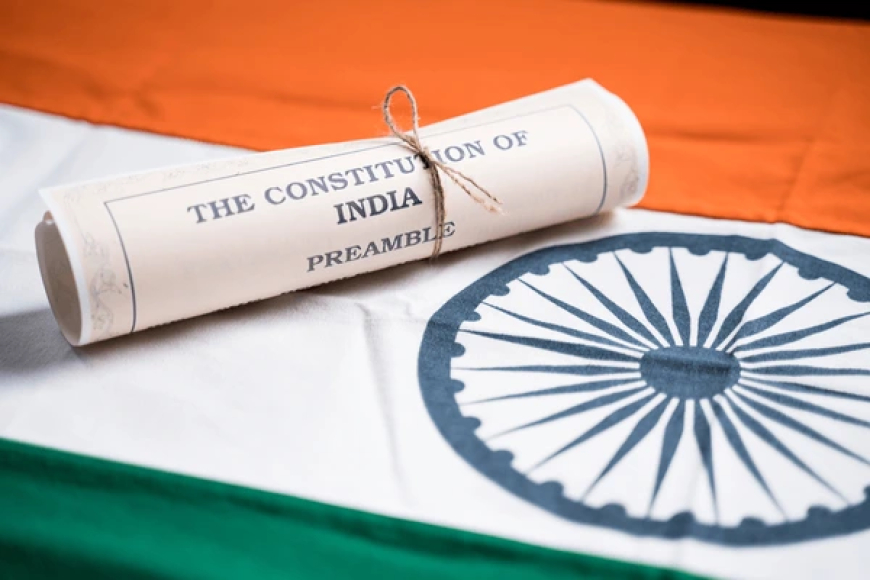
For decades, India has marketed itself to the rest of the world as one of the most ambitious experiments in democracy ever attempted.
The success of this civilization-state has been due to its ability to sustain religious diversity, multilingualism, varied ethnology, and differing cultures within a secular constitutional order.
In India, stretching from the high ranges of the Himalayas to the lush green lands of Kerala, and from the arid regions of Gujarat to the marshlands of Assam, diversity has always been a source of pride.
The architects of modern India, like B.R. Ambedkar, Jawaharlal Nehru, and Mahatma Gandhi, saw democracy as the foundation of the Indian Constitution.
But today, India finds itself in an awkward position.
Electoral politics over the past few years has increasingly depended on majoritarian nationalism -- nationalism rooted in religious and cultural homogenization of national identity rather than in constitutional plurality.
Political mobilization around religion, citizenship concerns, demographic fears, and cultural polarization has provided electoral successes to the ruling establishment without fail. However, the deeper issue confronting India today is whether a democracy remains genuine even as its electoral victories begin to erode the pluralistic base on which it stands.
This dilemma is now at the heart of India's future democracy.
The Growing Electorally Driven Majoritarianism
It is a given truth that modern democracies are naturally competitive. Ideologically divided political mobilizations around issues of national identity, economic policies, security fears, and social welfare inevitably lead to polarizing rhetoric between rival political parties.
However, the moment the minorities come to be viewed as "outsiders," "suspect citizens," or demographic threats, democracy starts to tilt towards a majoritarian framework of politics.
Political mobilization around the concept of Hindu nationalism and civilizational identity has significantly shaped electoral discourse in India. Temple politics, religious symbolism, citizen concerns, political rhetoric surrounding citizenship, selective history, and communal politics are now regular features of Indian election campaigns.
In India today, governance issues, economic development, employment, inflation rates, healthcare, and institutional accountability no longer matter. Instead, emotions play an essential part in elections through the mobilization of religious identity politics.
And, this approach works.
Hindu nationalist ideology and its political consolidation have ensured that the ruling parties consistently win elections across many states and the country as a whole. However, the question today is whether such political success is turning Indian democracy into a dependent entity of religious polarization.
The criterion for judging democracy cannot rest solely on election outcomes. The authoritarian state can also conduct an election and win it. The difference between democracy and authoritarianism is that the former can guarantee the autonomy of institutions, constitutional morality, minority rights, freedom of expression, judicial independence, and equal citizenship.
When electoral politics becomes an identity referendum, democracy loses its moral footing.
The Growing Threat to Constitutional Secularism
India’s constitution did not intend secularism to be anti-religion. On the contrary, secularism under the Indian constitution implied principled neutrality towards all faiths, where the state would neither privilege one religion over another nor persecute any religious community. Such a balance was supposed to provide peace.
Today, however, political discourse has begun to challenge this principle.
Communities belonging to a minority in terms of demography, namely the Muslims, have increasingly faced criticism, suspicion, media portrayal, hate speech, citizenship controversy, and communal violence. The issues of voter disenfranchisement, citizenship verification, demographic politics, bulldozing of Muslim houses, opposition to conversion, selective law enforcement, and other similar measures have created fears among minority communities.
But the problem goes beyond one community.
Once a democracy normalizes exclusionary politics targeting one community, its political culture begins to erode. When constitutional protections of minorities hinge on political convenience, democracy starts suffering irreparable damage. The greater danger is that such processes slowly transform public opinion. Repeated political campaigning, partisan media narratives, and digital politics normalize discrimination and exclusion.
Historically, democracies are usually undermined incrementally.
Electoral Success and Democratic Decline
Therein lies the contradiction the Indian state faces today.
Electoral success does not necessarily imply democracy. Indeed, many of the worst democratic backslide scenarios around the world were possible because of continued political successes through elections. Democracies weaken when institutions lose their autonomy, opponents are demonized, free media are pressured, civil society faces a crackdown, and dissidents are considered traitors.
Plural societies thrive on the ability to live with contradictions in their democracies. Plural societies like that of India managed to thrive precisely because of the presence of several religious communities, including others, which did not detract from but enhanced the notion of nationalism.
Majoritarian nationalism challenges this assumption.
It proposes one idea for nationalism through a specific cultural paradigm. Disagreement with that idea is seen as being anti-national, foreign-influenced, or civilizational. Academia, press, human rights activists, opposition members, and intellectuals often face harassment and hostility for expressing their opinions on national issues.
Such a situation undermines democracy.
A democracy is fragile if fear prevails over debate and conformity overrides citizenship.
Digital Media and Democratic Polarization
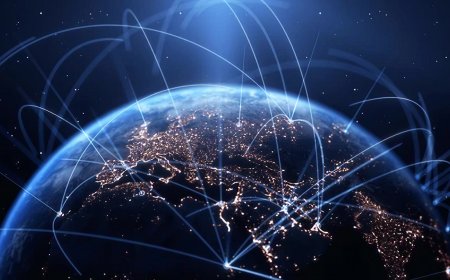
The phenomenon of digital media adds another layer to this dilemma.
Algorithms on social media sites feed on emotions and simplistic stories. Political communication has now taken the form of mobilization through symbolism, campaigning by emotion, and political ideologies. The deployment of online media systems might be used to escalate information wars, misinformation, and community politics on a massive level.
This process leads to an unhealthy cycle.
Increased polarization results in electoral successes, electoral successes promote divisive rhetoric, and divisive rhetoric fosters further social fragmentation. In this context, democracy becomes emotionally driven, tribal, and non-constitutional.
That explains why there is low social trust, heightened societal fears, institutional decay, and an increased risk of civil unrest. In other words, the sustainability of India cannot be achieved through mere economic growth and military strength, but also socially by bringing together its different religions and social communities.
Regional and International Ramifications
The implications of the Indian situation extend far beyond India’s borders.
As the world’s biggest democracy and an aspiring global power, India is a player on the global scene and a prominent actor in international politics and diplomacy. India’s reputation as a democracy will influence geopolitics, soft power, foreign investments, and regional stability in South Asia.
India’s democratic reputation may affect India’s power and reputation as a foreign policy player. If the Indian government continues with its current majoritarian political system, then it will find itself hard-pressed to maintain peace in the regions that it controls.
History shows that societies that fracture along religious and political lines have structural weaknesses and instability. A win won through polarization weakens the foundation of a nation and its people.
A country cannot sustain its power if sizable proportions of its population feel politically marginalized, socially excluded, and constitutionally insecure.
Restoring the Constitutional Idea of India
Ultimately, the solution for India lies in reaffirming its constitutional ideas of citizenship.
Pluralism was never a weakness but the foundation upon which India has managed to preserve itself as a democracy despite its vast diversity and complicated history.
India now stands at a crossroads.
Does India want to continue as a constitutional democracy based on equal citizenship and pluralism? Or does India want to redefine itself through electoral majoritarianism and demographic dominance?
This choice will determine not only the future of India but of democracies worldwide in the 21st century.
History teaches us that democracy never dies simply through a coup or invasion. In reality, societies often come to believe that electoral victories are all that is needed to save democracy, when in fact they end up undermining constitutional democracy through their electoral triumphs.
As Jawaharlal Nehru once observed: “Citizenship consists in the service of the country.”
For India today, that service may require not merely winning elections, but preserving the constitutional spirit of pluralism, equality, and democratic coexistence that has long defined the republic’s moral foundation.
Dr. Serajul I. Bhuiyan is a professor and former chair of the department of journalism and mass communications at Savannah State University, Savannah, GA.