








































































Assessing the Real Impact of the New Stimulus Package
Injecting fresh credit into such entities risks creating 'zombie firms' -- businesses that survive on subsidized finance but fail to generate sustainable returns.

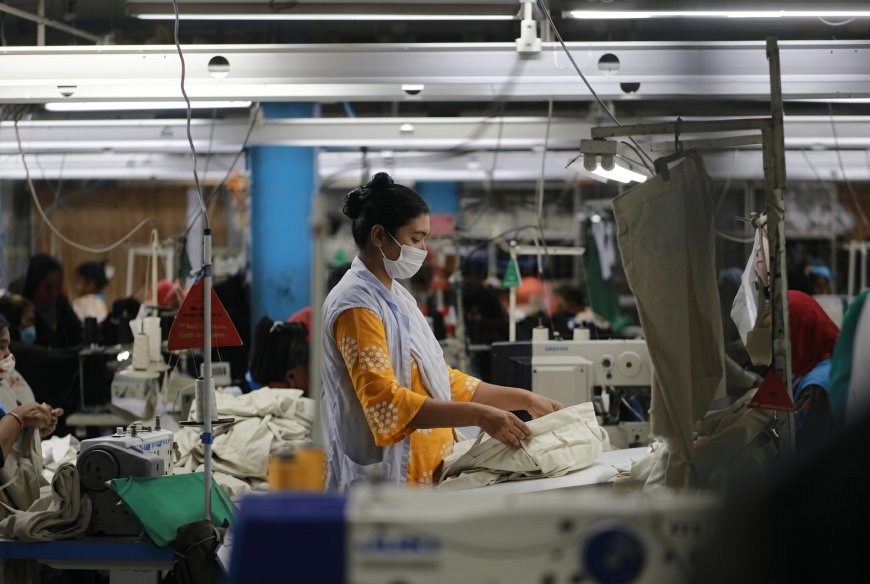
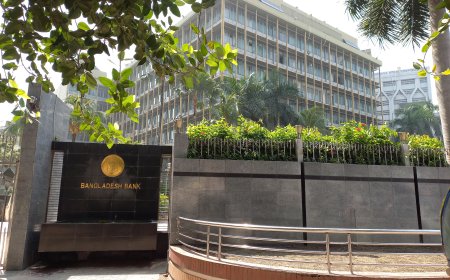
Bangladesh Bank’s newly announced Tk 60,000 crore stimulus package marks one of the most ambitious monetary interventions in the country’s recent economic history. Framed as a ‘production and employment revival’ program, the initiative aims to reopen shuttered factories, stimulate private sector credit, and create an estimated 2.5 million jobs.
At a time when credit growth has slumped to historic low and industrial activity remains uneven, the package seeks to break a dangerous cycle of idle liquidity co-existing with production paralysis. Yet, while the intentions are bold and timely, the ultimate impact of the program will depend less on its size and more on its design, execution, and the broader economic environment in which it operates.
At its core, the stimulus addresses a paradox that has increasingly defined Bangladesh’s financial system: Surplus liquidity trapped in banks alongside a shortage of productive investment. Several banks, burdened by non-performing loans and declining depositor confidence, have become risk-averse.
At the same time, stronger banks are holding excess funds but are reluctant to lend due to weak demand and uncertainty about repayment capacity. The result is a fragmented system where money exists but does not move. By offering a structured refinancing mechanism, Bangladesh Bank is attempting to act as an intermediary -- mobilizing idle funds and redirecting them toward sectors with potential for recovery.
This intermediation function is perhaps the most innovative aspect of the package. Instead of relying solely on direct monetary expansion, the central bank is leveraging existing liquidity within the banking system. By offering 10% interest on deposits mobilized from banks and redistributing those funds at subsidized rates, it creates an incentive structure that encourages participation while maintaining a degree of discipline. In theory, this could revive credit flows without significantly destabilizing the monetary base.
The sectoral allocation of funds also reflects a broad-based approach to economic recovery. By targeting agriculture, SMEs, export-oriented industries, and rural activities, the program recognizes that Bangladesh’s growth engine is not confined to large industrial units alone.
The emphasis on reopening closed factories is particularly significant, as it seeks to restore sunk investments rather than create entirely new capacities. This approach can yield faster results, as dormant assets are brought back into operation with relatively lower capital requirements.
However, the effectiveness of this strategy hinges critically on the viability of the targeted enterprises. Not all closed factories are victims of temporary shocks; some are structurally uncompetitive or burdened by chronic mismanagement.
Injecting fresh credit into such entities risks creating ‘zombie firms’ -- businesses that survive on subsidized finance but fail to generate sustainable returns. This not only locks capital into unproductive uses but also increases the future burden of non-performing loans on the banking system.
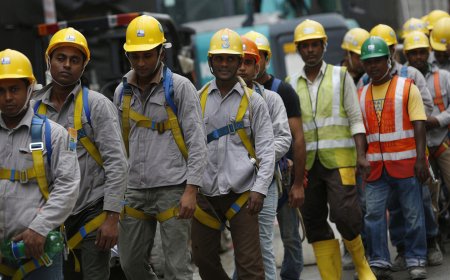
The employment dimension of the stimulus is both its most compelling promise and its greatest uncertainty. The projection of 25 lakh jobs reflects an optimistic multiplier effect across sectors. Agriculture, SMEs, and cottage industries are expected to generate the bulk of employment, leveraging their labor-intensive nature.
If realized, this could significantly alleviate unemployment pressures, particularly among youth. Increased employment would, in turn, boost aggregate demand, creating a virtuous cycle of production and consumption.
Yet, job creation is not an automatic outcome of credit expansion. It depends on whether the financed activities are genuinely productive and whether they operate in an enabling environment. For instance, industrial revival requires not only access to finance but also reliable energy supply, efficient logistics, and stable policy conditions.
As noted by bankers, persistent issues such as gas shortages and high energy costs could undermine the effectiveness of the stimulus. Without addressing these structural bottlenecks, the injected liquidity may fail to translate into sustained economic activity.
Inflationary pressure is another critical concern. A large-scale injection of funds into the economy inevitably raises questions about price stability. In the short term, increased money supply could fuel demand-pull inflation, particularly if supply-side constraints persist. However, the medium-term impact may differ.
If the stimulus successfully boosts production and expands supply, it could help moderate inflationary pressures over time. The balance between these opposing forces will depend on the speed and efficiency of implementation.
The interest rate structure embedded in the package also deserves close scrutiny. Loans priced comparatively between 4% and 7% represent a significant departure from prevailing market rates, particularly for SMEs that often face borrowing costs exceeding 15%.
This reduction could lower the cost of doing business and improve profitability, encouraging investment. However, it also introduces potential distortions in credit markets. Subsidized rates may lead to misallocation of resources, with borrowers prioritizing access to cheap funds over productive efficiency.
Moreover, the absence of a credit guarantee mechanism raises concerns about risk distribution. Banks are expected to bear the credit risk associated with lending under the scheme, even when financing distressed enterprises.
This could lead to cautious lending behavior, limiting the reach of the program. Alternatively, if banks are compelled to lend under pressure, it could exacerbate future asset quality problems. Striking the right balance between risk-sharing and accountability will be essential.
The governance framework of the stimulus will play a decisive role in determining its success. The proposal to use escrow accounts and strict monitoring mechanisms is a step in the right direction. By ensuring that loan proceeds are used for intended purposes and that revenues are channeled through controlled accounts, the central bank aims to minimize fund diversion.
However, effective monitoring requires institutional capacity and transparency. Past experiences with refinance schemes in Bangladesh suggest that weak oversight can lead to misuse of funds and limited impact.
Another notable aspect of the package is its inclusion of emerging sectors such as the creative economy and green products. While the allocated amounts are relatively small, the symbolic importance is significant. By extending financial support to non-traditional sectors, the central bank is signaling a shift toward a more diversified economic model. This could encourage innovation and entrepreneurship, particularly among younger segments of the population.
At a macroeconomic level, the stimulus represents a shift toward a more active role for the central bank in economic management. Traditionally focused on price stability and financial regulation, Bangladesh Bank is now directly influencing resource allocation and sectoral development.
While this can be effective in times of crisis, it also raises questions about institutional boundaries and long-term sustainability. Prolonged reliance on central bank-led interventions may blur the lines between monetary and fiscal policy, potentially undermining policy credibility.
The success of the program will also depend on the broader investment climate. As several bankers have pointed out, liquidity alone cannot drive investment if confidence remains low. Political stability, regulatory clarity, and ease of doing business are critical factors that influence private sector decisions. Without improvements in these areas, the stimulus may face limited uptake or suboptimal utilization.
Furthermore, the program’s reliance on government subsidies introduces fiscal implications. The annual subsidy burden of around Tk3,000 crore, while manageable in the short term, could become significant if extended over multiple years. This underscores the importance of ensuring that the stimulus generates tangible economic returns, thereby justifying the fiscal cost.
In evaluating the overall impact of the Tk60,000 crore package, it is important to recognize that it is not a silver bullet. Rather, it is a strategic intervention designed to address specific bottlenecks within the financial system. Its success will depend on complementary reforms in banking governance, energy supply, and industrial policy. It also requires a disciplined approach to implementation, with clear criteria for beneficiary selection and robust mechanisms for monitoring and evaluation.
If executed effectively, the stimulus could serve as a catalyst for economic recovery, restoring confidence in the financial system and reviving productive activity. It could transform idle liquidity into a driver of growth, creating jobs and expanding output. However, if mismanaged, it risks reinforcing existing vulnerabilities, including rising non-performing loans, inflationary pressures, and inefficient resource allocation.
In the final analysis, the Tk 60,000 crore stimulus is both an opportunity and a test. It offers a chance to reset the dynamics of Bangladesh’s economy, but it also challenges policymakers to navigate complex trade-offs. The difference between success and failure will lie not in the scale of the intervention, but in the precision with which it is implemented and the broader reforms that accompany it.
Nasrin Sheely is an analyst and commetator based in Dhaka, Bangladesh, specializing in banking, economic policy, and international trade.