





















![A Ledger of the Soul: Navigating the Allah-Bhagavant Nexus in a 19th-Century Puruṣākāra Jñāna Caupara [Gyan Chauper]](https://counterpointbd.com/uploads/images/202608/image_430x256_6a93baa3b09a7.jpg)



















Women, Life, Freedom, Bangladesh
We should treat the promise of this election with the respect it deserves. The students who gave their lives, the activists who risked everything, the ordinary citizens who stood up against tyranny, did not do so for narrow partisan advantage. They did so for Bangladesh.
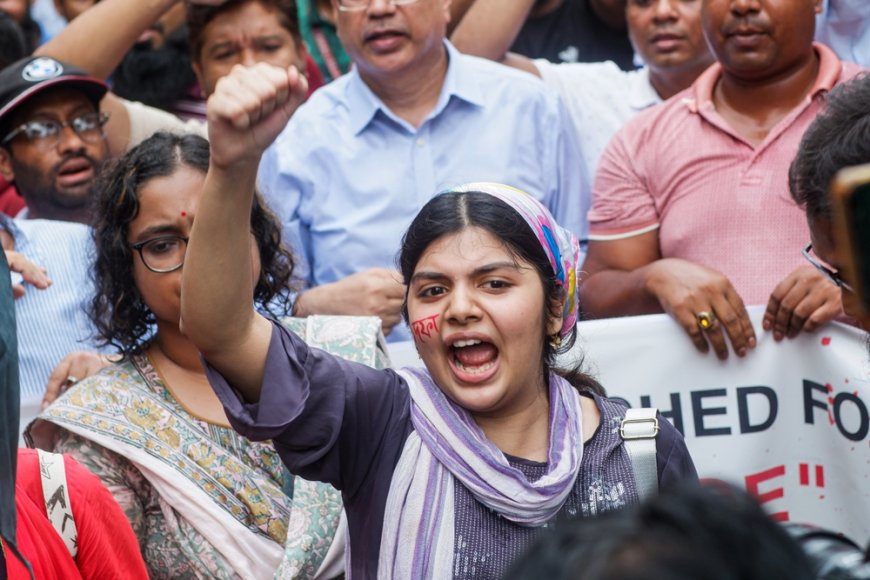
"Woman, Life, Freedom" was the rallying cry of the 2022 Iranian uprising that erupted after Mahsa Amini's death in morality police custody.
As I write this, Iran is going through yet another wave of unrest. I send my good wishes to the people of Iran, who deserve a government that does not brutalize its young and its women to stay in power. A new Iran, like the new Syria next door, could be a transformative step towards lasting peace in the Middle East.
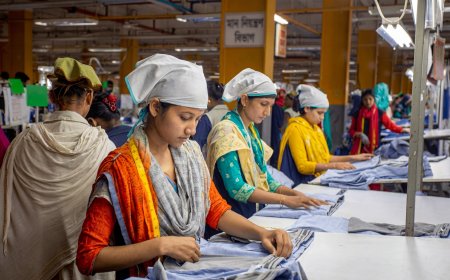
In Bangladesh, the issue of women is currently at the forefront. Women work grueling hours and drive the ready-made garment sector, the main engine of the Bangladeshi domestic economy. They staff hospitals, teach in schools, and increasingly occupy positions in government, the armed forces, and the professions. Their contributions cannot simply be ignored or dismissed.
Sidelining women is a gateway drug to a retrograde society that privileges men over women and promises even the most ineffectual and unworthy man that he will be superior to all women around him. It is a deeply backward view of society. The desire to erase women from the public sphere can then open the door to many other types of bigoted state policy. A society that tells half its population to stay home and remain silent will not stop there; it will have to try harder and harder to keep feeding this same unearned sense of superiority amongst other segments of the population.
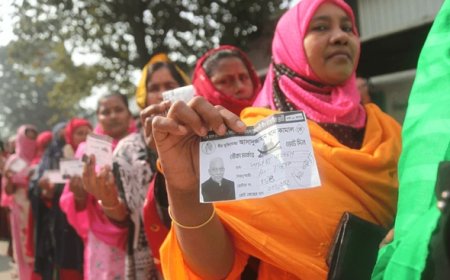
Elections are coming up in Bangladesh on February 12. I want to be transparent: Due to BNP's long championing of democracy during the 15 years of Hasina's dictatorship, and its leadership in ousting Hasina and bringing back democracy, I would prefer to see BNP win this election. However, regardless of the result of this election, there is much work ahead for both BNP and Jamaat.
BNP should remember that it is currently the putative front-runner. But that anticipated victory, if it materializes, will be built on the sacrifice of countless BNP activists who were killed, tortured, suffered enforced disappearance, and endured various other forms of violence under the 1/11 government and the Hasina regime.
If BNP wins, in addition to BNP’s policy positions and the development schemes proposed by the party, as ably articulated by BNP Chairman Tarique Rahman, the people of Bangladesh will be remembering the BNP personnel who sacrificed so much during the last 17 years.
Furthermore, they will be honoring the memory of Khaleda Zia, whose death just a month and a half before the elections was a reminder of what true leadership looks like, and the toll such leadership takes on leaders as well as those around them. Assuming BNP forms the next government, it is the current leadership that going forward must earn the mandate when BNP again faces the people in 2031.
The goodwill of past sacrifices will not last forever. BNP must govern in a way that it can leave the halls of power with its head held high and look the people of Bangladesh in the eye, once the five-year term is done.
For its part, Jamaat has vaulted from the fourth-largest party to the second-largest in Bangladesh. It has brought the National Citizens Party into its coalition and appears set to emerge as a strong opposition, and if historical trends regarding anti-incumbency hold, potentially the main contender for state power in 2031. But Jamaat must decide what it truly stands for.
How can a party that does not allow women or religious minorities to take the top leadership positions credibly represent a nation where women constitute half the population and minorities have been integral to the country's history and identity? The people of Bangladesh, and many across the world, will be watching closely as Jamaat grapples with these issues.
In a parliamentary democracy, the opposition is as much a part of the state as the ruling party. I would love to see the leader of the winning party visit the leader of the opposition the day after the election, sit together, and pledge to work collaboratively on matters of national importance.
While the various parties can and should politically attack each other over their policy differences, they should also try to forge common areas of agreement. This is the only way for a parliamentary democracy to function effectively.
Consider the United States. Despite all the partisan rancor Americans witness in their politics, the structure of the US Senate requires 60 votes to overcome a filibuster and advance most legislation. In a 100-member chamber, this means that in practice, major bills need support from both the majority and the minority.
This structural requirement has forced bipartisan cooperation on infrastructure, defense spending, and numerous other priorities, even in an era of intense polarization. The system compels negotiation.
Or our neighbor, the world’s largest democracy. Even in the era of heightened partisanship under Prime Minister Modi, political parties have found ways to present a united front on matters of national importance.
Following the recent terrorist attack in Pahalgam, the Modi government organized bipartisan parliamentary delegations to travel abroad and present India's unified stance against terrorism. Opposition members who vehemently disagree with the government on domestic policy participated nonetheless.
Bangladesh must aspire to similar practices. The ruling party and the opposition should identify areas where they can speak with one voice, whether on counterterrorism, anti-corruption, or protecting the nation's economic interests. Partisan competition is healthy, but it should not consume every aspect of governance.
Finally, let us remember how lucky we are to be at this moment. If we think back to January 2024, just after Hasina had orchestrated her “dummy” election with no genuine opposition participation. Bangladesh's democratic future seemed impossibly distant.
The international community appeared resigned to Hasina's continued authoritarian rule. In that moment, few could have predicted the July uprising that would sweep her from power and open the door to the democratic moment Bangladesh now enjoys.
We should treat the promise of this election with the respect it deserves. The students who gave their lives, the activists who risked everything, the ordinary citizens who stood up against tyranny, did not do so for narrow partisan advantage. They did so for Bangladesh.
As the country prepares to vote, all parties and all citizens would do well to remember that there are more important things than day-to-day partisan politics. The future of Bangladesh's democracy is one of them.
Ehteshamul Haque is a lawyer who focuses on technology transactions. He teaches corporate law at American University.