



















































What the IRI Poll Really Tells Us
The Charter belongs to no party. Whoever channels public impatience into pressure for its implementation will own ground nobody else is contesting.
IRI's latest survey shows no verdict on the government, no verdict on the opposition -- and one unclaimed opportunity sitting in plain sight.
Bangladesh's newest national poll will disappoint anyone hunting for a verdict.
IRI's Center for Insights in Survey Research ran 5,000 interviews across all 64 districts between May 16 and June 24.
The headline: The government hasn't lost the public, the opposition hasn't won it, and something more interesting than either is happening instead.
First, the poll itself. This is the most rigorous wave IRI has run. For the first time, the sample is weighted for education alongside age, gender, and division, anchored to the full 2022 census -- a correction that makes these numbers more representative than any prior wave, though it also means some of the movement since October 2024 may be statistical correction rather than genuine opinion shift.
On government job approval, respondents answered on a tablet the interviewer couldn't see -- a secret ballot inside a survey, sensible in a country where more than a third of respondents admit they're afraid to speak their political mind openly.
Whatever you make of IRI's institutional history in Bangladesh -- and it has not been controversy-free -- it deserves credit for fielding work this rigorous at a moment when Washington's appetite for funding has contracted sharply.
Whether this poll signals renewed commitment or merely spends down pre-appropriated funds isn't knowable from outside. Either way, Bangladesh is better for having the data.
Start with the number everyone reaches for first: Direction of country. 46% say right track, 44% wrong track -- a two-point net, down hard from an 11-point net in October. The decline is real. What it produced is not what you'd expect.
Jamaat-e-Islami, now the constitutional opposition, has not benefited from the souring mood. Its favorability slipped from 53 to 48% -- still net positive at +3, but down from +13 in October.
The BNP-led government, meanwhile, has not been punished. Its favorability rose from 51 to 57%, net +19, nearly matching its post-election high.
Corruption leads cited national problems at 22%, and price hikes drive wrong-track sentiment more than any other measured factor. Neither has translated into opposition gains, and neither has cost the government its base.
This is not evidence that Jamaat is failing as an opposition. One wave, four to five months into the role, is far too early to grade anyone's performance -- and a coalition anchored by religious parties was never going to convert public discontent into support overnight. That was predictable from the start.
The relevant finding is the negative one: No serious decline either. No buyer's remorse. The public is still getting used to the idea of a Jamaat opposition, not turning against it. The BNP's honeymoon isn't over; it has just settled into something more grounded, more about prices and corruption than February's afterglow.
If there's a real surprise in the poll, it isn't about any party. It's the July National Charter. Only 31% of the public knows anything about its contents -- most Bangladeshis have no view at all. But among the engaged minority, 59% say implementation is moving too slowly, and a solid majority remain optimistic it will succeed regardless. Frustrated with the pace, not the destination.
That is a durable, cross-partisan asset sitting almost entirely unclaimed: "elections and electoral reform" registers as the single most important national problem for just 4% of the public, against 22% for corruption.
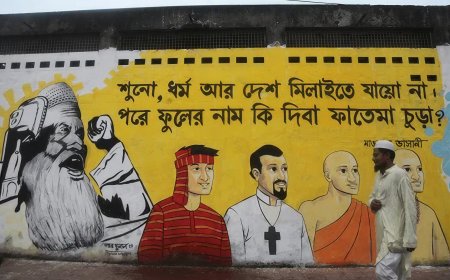
That is the opposition's opening, and it isn't a religious one. Jamaat doesn't need to win an argument about faith in politics to gain ground -- 74% of the public already believes elected office should be open to all religions, including 73% of Muslims. That argument is already settled in Jamaat's favor; spending scarce credibility relitigating it is wasted effort.
The sharper move is to become the loudest voice for finishing what the Charter started, rather than competing with NCP's generational appeal or leaning on religious identity. The Charter belongs to no party. Whoever channels public impatience into pressure for its implementation will own ground nobody else is contesting.
The government has the same move available from the other side. Redirecting public focus toward Charter milestones is easier terrain than jobs and prices -- precisely where the government's numbers are softest. Expect both sides to reach for it before the year is out.
None of this is a dramatic poll.
That should reassure a government that rightly feared runaway expectations, and reassure an opposition still finding its footing in a role Bangladesh has never tested before. Minor surprises are, in their own way, the best outcome anyone could have asked for this early.
Owen Paul Lippert is Executive Director of Opposition International, a non-partisan organization strengthening opposition parties as democratic infrastructure.