



















































![A Ledger of the Soul: Navigating the Allah-Bhagavant Nexus in a 19th-Century Puruṣākāra Jñāna Caupara [Gyan Chauper]](https://counterpointbd.com/uploads/images/202608/image_430x256_6a93baa3b09a7.jpg)





















A Rate Cut Solves the Wrong Problem
Lower interest rates can reduce the cost of borrowing. They cannot repair broken credit discipline, restore depleted capital, or rebuild confidence. Monetary policy can support economic recovery only when the banking system is capable of allocating capital on commercial rather than political grounds.


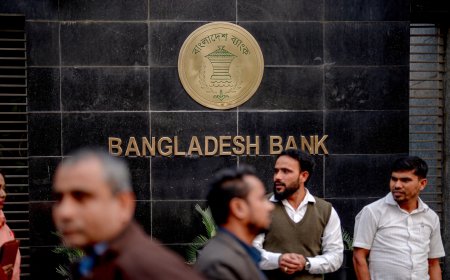
On July 30, Bangladesh Bank reduced its policy rate by 50 basis points, from 10% to 9.5%. It was the central bank's first rate cut in six years.
The Monetary Policy Committee justified the decision in familiar macroeconomic terms: Lower borrowing costs should encourage investment, revive private sector credit, and support employment.
Under normal circumstances, such a decision would be widely welcomed. Bangladesh, however, is not operating under normal circumstances.
In the same season, Bangladesh Bank reported that the banking system's aggregate capital adequacy ratio had fallen to minus 2.64%, while non-performing loans (NPLs) had reached 32.26% of total outstanding credit, the second highest ratio in the world after war-torn Ukraine.
A banking system with a negative aggregate capital position does not primarily suffer from an interest-rate problem. It suffers from a failure of capital allocation and risk pricing. Lower policy rates cannot repair that structural weakness.
The case for reducing the policy rate is nevertheless understandable and deserves to be acknowledged before it is challenged.
Private sector credit growth slowed to 4.72% in March 2026, the weakest performance since Bangladesh Bank began maintaining comparable records in 2003, before recovering only marginally to 4.98% in May.
Both figures remained well below the central bank's revised target of 6.8%. Businesses genuinely need more affordable financing. Years of elevated interest rates, maintained to contain persistent inflation, have increased borrowing costs for precisely the productive firms Bangladesh needs to generate employment for roughly two million young people entering the labour market each year.
If lower policy rates reached these firms, they could stimulate investment and production. The problem is that cheaper money is unlikely to reach them.
Liquidity is not scarce in Bangladesh's banking system; it is misallocated. Government borrowing from domestic banks has expanded to the point where many banks increasingly prefer financing the state rather than lending to private businesses.
Government securities carry virtually no default risk, require minimal monitoring, and consume far less regulatory capital than commercial loans. Economists describe this phenomenon as crowding out.
While hardly unique to Bangladesh, it has become unusually pronounced in recent years. As banks devote a growing share of their balance sheets to financing fiscal deficits, the transmission of monetary policy to the productive private sector inevitably weakens.
Under such conditions, a 50-basis-point reduction in the policy rate changes very little. Banks continue to face the same incentives, and government securities remain the safer and more predictable investment.
Even stronger private banks illustrate this reality. Several well-capitalized institutions have reported healthy profits during the past year, largely through earnings on government securities rather than through significant expansion of private lending.
Their behavior is economically rational given the incentives they face. Capital is not remaining idle because borrowing costs are too high. Rather, it is flowing toward the lowest-risk assets available instead of financing productive investment.
There is an even deeper structural problem that monetary policy cannot address. A well-functioning banking system relies on interest rates to distinguish good borrowers from risky ones.
Interest rates are not simply the price of money; they are the market's primary mechanism for pricing credit risk. Borrowers with stronger financial positions should receive credit on better terms than those presenting greater risk. This process allows scarce capital to flow toward its most productive uses.
Across much of Bangladesh's banking sector, that mechanism has broken down. According to Bangladesh Bank, fifteen of the country's sixty-one banks now account for more than 85% of all non-performing loans.
Among state-owned commercial banks, Janata Bank's NPL ratio approaches 70%, while Agrani Bank, Rupali Bank, BASIC Bank, and Bangladesh Development Bank continue to carry severely impaired loan portfolios.
By contrast, foreign commercial banks operating under the same monetary policy, the same inflation environment, and the same macroeconomic conditions maintain NPL ratios below 6%.
The difference is not the cost of funds. It is governance. Who receives credit, under what conditions, and based on which criteria remains the defining distinction.
Where lending decisions are driven by political influence, institutional weakness, or inadequate risk assessment rather than commercial fundamentals, monetary policy cannot restore sound banking behavior.
Weak legal enforcement further compounds the problem. Lengthy recovery procedures, uncertain collateral enforcement, and repeated opportunities for restructuring distressed loans reduce repayment discipline and weaken incentives for prudent lending.
Faced with these conditions, banks naturally become more cautious toward new private borrowers while increasing their preference for sovereign assets.
None of this suggests that Bangladesh Bank should never reduce interest rates. Monetary policy remains an essential instrument for maintaining macroeconomic stability.
Syed Mahbubur Rahman, Chief Executive Officer of Mutual Trust Bank, welcomed the decision while cautioning that structural constraints, particularly persistent weaknesses in the energy sector, would continue to limit meaningful credit expansion. His observation reflects an important reality.
Lower policy rates can reduce financing costs for fundamentally healthy borrowers, but they cannot resolve structural weaknesses within the banking system itself.
The beneficiaries of this rate cut are therefore likely to be firms and financial institutions that were already creditworthy. The measure offers little assistance to banks whose fundamental problems lie in weak governance, inadequate capital, and poor asset quality.
Nor does it address the government's growing reliance on domestic bank financing, which continues to divert financial resources away from private investment. What would make a meaningful difference?
The weakest institutions require comprehensive resolution rather than monetary relief. Recapitalization should be tied to governance reform, management accountability, stronger underwriting standards, and measurable improvements in risk management rather than simply injecting additional capital into existing structures.
Government borrowing from the domestic banking system must gradually return to sustainable levels so that banks once again have stronger incentives to finance productive private investment. Bank supervision must also operate with sufficient institutional independence to enforce prudent lending standards and ensure that credit decisions are based on commercial merit rather than political influence.
Encouragingly, many of these principles already appear within the recently enacted Bank Resolution Act. Whether the legislation succeeds will depend not only on its legal provisions but also on its implementation.
Critics have expressed concern that the law could permit some former owners and managers responsible for past governance failures to regain influence over troubled institutions. If those concerns prove justified, the opportunity for meaningful reform may once again be lost.
International experience consistently shows that monetary easing is most effective when supported by a healthy banking system capable of transmitting lower funding costs into productive lending.
Countries that have successfully emerged from banking crises typically combined accommodative monetary policy with decisive bank recapitalization, asset quality reviews, governance reforms, and stronger supervision. Interest-rate reductions alone rarely restore financial intermediation when confidence in the banking system has already deteriorated.
Lower interest rates can reduce the cost of borrowing. They cannot repair broken credit discipline, restore depleted capital, or rebuild confidence in lending decisions. Monetary policy can support economic recovery only when the banking system is capable of allocating capital on commercial rather than political grounds.
Until that happens, each policy rate adjustment in Bangladesh will continue treating the symptoms while leaving the underlying disease largely untouched.
Dr. Mohammed A Rab is currently a freelance consultant on Financial Risk Management, Quantitative Risk Modeling and Enterprise Risk Management.