










































![A Ledger of the Soul: Navigating the Allah-Bhagavant Nexus in a 19th-Century Puruṣākāra Jñāna Caupara [Gyan Chauper]](https://counterpointbd.com/uploads/images/202608/image_430x256_6a93baa3b09a7.jpg)





















The Strategic Risks of the Iran Conflict
For the first time in decades, the United States risks strategic isolation within its own alliance network. If the United States is perceived as an unreliable negotiating partner, future mediation efforts -- both in the Middle East and beyond -- may suffer.
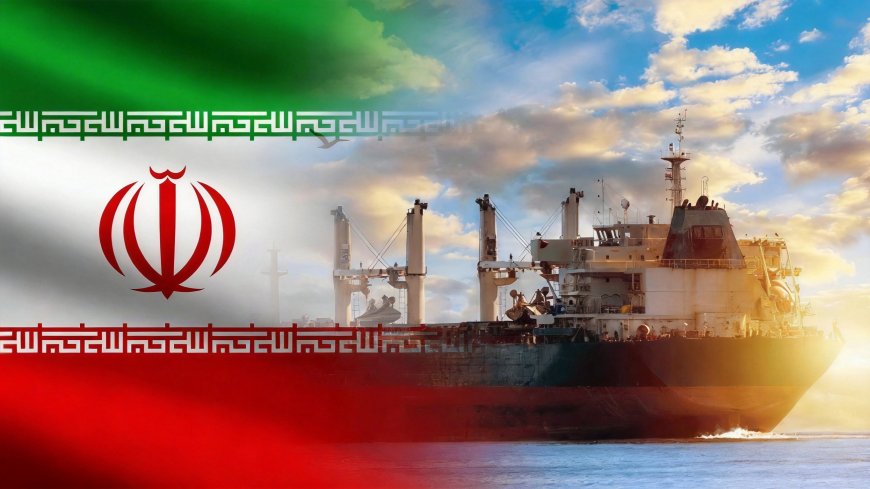
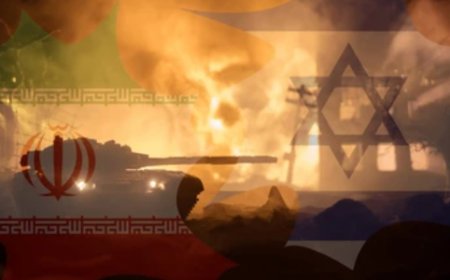
The renewed US-Israel military strikes on Iran, launched even as negotiations were reportedly underway to limit Tehran’s weapons program, have pushed the Middle East into a precarious and unpredictable phase.
What makes this conflict particularly significant is the scale of regional involvement and its global implications -- ranging from oil production, supply chains, and trade to the broader stability of the international economic order.
President Donald Trump, who campaigned on avoiding new foreign wars, now faces the paradox of justifying escalation as essential for American security. Reports suggest that only about 20% of US citizens support a large-scale war with Iran.
Opposition from senators, coupled with criticism in the media and civil society, reflects a growing perception that the United States has been drawn into another costly conflict, one not universally seen as aligned with its core national interests.
Within the United States, a critical question is emerging: are taxpayers prepared to bear the financial burden and human cost of another prolonged Middle Eastern war? Casualties are beginning to mount, and rising oil prices are already affecting consumers.
Domestic priorities risk being overshadowed by the demands of a war effort that lacks broad public support. Politically, the repercussions may also weigh heavily on the Republicans in the upcoming midterm elections.
For Tehran, however, the conflict is framed as existential. Iranian leadership has prepared for such a confrontation for over two decades. The strikes are portrayed as part of a broader attempt at regime destabilization.
Even the assassination of the Supreme Leader Ayatollah Ali Khamenei would be unlikely to fracture Iran’s political continuity. The country has a defined constitutional process for succession, and history suggests that external pressure often consolidates internal unity rather than weakening it.
Iran’s resilience under sustained US-Israel attacks has reinforced national resolve. The population appears determined to resist, driven by the belief that failure to do so would invite repeated conflicts in the future. This dynamic complicates any expectation of rapid political collapse.
The Trump administration’s apparent strategy -- decapitate leadership, dismantle command structures, and trigger internal regime collapse -- has precedent in Iraq and Libya.
However, Iran’s state structure differs fundamentally from these cases. As Iranian Foreign Minister Abbas Araghchi noted on 1 March 2026, Iran has spent decades studying US military campaigns in Iraq, Syria, Afghanistan, and the Balkans, adapting its strategy accordingly.
Central to this adaptation is Iran’s decentralized “Mosaic Defence” doctrine, designed to ensure operational continuity even if senior leadership is eliminated. Decapitation strikes against centralized regimes have historically produced rapid collapse; Iran’s model seeks to prevent precisely that outcome. Instead of weakening resolve, such attacks may strengthen national cohesion and intensify resistance.
Importantly, this doctrine is not designed for outright victory in conventional terms. Rather, it aims to make victory prohibitively costly for the adversary. By stretching resources, inflicting economic strain, and prolonging the conflict, Iran seeks to erode political will in Washington and Tel Aviv. This raises the spectre of a Pyrrhic victory -- where the cost of success outweighs its benefits.
Iran’s retaliatory strikes have reportedly targeted US-linked military facilities across several Gulf Cooperation Council (GCC) states, including Saudi Arabia, the United Arab Emirates, Qatar, Iraq, and Kuwait.
These actions risk drawing host nations into a conflict not of their choosing. While these states host US military assets, their sovereignty and domestic stability are directly threatened if their territories are used as operational platforms.
The strategic logic behind the US-Israel operation appears twofold: To degrade Iran’s military capabilities and to force Tehran back to the negotiating table under pressure. Yet coercive diplomacy carries inherent risks.
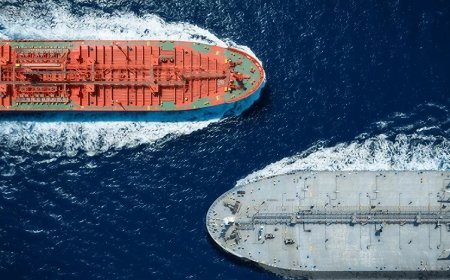
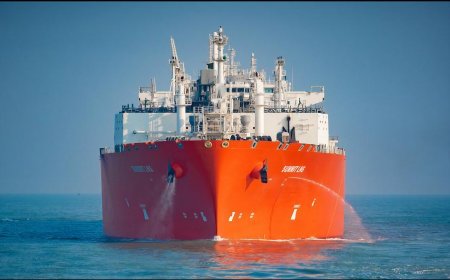
Iran’s expanding retaliatory actions have already transformed the conflict into a broader regional theatre. Attacks on oil tankers and commercial vessels in the Strait of Hormuz, along with strikes on US personnel, have made escalation more difficult to control.
Efforts by Washington to draw European powers into the conflict have met with caution. Many European states appear reluctant to engage in a war they did not initiate. For the first time in decades, the United States risks strategic isolation within its own alliance network. If the United States is perceived as an unreliable negotiating partner, future mediation efforts -- both in the Middle East and beyond -- may suffer.
The economic consequences are immediate and global. Nearly 20% of the world’s oil supply transits through the Strait of Hormuz. Disruptions have already pushed prices from around USD 70 to over USD 100 per barrel, with fears of further escalation toward USD 200.
Strategic reserves are being tapped to stabilize markets, but such measures offer only temporary relief.
There are also emerging indications that Iran may consider allowing limited tanker passage through the Strait of Hormuz on the condition that oil transactions are conducted in non-dollar currency. If implemented, such a move would challenge the dominance of the petrodollar system and signal a significant shift in global energy trade dynamics.
The ripple effects extend far beyond energy markets. Airspace closures and security concerns have disrupted aviation across the region. Major hubs such as Dubai International Airport and Hamad International Airport have faced widespread cancellations and rerouting. Insurance premiums are rising, passengers are stranded, and supply chains are under strain.
Will the war be prolonged? Iran has signaled its intent to sustain resistance irrespective of leadership changes. Its strategy appears to involve expanding the conflict’s geographical scope, raising the economic costs, and influencing regional public opinion against the presence of foreign military bases.
By increasing oil prices and threatening key maritime routes, Tehran is leveraging economic pressure as a strategic tool.
Meanwhile, the deployment of the USS Tripoli, carrying approximately 3,000 US Marines, signals the potential for further escalation, including the possibility of ground operations. For the Middle East -- and indeed the global economy -- the imperative must now be de-escalation.
No actor stands to gain from a prolonged conflict that threatens critical energy routes, aviation networks, regional sovereignty, and already fragile domestic political balances.
In conflicts of this nature, victory is rarely decisive. The real measure of success lies in preventing escalation from becoming irreversible.
Brigadier General Mustafa Kamal Rusho (Retired), works as a Research Director with Osmani Centre for Peace and Security Studies.