
























































The Man who Transformed Higher Education in Bangladesh
He understood that the success of North South University would serve as a practical demonstration that the newly enacted legislation would help develop Bangladesh. After all, he had been instrumental in helping create the legal framework that made the institution possible.

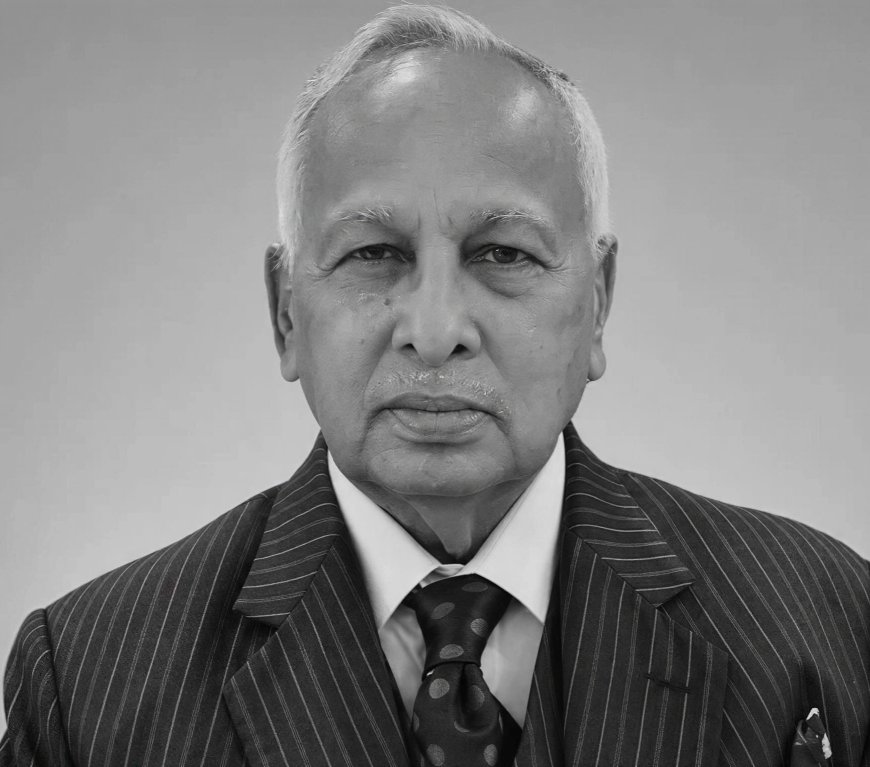
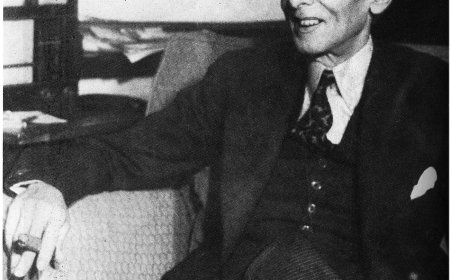
When Barrister Muhammad Jamiruddin Sircar passed away on July 12, at the age of 94, most tributes focused on his long political career. He was a founding member of the BNP, Speaker of Parliament, Acting President of Bangladesh, cabinet minister, and one of the most respected parliamentarians of his generation.
Few public figures have occupied so many positions of national importance with such dignity and restraint.
Yet one of his most consequential contributions to Bangladesh received surprisingly little attention. It was a contribution whose effects are visible every day in the lives of hundreds of thousands of students pursuing higher education across the country.
As Minister of Education during the early 1990s, Barrister Jamiruddin Sircar played a pivotal role in creating the legal framework which opened the door to private universities in Bangladesh. This law has changed the face of higher education in Bangladesh over the past 40 years.
Today, with more than one hundred private universities operating across the country, and nearly as many students enrolled in private institutions as in public universities, it is difficult to imagine a Bangladesh without private universities. But in 1991, the idea was both novel and controversial.
Today, as we mourn his passing, we must also celebrate his legacy as an important founder of the private university movement in Bangladesh.
A Different Bangladesh
To appreciate the significance of the Private University Act, 1992, one must return to the Bangladesh of the early 1990s.
The country had only a handful of major public universities. Demand for higher education was growing rapidly as economic development, urbanization, and rising aspirations created a generation eager to gain higher education in a university setting. Public institutions simply could not accommodate the growing number of qualified students.
Constant and often violent political agitation on university campuses presented an additional challenge. Academic calendars were frequently disrupted, with sessions sometimes extending far beyond their scheduled duration. At the same time, large numbers of Bangladeshi students were seeking higher education abroad, particularly in neighboring India.
This was on particular concern to the BNP government as the negative impact was both financial (loss of foreign exchange) and posed a cultural risk, as students studying abroad would pick up ideas from abroad and rick losing contact with national norms and values.
The newly elected BNP government under Prime Minister Begum Khaleda Zia recognized that the state alone could not satisfy the nation's expanding demand for university education. A new approach was needed.
The answer emerged in the form of the Private University Act, 1992, enacted on August 9, 1992. Although often referred to informally as a 1991 initiative, that description reflects the fact that the policy discussions, consultations, and drafting work began soon after the BNP government assumed office following the 1991 parliamentary elections.
As Education Minister from September 1991 to March 1996, Jamiruddin Sircar was the cabinet member responsible for shepherding this landmark legislation through the parliament. In many ways, he became the political architect of one of the most important reforms in Bangladesh's higher education sector in the past four decades.
Opening the Door
The objectives of the legislation were straightforward but ambitious.
The Act sought to expand access to higher education, accommodate increasing student demand, encourage private and philanthropic investment in education, and permit charitable trusts, foundations, and private groups to establish universities under government supervision.
What appears obvious today was anything but obvious in 1991-92.
For decades, university education in Bangladesh had effectively remained a state monopoly. Many questioned whether private institutions could maintain academic standards, attract qualified faculty, or earn public trust. Critics feared that higher education would become commercialized. Supporters, however, argued that the country simply could not meet future educational needs without private participation.
Another perceived criticism was that private universities would worsen the income and wealth distribution, as it would cater only to the students from well-to-do families.
History over the next thirty years would ultimately vindicate the reformers, and political leaders like Mr. Jamiruddin Sircar and his colleagues.
Beginning with North South University in 1992, the private university sector expanded steadily. Today private universities educate hundreds of thousands of students in business, engineering, medicine, computer science, social sciences, and the humanities. Several institutions have earned international accreditation and recognition. An initiative that once appeared experimental has become an indispensable pillar of the nation's higher education system.
My Brief Encounter with History
My own appreciation of Jamiruddin Sircar's role emerged through a personal experience which took place shortly after the passage of the Act.
I first became aware of him through family connections. He was a longtime friend of my late father-in-law, Dr. Khorshed Ali, who, like Mr. Sircar, had left home (Dinajpur) as a young man to pursue higher education in Dhaka. Their careers took different paths -- one becoming a distinguished physician and scholar, the other a renowned barrister and politician -- but the friendship endured throughout their lives.
In 1992, I returned to Bangladesh from the United States for a year-long sabbatical. My principal research project, funded by the American Institute for Bangladesh Studies (AIBS), focused on the emerging ready-made garments industry. While conducting this research, my friend and mentor, Professor Salim Rashid, introduced me to a retired civil servant and former ambassador named Muslehuddin Ahmed, who was looking for an academic to support his ambitious work in higher education.
Mr. Ahmed had an ambitious dream: To establish Bangladesh's first private university. The institution would become the North South University (NSU), perhaps the best known and largest private university in Bangladesh today.
At the time, the concept of a new private university existed largely as an idea, a small office in Gulshan, and the determination of a handful of individuals, including a few prominent business leaders, who believed that Bangladesh urgently needed new institutions for higher education.
Despite my own commitments and limited time, I was intrigued by the vision and soon became involved in helping develop the ambitious project.
A Chance Encounter
The application for NSU received due approval from Mr. Sircar’s ministry. I accompanied Mr. Ahmed to his office in the secretariat to make the case and receive the minister’s approval.
Once the approval was attained, preparations for launching the university advanced briskly. However, one challenge remained unresolved.
We desperately wanted Prime Minister Khaleda Zia to attend the inauguration ceremony. Her presence would confer legitimacy on an entirely new concept whose future remained uncertain. Weeks passed without a response from the Prime Minister's Office. Unfortunately, we faced a dead-end in our efforts to open Bangladesh’s first private university with a splash in the news media.
At that time, I suggested Mr. Ahmed that for assistance we approach the Education Minister himself, Mr. Jamiruddin Sircar.
Through some inquiries, we learned that he would be attending a program at a hotel in Mahakhali, not far from Kemal Ataturk Road, where we wanted the opening ceremony for NSU on a temporary campus. Mr. Ahmed and I drove to the hotel, and waited outside, for the minister to emerge from his program.
When Mr. Sircar emerged from the building, I quickly walked over and presented myself to the minister as the son-in-law of his old friend from Dinajpur. The connection instantly opened the conversation.
Mr. Sircar warmly invited me into his car as he traveled toward Parliament. During the drive, I explained our efforts to establish North South University (NSU) and our fervent hope that the Prime Minister Khaleda Zia would attend the opening ceremony as chief guest to cut the ribbon. I added that this would provide the necessary publicity the new private university movement desperately needed. He seemed convinced. What struck me immediately was his genuine enthusiasm for the idea that the PM should be present on this historic occasion.
This was not merely another administrative matter crossing a minister's desk. He understood that the success of North South University would serve as a practical demonstration that the newly enacted legislation would help develop Bangladesh. After all, he had been instrumental in helping create the legal framework that made the institution possible.
He listened carefully and then asked whether I had a blank sheet of paper.
Using the paper I produced from my bag, he gave me a handwritten note addressed to officials in the Prime Minister's Office, recommending that the PM attend the program. Reaching the Prime Minister's office on his way to the parliament, he instructed the driver to stop the vehicle by the side of the road, and instructed me exactly whom I should meet with his written message.
The result was remarkable. By the time I returned to my office, confirmation had arrived by email that Prime Minister Khaleda Zia would indeed attend the inauguration program of NSU, Bangladesh’s first private university under the new act passed in the parliament.
A Historic Opening
Over the ensuing days, we worked closely with her office on the details of the ceremony, including drafts of the speech she would deliver. I was requested to write the initial draft. Multiple revisions followed before the final version was approved.
On February 10, 1993, Prime Minister Begum Khaleda Zia formally inaugurated North South University, the first private university established under the new legal framework. I still have an enlarged picture on the wall of my office, in which I am standing in with faculty and administrators waiting to greet PM Khaleda Zia, who is shaking hands as she is introduced to each person by the university president, Mr. Muslehuddin Ahmed.
The Prime Minister's participation transformed the event.
The symbolism was powerful. The government was publicly endorsing a completely new model of higher education. This is nation building at its best.
Prime Minister Begum Khaleda Zia formally inaugurated North South University on February 10, 1993. Fast forward a few years. The university successfully graduated its first cohort. The first convocation was held in the Army Stadium in 1995, when I accompanied, Dr. Ray Hoops, President of the University of Southern Indiana, who was one of two commencement speakers.
President and Chancellor Justice Shahabuddin Ahmed, was the main speaker in the first convocation ceremony of NSU held on the Army Stadium on December 19, 1996.
He called upon the students to build up their character besides academic achievements. He told them that while education, intelligence and knowledge are valuable, these values cannot replace the nobility of character -- a virtue that remains steadfast even in adverse circumstances and is marked by rigorous honesty in dealings with others. He urged them to strive to become good citizens and seek to contribute to nation-building.
The founding president of North South University, Mr. Musleh Uddin Ahmed, delivered the welcome address. Chairman of Board of Governance MA Awal also spoke.
There is a general consensus that students of private universities, especially BRAC and NSU, played an important role in strengthening the July 2024 student led mass uprising in Bangladesh, which liberated the nation from a brutal, decade-long, autocracy. These private universities, including more specialized ones, are today an integral and dynamic part of the higher education sector in Bangladesh.
Not many citizens, including students of private universities, are aware of this early history of Private University movement in Bangladesh. Indeed, the nation is indebted to Mr. Jamiruddin Sircar for his leadership role in crafting the Private University Act, 1992, which led to a revolution in the higher education sector in Bangladesh.
Dr. Munir Quddus is a former dean of the College of Business at Prairie View A&M University, and presently serves as the Endowed Professor of Economics. He helped found the North South University (NSU), and briefly served as its first Chief Academic Coordinator (Provost). He can be reached at [email protected]