








































![A Ledger of the Soul: Navigating the Allah-Bhagavant Nexus in a 19th-Century Puruṣākāra Jñāna Caupara [Gyan Chauper]](https://counterpointbd.com/uploads/images/202608/image_430x256_6a93baa3b09a7.jpg)




















The Revolution Was the Easy Part
Bangladesh has already demonstrated that revolutions can go viral. The unfinished challenge is ensuring that reform becomes institutional.

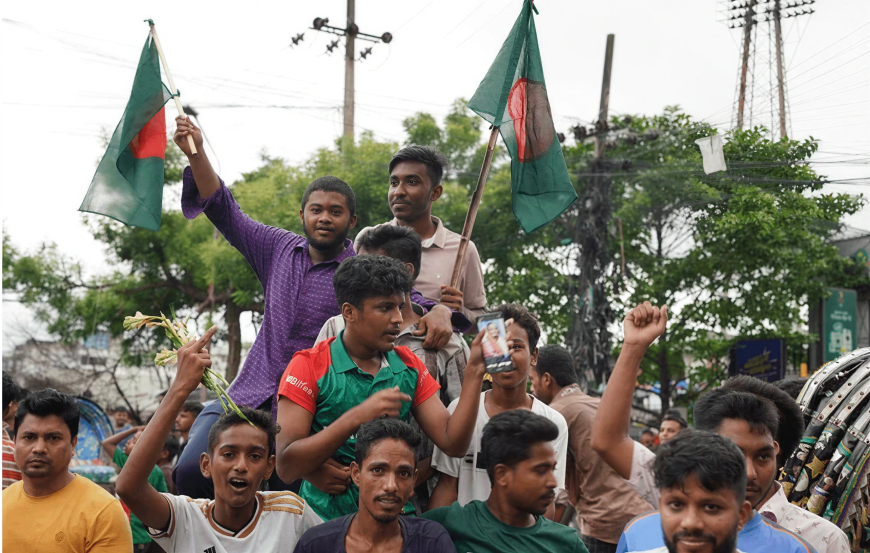
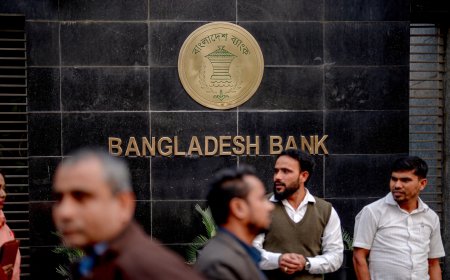
Two years after Bangladesh’s July uprising, the country’s greatest political lesson is no longer about how an authoritarian government fell.
It is about why replacing a government proved far easier than rebuilding a state. This is not simply Bangladesh’s story. It is becoming the defining political paradox of Generation Z across the world.
From Dhaka to Kathmandu, from Tunis to Colombo, young people have demonstrated an extraordinary ability to mobilise millions, but a much more limited ability to translate revolutionary momentum into durable institutional change.
The question is no longer whether young people can bring down governments. They clearly can. The real question is whether they can redesign the machinery of the state after the celebration ends.
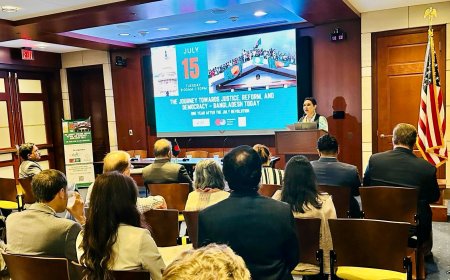
The July uprising will remain one of the most remarkable moments in Bangladesh’s democratic history. Millions of citizens, led largely by students and young activists, united behind a simple objective.
The movement gathered enormous public sympathy after the killing of Abu Sayeed, whose death became a powerful symbol of state violence. Within weeks, a government that had ruled for fifteen years collapsed under unprecedented public pressure.
It was a reminder that no political regime, however powerful, is immune from the collective will of ordinary people. But revolutions have always contained an uncomfortable truth. Removing a ruler is an event.
Reforming a state is a process. One demands courage. The other demands patience, expertise and institutions.
Bangladesh succeeded spectacularly at the first but has struggled with the second. The disappointment many people express today stems from confusing those two entirely different tasks.
During the movement, almost everyone agreed on what had to end. Once the government fell, however, agreement disappeared. Questions emerged over constitutional reform, electoral timing, bureaucratic restructuring, judicial independence, corruption, and economic recovery.
Every political actor possessed a different answer. The unity that had made the uprising successful gradually gave way to competing visions of the future. This is hardly surprising.
Protest movements are designed to build consensus against an existing system, not necessarily around a future one. The slogan that unites millions on the streets rarely becomes a blueprint for governing a country.
That is where Generation Z movements appear to face their greatest structural weakness. They are exceptionally effective at creating political momentum but far less effective at building political organisation.
Social media has transformed mobilisation into something almost instantaneous. A single video can reach millions within hours. Public outrage can spread across the country before governments even understand what is happening.
Yet the same technology that accelerates revolutions often discourages the slow, patient work of institution-building. Digital movements reward visibility, emotion and speed.
States operate through negotiation, compromise and procedure. One speaks the language of urgency; the other speaks the language of continuity. A movement that succeeds on Instagram or Facebook cannot automatically succeed inside ministries, courts, legislatures or public administration.
This explains why many contemporary uprisings generate enormous hope but struggle to produce equally dramatic reforms. Political scientist Erica Chenoweth’s research points to a broader global trend.
Nonviolent movements today are becoming less successful at achieving lasting political transformation than similar movements several decades ago. Ironically, revolutions have become more visible while becoming less transformative.
History offers an interesting comparison. The democratic transitions in countries like Poland and South Korea were not simply products of mass protests. They were the culmination of years of organisational development, grassroots mobilisation, labour unions, civic associations and political negotiation.
Their movements built institutions before assuming power. Many contemporary youth movements, by contrast, reach political power before building institutions capable of governing. Bangladesh’s post-uprising experience reflects precisely this dilemma.
The interim administration inherited an economy under pressure, fragile law and order, weakened institutions and immense public expectations. At the same time, competing political actors disagreed over the sequence and priorities of reform.
Some demanded structural transformation before elections, while others insisted democratic legitimacy should come first through elected representatives. Predictably, consensus became increasingly elusive.
Another challenge emerged from the very nature of youth-led politics. Young leaders brought honesty, courage and extraordinary sacrifice to the movement. Yet governing a state requires skills that no revolution alone can teach.
Administrative experience, constitutional design, economic management and institutional negotiation are acquired over years rather than during months of political mobilisation. This should not be interpreted as a criticism of youth leadership.
Rather, it highlights the unrealistic burden societies often place upon young revolutionaries, expecting them to become experienced statesmen immediately after leading a successful uprising. Equally problematic has been the widespread distrust of established political experience.
Modern anti-establishment movements often assume that experience itself represents complicity with the old order. Certainly, many experienced politicians deserve public scepticism.
Yet successful democratic transitions usually combine youthful energy with institutional knowledge. Rejecting every experienced voice creates a vacuum that is often filled by opportunists rather than reformers.
Bangladesh also illustrates another recurring feature of revolutions. Authoritarian systems often personalise power so completely that citizens begin believing removing one individual will automatically transform the entire system.
Reality proves otherwise. Bureaucracies, patronage networks and institutional habits survive governments remarkably well. Political leaders may change overnight. Administrative cultures rarely do. That is why corruption, centralisation and bureaucratic dominance remain stubborn challenges even after dramatic political transitions.
States possess a remarkable ability to preserve themselves despite changes in political leadership. Revolutions frequently underestimate this resilience.
Bangladesh is not alone in confronting these realities. Nepal recently witnessed a youth-driven political wave that quickly encountered similar frustrations once governing responsibilities replaced revolutionary slogans.
The Arab Spring followed an even more dramatic trajectory. Massive youth-led movements inspired global optimism, yet most failed to establish stable democratic institutions. Tunisia, once celebrated as the Arab Spring’s greatest achievement, eventually experienced significant democratic regression.
At the same time, examples like Thailand and Sri Lanka demonstrate that youth-led political transformation is not impossible. What distinguishes relatively successful cases is not merely public enthusiasm but organisational continuity.
Political movements gradually evolved into structured parties, built alliances with civil society and engaged existing institutions rather than relying exclusively on street mobilisation. Sustainable reform required more than revolutionary legitimacy.
It required organisational maturity. Perhaps the greatest misconception surrounding modern revolutions is the belief that history changes on the day governments fall. In reality, that day merely opens the first chapter.
Everything that follows determines whether history ultimately remembers the uprising as a democratic breakthrough or as a missed opportunity. The July uprising undoubtedly transformed Bangladesh’s political consciousness.
Citizens rediscovered their collective power. Young people proved they could influence the country’s political future. Democratic participation regained meaning after years of public frustration.
These achievements should never be underestimated. Yet history will judge the July generation by a more demanding standard than its ability to overthrow a government.
It will judge whether that generation succeeds in building institutions stronger than the personalities who occupy them. Governments can be replaced through extraordinary courage.
States are transformed through extraordinary patience. Bangladesh has already demonstrated that revolutions can go viral. The unfinished challenge is ensuring that reform becomes institutional.
Only then will the aspirations of July become something greater than a remarkable memory. They will become the foundation of a genuinely different republic.
H. M. Nazmul Alam is an academic, journalist, and political analyst based in Dhaka, Bangladesh. Currently he teaches at IUBAT. He can be reached at [email protected].