













































![A Ledger of the Soul: Navigating the Allah-Bhagavant Nexus in a 19th-Century Puruṣākāra Jñāna Caupara [Gyan Chauper]](https://counterpointbd.com/uploads/images/202608/image_430x256_6a93baa3b09a7.jpg)





















Islamic NATO or Anti-Iran Pact?
The military pact should not be viewed as an Islamic NATO. There are several reasons for this perspective. For one, there is no indication that a potential Indian attack on Pakistan would trigger a joint retaliation against India from all the signatories of the pact, the signature feature of NATO’s Article 5.

Even highly qualified analysts and experts in international relations sometimes struggle to understand the fine details of agreements, treaties, and pacts between countries -- whether they are adversaries or allies.
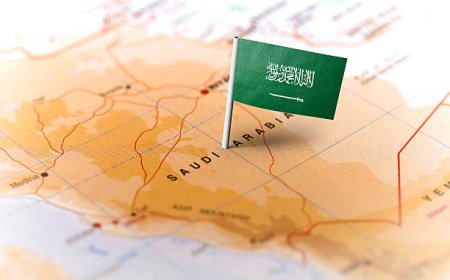
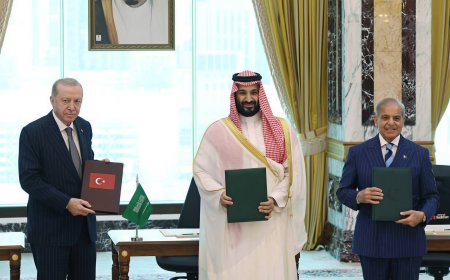
This challenge extends to ordinary people as well. An enigmatic pact signed on August 7 between Turkey, Saudi Arabia, and Pakistan has confused many analysts and misled countless individuals around the world, particularly Muslims.
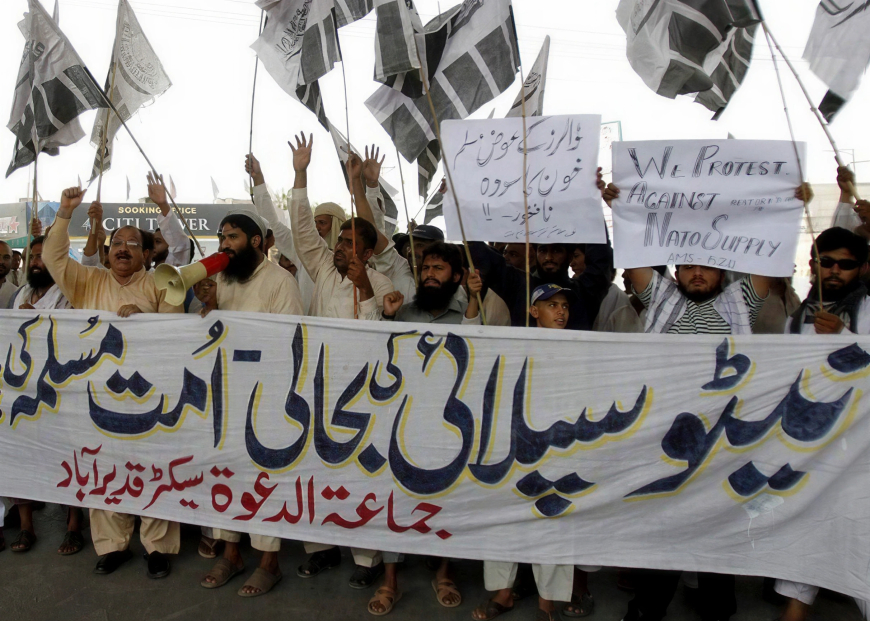
In Bangladesh and Pakistan, there has been a surge of enthusiasm among Muslims regarding this mutual defense agreement. Many are now advocating for their countries to join what they refer to as an Islamic NATO, which would consist of two million troops, 20,000 tanks, and 5,000 military aircraft.
Notably, the Muslim-majority countries of Turkey, Pakistan, and Saudi Arabia have been pro-American, if not explicitly pro-Israeli, largely due to the widespread aversion to Israel in both Saudi Arabia and Pakistan.
Turkey, a NATO member that has maintained diplomatic relations with Israel since its inception, did not emphasize its Islamic identity until Erdogan came into power.
Recent news indicating that Egypt is set to join this alliance clearly suggests that another pro-Western country with diplomatic ties to Israel is aligning itself with this anti-Iranian, pro-Western arrangement.
This backdrop dispels myths about the alleged Islamic NATO, which is claimed to be modeled after NATO, purportedly confirming that an attack on any member country would be considered an attack on all signatories. It is important to comprehend what is referred to as the Islamic NATO or the Sunni Alliance, a term that Israel has used.
The reason for this is clear: Distinguishing Shia and Sunni Muslims to differentiate between the followers of these two major Islamic sects does not accurately represent either an Islamic or a Sunni alliance.
The military pact should not be viewed as an Islamic NATO, nor should it be seen merely as a defensive measure intended to protect the Saudi monarchy against potential threats from Iran.
There are several reasons for this perspective. For one, there is no indication that a potential Indian attack on Pakistan would trigger a joint retaliation against India from all the signatories of the pact, the signature feature of NATO’s Article 5.
This article states that an attack on one NATO member country will lead to a collective military response from all NATO members against the aggressor. Instead, this agreement has a broader scope and serves multiple objectives, rather than simply promoting Western or Israeli military and strategic interests in the region. It plays a critical role in establishing an anti-Iranian security framework.
Exciting developments are underway as representatives from Saudi Arabia, Turkey, and Pakistan engage in meaningful discussions to establish a hopeful defense pact that could strengthen regional stability. However, it is crucial to recognize the challenges that accompany these developments.
Recently, tragic incidents in Aden, where pro-Saudi Yemeni soldiers lost their lives due to attacks from Iran-backed Houthi militias, serve as a stark reminder of the complexities we are facing.
Additionally, missile strikes on Saudi territory clearly demonstrate Iran's opposition to the pact, bringing to light not only the security concerns for Saudi Arabia but also the potential implications for regional dynamics.
Despite these significant challenges, the commitment to forging robust alliances is palpable. It is worth noting that Iran has aggressively targeted US military bases throughout the Arab world, further complicating the landscape.
Supporters of this defence pact often frame it in a way that may obscure its true nature. They refer to it as a security architecture grounded in Islamic principles, emphasizing its role in safeguarding the cradle of Islam -- Saudi Arabia -- with its headquarters located in the esteemed city of Makkah.
To further clarify the intent behind the pact, Pakistani Defense Minister Khwaja Asif took a strong stance against Israel, labeling it a "threat to the entire Muslim world," just a day after the pact was signed.
The varied international media responses to this pact when it was being signed on August 7 are intriguing, with outlets like Reuters dubbing it a "Joint Defense Agreement," while France 24 referred to it as a "Defence Pact," framing it as peaceful and cooperative.
In contrast, the Indian media outlet First Post described it as a "Trilateral Agreement across the Islamic World," and Israel characterized it as a “Sunni Alliance,” using terms that suggest division within the Muslim community.
The backdrop of this pact includes the Saudi-Pakistan Mutual Defence Pact signed in 2025 and the recent diplomatic outreach between the UAE and Israel. Interestingly, while Pakistan, similar to Saudi Arabia, has publicly distanced itself from Israel, describing it as a "threat to the Muslim world," all parties involved in the pact have traditionally aligned with Western powers since the Cold War era.
Thought-provoking insights have emerged from Iranian Professor Seyed Mohammad Marandi [August 9], a former advisor to Iran’s Nuclear Negotiation Team.
He draws a compelling comparison between Iran's recent strategic successes against the US, Israel, and their regional partners, viewing them as part of a 21st-century confrontation, contrasting this with what he perceives as outdated 20th-century approaches by the US. Marandi reflects on significant events, such as the American role in the collapse of the Soviet Union and the 1991 invasion of Iraq, as pivotal moments contributing to the decline of US influence.
Moreover, Marandi characterizes the Makkah Defense Pact as an initiative largely designed to protect Saudi interests while appearing indifferent to the ongoing suffering of Palestinians in Gaza and the West Bank as a result of military actions by Israel. He also highlights that the US has not taken meaningful steps to alleviate the humanitarian crises in Syria, Iraq, Yemen, and beyond.
The objective of the Makkah Defence Pact appears to be aimed at weakening both the Houthis in Yemen and Hezbollah in Lebanon. Furthermore, Iran’s significant military assistance to Russia amid its conflict with Ukraine adds another layer of complexity to this defensive landscape.
While the US has employed less-than-transparent rhetoric to navigate its own challenges and the perception of its military strength, the reality of the situation speaks volumes about the shifting dynamics and the economic and human costs associated with these military engagements.
The claims made by US Vice President JD Vance and his team about a supposed agreement between Iran and Oman are absurd, to say the least. Iran has not wavered from its demand for a 5 to 7 % toll on all foreign ships in the Strait of Hormuz.
Additionally, Iran has requested that the US honour the MOU signed between the two countries in June, which includes the lifting of all sanctions against Iran and the return of its frozen assets in the US as preconditions for reopening the Strait of Hormuz.
Furthermore, Iran seeks the withdrawal of all Israeli troops from Gaza and the West Bank but does not expect the US to yield anytime soon. Given the existing deadlocks in the region, combined with Trump's attempts to claim "victory" by supporting Israel’s actions in the region and the notable decline in US military power, it is difficult for a humiliated and weakened US to position the formation of the Islamic NATO as a new era of peace in the Middle East.
Moreover, the pro-US and pro-Israel military junta in Egypt is likely to join the Makkah Defense Pact, and the potential inclusion of pro-American countries like Kuwait, the UAE, and Bahrain in this defense pact will not provide any legitimacy to the pro-Israeli and anti-Iranian Islamic NATO.
It remains uncertain whether, as a face-saving measure, the Trump administration will end the war and present the largely ineffective Islamic NATO as a major success in promoting peace and stability in the Persian Gulf and beyond, or if the US and Israel will again engage in hostilities with Iran, having powerful allies such as China and Russia, in the near future.
Taj Hashmi is a historian-cum-cultural anthropologist and security analyst. Taj Hashmi, Ph.D., FRAS, is a former Professor of Security Studies at the APCSS, US.