
































































On China Again -- Between Peace and Power
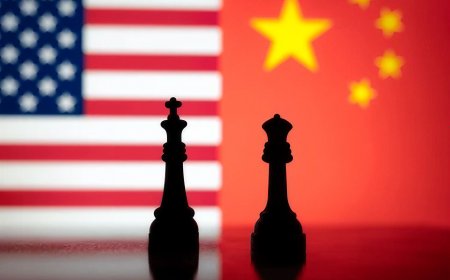
The Chinese leaders learned it well, as was evident in his call to Mr. Trump in the opening remarks of Chinese Premier Mr. Xi Jinping, who urged him to avoid falling into the Thucydides trap and embrace peace for global prosperity. But at the close of the talk, the disturbing global concerns may be: is there a second Kissinger, or a President like Nixon, to achieve the same?

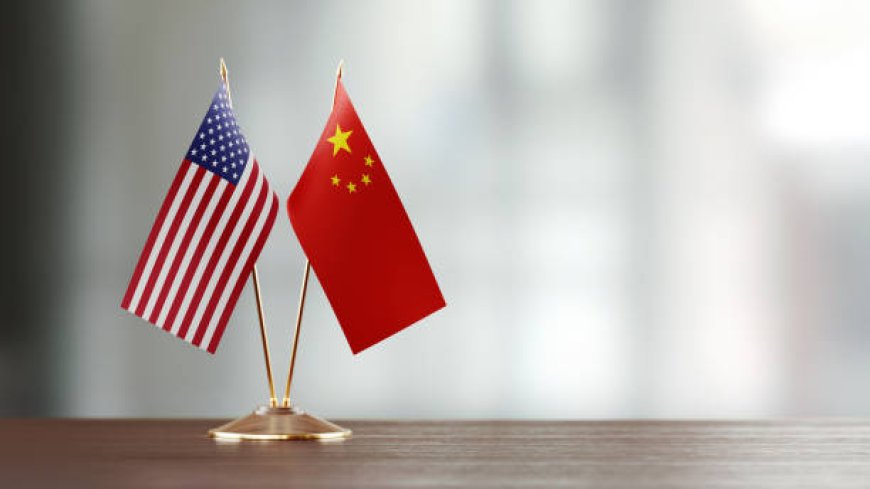
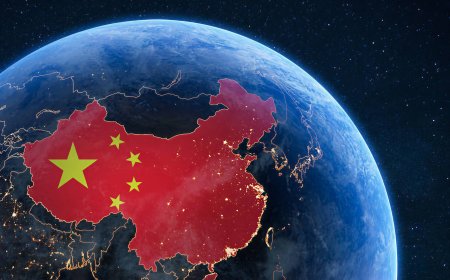
The most significant event in the world in the post-Iran war deadlock is the visit of Mr. Trump, the President of the USA, to China, an effort to repeat what Henry Kissinger, the Secretary of State, did in 1971. Kissinger was sent by President Nixon to reestablish contact with China, which had been closed for almost 20 years.
In his famous book ‘On China,’ Kissinger, with more than 50 visits to China, said that the relationship between China and the United States has become a central element in the quest for world peace and global prosperity. In the wake of the talks between the two countries ending, there are immediate criticisms across various forums and among the intelligentsia about whether it is a victory for China or the USA, or a failure, amid uncertainties about the resumption of war in the Gulf.
There is also an intellectual sense of the beginning of the end of the Western World order and the emergence of a Sinocratic World order. At the same time, there is conjecture of more war in the offing or the emergence of a cooperative world under the competitive syndrome of the profit-hungry, business-friendly world. Whether these are over- or understatements will perhaps need investigation in light of the West’s perception of power and harmony, and of war and peace vis-à-vis China.
The outcome of the event to trigger further conflict or deliver peace would depend on the divergent views of the West and China when seen in the prism of Confucius, Machiavelli, Clausewitz, and Sun Tzu. Politically, the United States and the West are inspired by the Machiavellian concept of statehood, anchored by the machinations of power.
On the other hand, Chinese civilizational statehood is deeply imbued with Confucian philosophy, emphasizing social harmony, compassionate rule, proper rituals, and the inculcation of filial piety. Confucius's philosophy is for the redemption of the state through righteous individual behavior, oriented towards the worldly code of social conduct.
Further can be gleaned from the discussion between Kissinger and Zhou en Li, in which he stated that China doesn't consider itself a power and wouldn’t join the ranks of a superpower once it is economically developed. On the other hand, the US efforts through this bilateral rapprochement are most visibly seeking a guarantee from its counterpart to play an assertive role in the Gulf, helping the West maintain its geopolitical and geo-economic supremacy.
Militarily, the United States and the West strategize around Karl von Clausewitz's dictum, ‘War is a continuation of policy by other Means‘, which implies that, in war, statesmen enter a new and distinct phase. China values the strategic ideas of Sun Tzu, emphasizing psychological and political elements over purely military ones.
Western strategists focus on assembling superior power at the decisive point, while the Chinese focus on building a dominant political and psychological position, thereby rendering the outcome of the conflict a foregone conclusion. Western strategists test their maxims by victory in battle, but Chinese strategists test theirs by victories where battles are unnecessary, as Sun Tzu philosophized.
The USA remains under the same delusion, rooted in Clausewitzian philosophy, and is uneasy about openly accepting its limits in military capacity to achieve a decisive victory. Any allusion to an assertive role for the Chinese military in ending the conflict is surely far from reality, as the Chinese doctrine of the use of military power is based on Sun Tzu's principles.
China rose as a unified state in the 3rd century B.C. and remained so until the collapse of the Qing Dynasty in 1912, standing at the center of an East Asian international system of remarkable durability. Through turbulent history, Chinese leaders learned that not every problem has a solution, and that placing too great an emphasis on total mastery of specific events could upset the harmony of the world.
The Chinese leaders learned it well, as was evident in his call to Mr. Trump in the opening remarks of Chinese Premier Mr. Xi Jinping, who urged him to avoid falling into the Thucydides trap and embrace peace for global prosperity. But at the close of the talk, the disturbing global concerns may be: is there a second Kissinger, or a President like Nixon, to achieve the same? China maintained its status as a geopolitical free agent during the Cold War amid the presence of two nuclear superpowers.
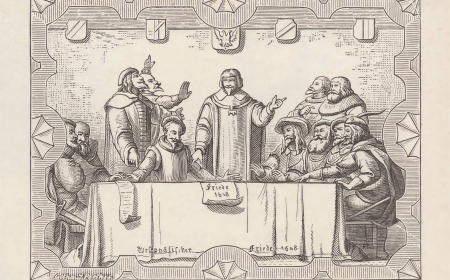
China moved from hostility to a near-alliance with the United States and, in the opposite direction, to a near-alliance with the erstwhile Soviet Union. It is now on friendly terms with the Russian Federation and maintains friendly alliances with the United States; any miscalculation would set the world on a perilous path to near destruction. The world is in a geopolitical stalemate and on the verge of renewed international relations, if not a new world order, be it a Westphalian or Sinocratic.
To avoid the Thucydides trap, the USA must pursue victory in a cooperative world for global peace and prosperity, as Xi Jinping has suggested, rather than fall prey to another uncertain war that would hasten the world's embrace of an apocalyptic order. There is no winner or loser in this bilateral effort between the USA and China.
Retrospection to the enlightening thoughts and experiences of Kissinger on rapprochement in China, and the strategic culture of Chinese meticulous planning based on long-term trends and careful study, as asserted in the saga of Zhou en Li, will decide who. The fear is that the quiet but strategic demeanor of Mr. Xi Jinping and the extremely flexible demeanor of Mr. Trump don't collide, but rather infuse on the same plane to yield what the world is closely watching.
Brigadier General AF Jaglul Ahmed (Retd) is a regular contributor to national dailies. He can be reached at [email protected].