

































































Peace or Strategic Reset?
The ceasefire has created an opportunity. Whether the parties seize it will depend not only on the negotiators in the room but also on political leaders willing to accept outcomes short of their maximalist positions. Transforming that opportunity into lasting peace remains the region's greatest challenge.

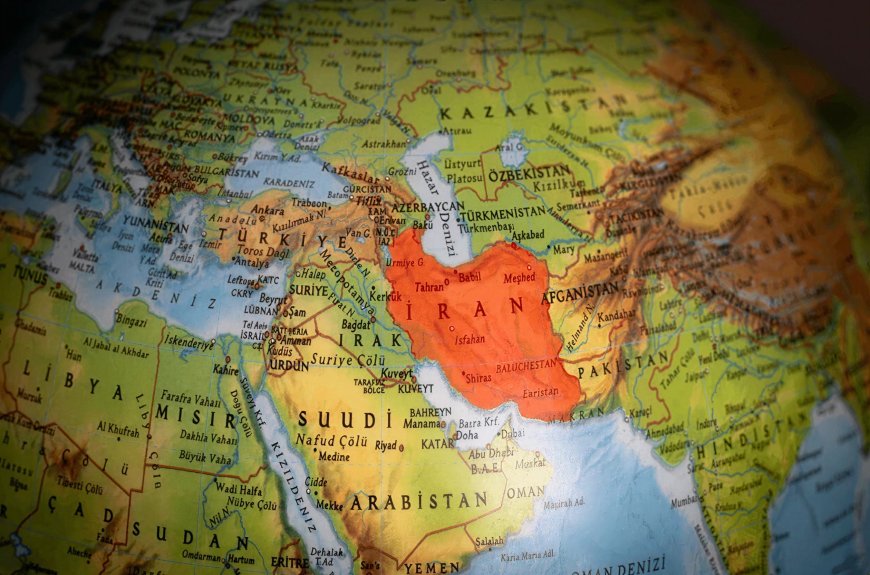
The confrontation among Iran, Israel, and the United States marked one of the most dangerous moments in the Middle East since the Cold War.
What began on February 28 with large-scale US-Israeli strikes on Iran, including the assassination of Supreme Leader Ali Khamenei, escalated into a twelve-week war marked by missile exchanges, attacks on Gulf infrastructure, the closure of the Strait of Hormuz, and a US naval blockade of Iranian ports.
Governments around the world prepared contingency plans for a conflict whose consequences extended far beyond the region.
Yet the confrontation did not end in a decisive military victory. On June 17, US President Donald Trump and Iranian President Masoud Pezeshkian signed the Islamabad Memorandum of Understanding, brokered primarily by Pakistan and facilitated by Qatar, Saudi Arabia, Turkey, and Egypt.
The memorandum extends the ceasefire by 60 days, reopens the Strait of Hormuz, waives sanctions on Iranian oil exports, and establishes a framework for nuclear negotiations with an August 2026 deadline.
As of June 26, US and Iranian officials have met face-to-face in Switzerland to begin substantive talks, while Lebanon, Gaza, and the Strait remain active flashpoints.
The deeper significance of the conflict lies not in who won or lost but in what the crisis revealed about the evolving nature of power and the renewed importance of diplomacy.
The Islamabad Memorandum represents neither a strategic victory nor a defeat for any single actor. It reflects a strategic reset: After months of confrontation, all parties have reluctantly acknowledged that military pressure alone cannot resolve the region's underlying political disputes.
Beyond the Battlefield
Military campaigns are often judged by tactical success. Strategic outcomes depend on whether military operations achieve lasting political objectives. By that measure, the recent conflict produced a far more complex picture than early commentaries suggested.
Israel demonstrated overwhelming military capability: intelligence superiority, precision air power, and missile defense. The United States confirmed its ability to project force rapidly throughout the region.
Yet weeks of intensive strikes did not eliminate Iran's nuclear knowledge, destroy its regional network of allies, or compel unconditional surrender.
As the Arms Control Association concluded, the 2026 attacks did not fundamentally alter the status of Iran's nuclear program. Military action cannot eliminate Tehran's capability to build a bomb.
Despite absorbing significant losses, including the death of its supreme leader, Iran preserved enough strategic leverage to be central to subsequent negotiations rather than excluded from them. Former President Barack Obama captured the outcome plainly: the United States had pulled out of a 2015 nuclear agreement, fought an expensive war, and may now be left roughly where it started, perhaps a little worse off.
The conflict, therefore, reinforced an enduring lesson. Military power remains indispensable but is rarely sufficient to secure durable political settlements. None of the principal actors achieved their maximalist objectives, and all ultimately concluded that further escalation offered diminishing strategic returns.
What the Islamabad Memorandum Actually Changes
The memorandum is a 14-point framework, not a comprehensive peace settlement. Its immediate provisions include the cessation of hostilities, the reopening of the Strait of Hormuz toll-free for 60 days, a waiver of US oil sanctions on Iran enacted on June 21, a US and regional partners' commitment to a reconstruction plan worth at least 300 billion dollars.
Iran's pledge not to produce or acquire nuclear weapons and to downgrade its enriched uranium to reactor-grade following a final agreement.
A direct US-Iran communication line for managing the Strait has been established, and a de-confliction mechanism for Lebanon has been created through Qatar and Pakistan.
Critically, several major issues are deferred to the 60-day negotiating window. Iran's ballistic missile program, its regional allies, and the detailed nuclear terms are absent from the current framework.
The Arms Control Association described the memorandum as fundamentally a non-nuclear deal that leaves key nuclear issues unresolved, including the scope of inspections, enrichment rights, and the disposition of Iran's existing stockpile.
Iran's President Pezeshkian stated on the morning of the Swiss talks that Iran will never back down from its right to enrich uranium.
Netanyahu has issued maximalist nuclear demands and made clear that Israel does not consider itself bound by the memorandum, while continuing strikes in Lebanon that have repeatedly threatened to unravel the deal.
These are not minor footnotes. They are the central disputes. Trump himself warned on June 17 that if he does not like the final agreement, the US will go right back to dropping bombs. The 60-day window closing in August is both the most important and the most fragile phase of the entire process.
The Economic Dimension
The Strait of Hormuz carries roughly one-fifth of the world's traded oil, and even limited disruption immediately affected shipping costs, insurance premiums, and global energy prices.
Asian economies faced acute fuel shortages during the dual blockade. Global markets surged when the memorandum was announced, with oil prices falling by more than $4 per barrel that day.
For Iran, the economic stakes are existential. Years of sanctions have led to severe inflation, currency depreciation, and declining living standards. The sanctions waiver and the prospect of accessing frozen assets offer a path to fiscal stabilization, though benefits remain conditional on compliance.
For Gulf states, the war damaged critical infrastructure, disrupted expatriate labor flows, and revised projected economic growth downward across the GCC. Qatar's Ras Laffan LNG plant sustained damage that may take years to repair.
The broader lesson is that economic interdependence increasingly constrains the independent use of military force. Both Washington and Tehran ultimately concluded that diplomacy offered greater strategic value than indefinite economic confrontation.
The Question of Double Standards
The Islamabad Memorandum revives a persistent concern: the unequal application of international norms. Negotiations have focused on Iran's nuclear program, enrichment levels, and verification requirements.
Israel's nuclear arsenal, widely estimated at 80 to 400 warheads, operates entirely outside the Non-Proliferation Treaty, with no inspection regime, no sanctions, and no pressure from Washington.
This asymmetry is not lost on regional actors. Iran condemned a joint US-GCC statement issued on June 25 as interventionist, irresponsible, and provocative, accusing Washington of repeating Israeli positions on Iran's nuclear program and missile capabilities while ignoring Israeli conduct in Lebanon and Gaza. Recognizing this concern does not imply support for nuclear proliferation.
On the contrary, effective non-proliferation depends on rules that are viewed as legitimate, impartial, and consistently enforced. A framework that demands compliance from one party while exempting another will not produce durable stability. Future diplomatic efforts would benefit from a broader regional security dialogue that promotes transparency, confidence-building, and arms control across the Middle East, rather than addressing individual programs in isolation.
Toward a New Regional Order
The conflict illustrates a gradual yet significant shift toward a more multipolar regional order. The United States remains the principal external security actor, but regional powers exercise greater strategic autonomy than in previous decades. Pakistan's emergence as an indispensable mediator, despite longstanding efforts to isolate it, is one clear illustration.
Qatar's persistence in the face of direct threats to its territory, continuing mediation even after Iranian strikes damaged its Ras Laffan liquefied natural gas plant, is another. The role of these smaller states as diplomatic bridge-builders is arguably the most durable institutional legacy of the 2026 war.
China expanded its economic influence across the region during the conflict. Gulf states showed growing diplomatic confidence while absorbing the costs of a war they did not start.
The Islamabad Memorandum was achieved not by American power alone but by a coalition of mediators, each with distinct relationships and leverage. That coalition must now hold together through the far more difficult 60-day negotiation phase.
A Reset, Not a Resolution
The Islamabad Memorandum warrants cautious support. The reopening of the Strait of Hormuz, the face-to-face meetings in Switzerland, and the return to nuclear negotiations are genuine achievements after months of escalating confrontation.
Yet the agreement should not be mistaken for a settlement. Lebanon remains a contested territory. Drone attacks on the Strait were reported as recently as June 26. Netanyahu has made it clear that Israel does not consider itself bound by the memorandum's provisions on Lebanon.
History offers a specific warning: The 2015 nuclear agreement reduced tensions but failed to produce a durable regional framework, and when political circumstances changed, the agreement collapsed. The 2026 war was the direct consequence of that failure.
The greatest lesson of this conflict is that military power, while indispensable, cannot, by itself, resolve deeply rooted political disputes. The Islamabad Memorandum signals a strategic reset in which all principal actors have, however reluctantly, acknowledged that diplomacy remains essential.
Whether it evolves into a durable regional order or becomes another pause between crises will depend on whether the 60-day negotiating window yields substantive progress on nuclear governance, Lebanon, and eventually Palestine. If not, the region risks returning to a more dangerous cycle of confrontation than the one that preceded this war.
The ceasefire has created an opportunity. Whether the parties seize it will depend not only on the negotiators in the room but also on political leaders willing to accept outcomes short of their maximalist positions. Transforming that opportunity into lasting peace remains the region's greatest challenge.
Dr. Mohammed A Rab is currently a free lunch consultant on Financial Risk Management, Quantitative Risk Modeling and Enterprise Risk Management.