





























































America’s Goliath Moment
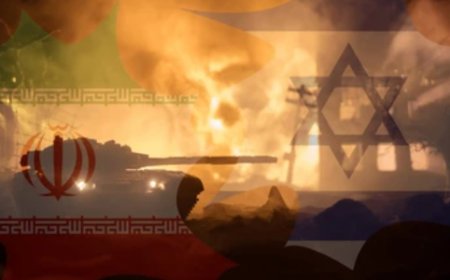
Against this background Trump is a disaster for America and its Iran war has pushed it to a point where presumably every ordinary man across the world has started mocking the American power by mistaking Trump to be the personification of the United States.

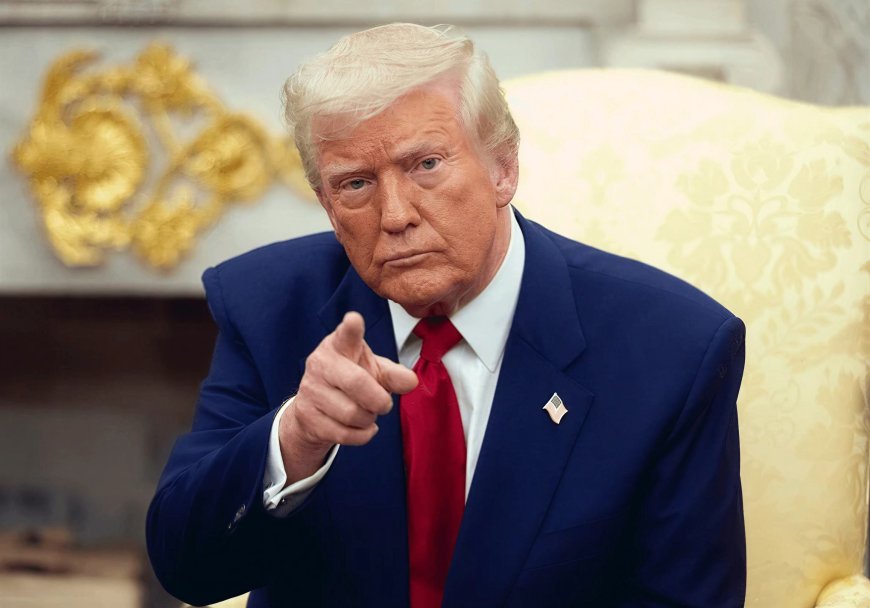
The US President Donald J. Trump's 19-minute address to the nation on the evening of April 1 was a routine performance of the kind the megalomaniac is notorious for. It was hyperbolic, pretentious, disrespectful of his Democratic predecessors, and most importantly, pompous about America’s unparalleled greatness.
His audience all over the world had waited with bated breath expecting that Trump, the mercurial character that he has always been, could surprise them by his sudden declaration to end the war with or without some innovative face-saving device. But what happened was exactly the opposite.
Probably the only person who had read Trump’s mind perfectly was the Iranian President, Masoud Pezeshkian. Just prior to Trump’s address he wrote an open letter addressed to the American public (which he shared on X), to caution them against ‘the machinery of [Trump’s] misinformation’ and to ‘look beyond.’
Sounding more like a scholar of American politics he wrote: ‘Portraying Iran as a threat is neither consistent with historical reality nor with present-day observable facts. Such a perception is the product of political and economic whims of the powerful -- the need to manufacture an enemy in order to justify pressure, maintain military dominance, sustain the arms industry, and control strategic markets. In such an environment, if a threat does not exist, it is invented.’
It may be noted that the letter was sent in the background of Trump’s false claim in his Truth Social post on March 25 that Iran had requested for a ceasefire.
The tone of Pezeshkian’s letter was polite but matter-of-factly. Its essential argument was that Iran had constantly been bullied through all kinds of sanctions and military threats and still it had never retaliated militarily or otherwise. Yet ‘as a proxy for Israel’ and ‘by manufacturing an Iranian threat, [the Trump administration] seeks to divert global attention away from its crimes toward the Palestinians.’
To sensitize the Americans to see the realty for themselves he wrote: ‘Observe the many accomplished Iranian immigrants -- educated in Iran -- who now teach and conduct research at the world’s most prestigious universities, or contribute to the most advanced technology firms in the West. Do these realities align with the distortions you are being told about Iran and its people?’
Trump either did not read the letter, or pretended not to have read it, for it would have otherwise disturbed his thought process geared to prove Iran as an unadulterated villain. In his address Trump proposed an even more deadly use of America’s incendiary power, which going by the record of the past 34 days of war, looked more like one of his daydreams.
But given Trump’s desperation to retrieve his ever-dwindling popularity one may as well visualize a more grotesque escalation. Or, who knows, he may have mindfully engineered a huge boost for America’s arms and intelligence industry through his rhetoric.
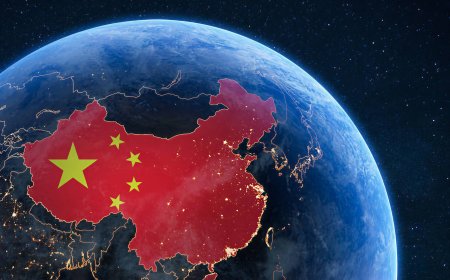
There cannot be any doubt that the United States is a superpower, quite comparable to Great Britain at the height of its imperial glory. The Chinese who come next in terms of power and influence is still a distant second, America’s 31 trillion-dollar economy versus China’s 21 trillion dollars.
Besides, in terms of social presence, such as, cinema, music, literature, popular culture, and so on, America is globally present which China is not. America’s biggest advantage is its English language, which is the lingua franca of the world. Even China recognizes that though it was never colonized by England; in technical terms, by none.
Against this background Trump is a disaster for America and its Iran war has pushed it to a point where presumably every ordinary man across the world has started mocking the American power by mistaking Trump to be the personification of the United States. Mercifully the unprecedented display of popular anger against him on 28 March 2026 has salvaged the situation for the country to some extent.
The world is reassured that all is not over. The reordering of the world order, which is seemingly on, has to be a slow process, and it is not good for anybody in the world to witness a dramatic collapse of the United States which will throw the world into a veritable chaos. One need not shed tears for the demise of the American Century but let it be a slow death, not a cardiac arrest.
Returning to Trump’s address to the nation the following may be underlined as its essential message:
(a) it was vitriolic against the previous Democratic presidencies, President Barack Obama's in particular
(b) it was hyperbolic about American power as displayed in Iran which had been reduced to a 'stone age' situation
(c) there was no mention of China, Russia, and leave alone India (the so-called fourth largest economy of the world)
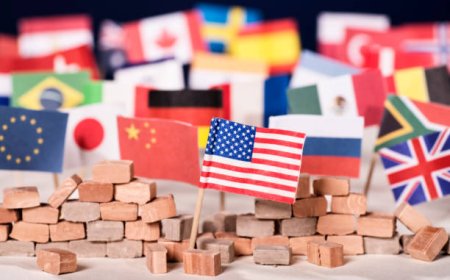
(d) the American allies, particularly, the European ones, were indirectly ridiculed for not bothering to protect even their own interests
(e) the opening of the Strait of Hormuz is not America's job; it is the job of those countries which depend on Middle East’s petrol and gas, which America did not, rather it was the biggest reservoir of these natural resources, and with the addition of the Venezuelan oil fields America was in an even better stead
(f) Trump’s MAGA rhetoric was trumpeted in deafening decibels. That the latter was meant to reassure his MAGA voters is evident given the popular protests against his regime which had the potential to be electorally disastrous at the midterm polls barely six months away.
Against this backdrop what kind of peace negotiations could be underway in Pakistan could be anybody's guess. If Trump wanted America to be on the negotiating table from a position of strength that sounded most unrealistic. It may only remind one of the famous dictum of Sir Winston Churchill: In defeat, defiance (his other dictums were: In war, resolution; in victory, magnanimity; in peace, goodwill).
Notably, about the ‘resolution’ dictum in war, Trump has proved himself to be a chameleon. He changes his stance so often that some have even started using Trump as a verb: ‘don’t Trump your position’ may now mean, don’t change your position so frequently.
One of India’s noted strategic thinkers, Pravin Sawhney, in his Force podcasts has been arguing that where America has failed and Iran has succeeded is because of their contrasting war strategies. While the Iranians, with the help of Russians and Chinese, are deploying a 21st century strategy the Americans are still basking in the glory of their twentieth century game plan banking on their globally spreads bases and so on.
Sawhney also emphasizes the point that Iran instead of using the GPS system of the United States is using its Chinese version called BeiDou Navigation Satellite System (BDS) which provides a centimetre level accuracy. In the recent India-Pakistan military clash (Operation Sindoor) Pakistan had the relative advantage vis-a-vis India for the same reason, argued Sawhney.
Let me end this essay with a personal lament for the United States, a country I have not only academically studied but have also intimately known as a young man through my coast-to-coast travel in buses in the mid-seventies about which I wrote in one of my Dhaka Tribune articles sometime ago.
As such, I was most disappointed by the hooliganism of the Trumpian mob that vandalized the Capitol Hill at the news of the Republican defeat in the presidential election of 2021 (my Dhaka Tribune articles were published on November 10, 2020 and 12 January 12, 2021).
All said and done, America is still the beacon of hope for all the democratic forces everywhere in the world. And please note, Donald Trump is not the beginning and end of America.