






































![A Ledger of the Soul: Navigating the Allah-Bhagavant Nexus in a 19th-Century Puruṣākāra Jñāna Caupara [Gyan Chauper]](https://counterpointbd.com/uploads/images/202608/image_430x256_6a93baa3b09a7.jpg)




















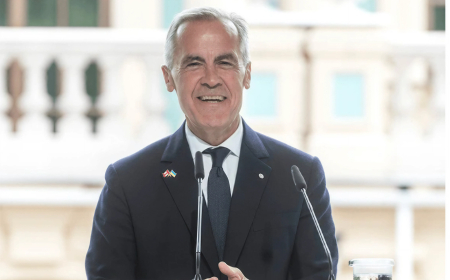
Is Mark Carney Emerging as the De Facto Statesman-in-Chief of the World?
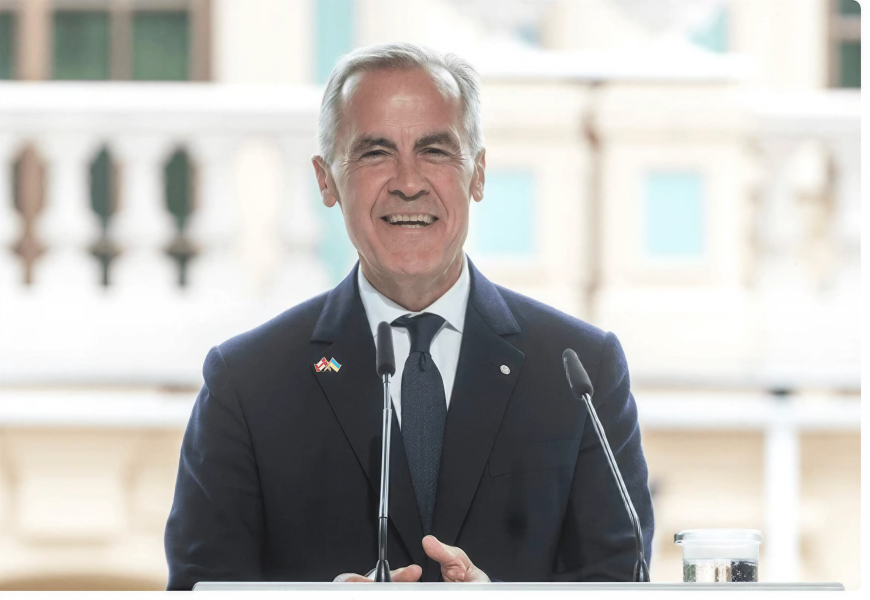
At a time when the world is looking for direction on how to contend with conditions that are anything but normal, Carney is better placed than any of his peers to shoulder the responsibilities and expectations that come with being the de facto leader of the global middle
The post-Second World War rules-based international order is, or perhaps was, to put it more bluntly, a phrase used to describe the norms and institutions via which nation-states cooperated, competed and, at the very least, sought, with varying degrees of success, to tackle transnational common-good problems such as climate change and nuclear proliferation.
Two tenets were adopted on paper in the settlement that emerged after the defeat of fascism and the establishment of the United Nations architecture.
First, nation-states had the right to exercise sovereignty over their own internal affairs.
Second, a set of rules of the game, or shared expectations for human civilization, was defined and given form, for example, through the codification of a body of human rights standards and instruments for addressing trade disputes, both of which were intended to apply universally.
Both tenets have, nevertheless, been upheld selectively throughout the postwar era.
The Rules-Based International Order Has Reached Breaking Point
Western nations and their allies have enjoyed more scope to determine their own course of action than developing countries with more limited military and economic power.
The latter have often been held more strictly to supposedly universal standards than the former.
For all the hypocrisies built into its operation, the rules-based international order has, on balance, delivered a net benefit to humanity.
In the era of Donald Trump, it is, to put it mildly, on life support.
A pessimistic reading is that it has already been consigned to the annals of history by an American President who has upended many of the conventions governing how nation-states are expected to deal with one another.
The strains, of course, predate Mr. Trump.
In an aftershock that extended beyond public health, government responses to the COVID-19 pandemic in the West catapulted distrust of institutions such as the World Health Organization and national public health agencies into the mainstream within far-right movements.
That distrust unsettled a once comfortable assumption about subject-matter expertise: that scientists would guide elected policymakers and civil servants when dealing with disease outbreaks, governments would act on their advice, and the population would, writ large, accept that advice.
The politicization of health, in turn, gave force to the notion that a not-so-minor cohort of people did not trust entities once accepted as sources of recommendations grounded in evidence.
The idea of a factual baseline capable of anchoring public discourse began to erode: what counted as truth became open to partisan interpretation.
In the arena of great-power rivalry, Russia’s invasion of Ukraine exposed a fault line: it laid bare the limits of what the rules-based order could do when an authoritarian regime decided that the principle of sovereignty stood in the way of its interests or, more dangerously, its ambitions.
The stakes were high for the West because the target was a country seeking closer strategic alignment with the principal architects of that order.
The devastation in Gaza following the Hamas-led attacks on Israelis on October 7, 2023, raised a different question about the value proposition of the rules-based order.
Independent experts from the United Nations have described the Israeli assault on Gaza as genocidal. To date, there is little sign of a permanent resolution to the Israeli-Palestinian conflict.
Across the Global South, the perceived duplicity of the West reinforced a longstanding view that alleged mass atrocity crimes committed by Western states or their allies have tended to draw more restrained condemnation than comparable acts attributed to their opponents.
Mr. Trump then pushed considerably further the boundaries of an arrangement whose functioning had always rested heavily on participants observing its rules in good faith.
In January 2026, American forces entered Caracas, captured the Venezuelan President and transported him to the United States to face criminal charges.
Less than two months later, joint American-Israeli strikes killed the Iranian Supreme Leader.
The significance of these episodes has to be assessed independently of the character of either the Venezuelan or Iranian regime.
They raised a question: Once Western capitals claim the authority to use military force directly against the leadership of sovereign adversaries, what principle prevents their own adversaries from claiming the same prerogative against the Western alliance?
Running alongside these developments was an ever-expanding disillusionment with the overarching health of world affairs, drawing impetus from several directions.
Parts of the political right grew antagonistic towards multilateralism, framing the organizations and agreements associated with it as the project of anti-national globalists.
Parts of the left grew more doubtful that international norms were being observed on equal terms and came to regard the Western-led order as farcical and outdated.
Many outside the West had harboured such reservations for far longer.
They had largely kept them in check because the prevailing arrangement, for all its inequities and inconsistencies, seemed preferable to the law of the jungle that had preceded the Second World War.
The rules-based order had provided at least some structure and predictability to international relations. Today, its ability to do either is in doubt, and the prospect of it becoming null and void can no longer be dismissed.
Canada’s Closest Ally Has Become the Greatest Threat to Its Sovereignty
During the Cold War and the period of American primacy that followed, Washington exercised its authority asymmetrically, depending on the nation-state it was dealing with and where it sat in the geopolitical hierarchy.
Smaller states outside the Western alliance, such as Nicaragua and Haiti, encountered a more openly strong-armed United States: Washington was more prepared to intrude on their autonomy through military intervention, support for armed proxies and financial coercion.
Allied capitals, including Ottawa and London, operated under a different understanding: The United States could be demanding, and bilateral disagreements could be intimidating, but they were usually managed through established diplomatic, commercial and security channels.
The gap between those two experiences is reducing.
What is changing now is that ties built around a liberal-democratic conception of cooperation and mutual benefit are themselves becoming instruments of pressure.
The interdependence that underpinned prosperity and security for American allies is leaving them with less freedom to set policy on their own terms.
Nowhere is that predicament more acute than in Canada.
For a Bangladeshi audience, India provides a useful point of comparison. The demographic imbalance is remarkably similar. India, with roughly 1.46 billion people, has just over eight times Bangladesh’s population of about 176 million.
The United States, with roughly 342 million people, likewise has more than eight times Canada’s population of about 41.4 million.
Canada is tied to its much larger neighbour to a degree that Bangladesh is not.
In 2025, the United States received 71.7% of Canada’s goods exports. India accounted for just 3.65% of Bangladesh’s goods exports in fiscal year 2024-25.
Put another way, imagine India buying more than seven out of every ten dollars of goods Bangladesh sold abroad.
The integration extends far beyond trade. Canada and the United States share the world’s longest international border, with roughly two-thirds of Canadians living within 100 kilometres of it at the 2016 census.
Their automotive industries operate through cross-border supply chains.
Canadian pipelines feed American refineries. The two countries jointly defend continental airspace through the North American Aerospace Defense Command, while their militaries and defence industries are intimately intertwined.
Bangladesh and India share important geographic, economic and security interests, but there is no comparable level of institutional integration.
Mr. Trump has disrupted the assumptions on which that relationship was built and, in the process, repeatedly insulted an ally that has, by almost every measure, been a reliable and constructive partner to the United States.
His administration has imposed tariffs on Canadian steel, aluminum and automobiles, threatened further restrictions on Canadian access to the American market and pressured companies to move production south of the border.
He has also repeatedly described Canada as a prospective 51st American state and extended that rhetoric to the shared geography of the two countries, including an order renaming Lake Ontario as Lake America: A move that quickly became the subject of mockery.
The result has been a breakdown in the terms on which the bilateral relationship had long operated.
For generations, Canada built much of its prosperity and security around the assumption that proximity to the United States was a strategic advantage: That same proximity has become a strategic liability.
A Crisis-Tested Resume and a National Consensus on Standing Up to Washington
This is the environment Mr. Carney has had to confront as Prime Minister.
There is some irony in the role he has come to occupy.
Mr. Carney’s resume reads like a catalogue of entities that the prevailing mood of the past decade has turned against: central banks, financial institutions and corporate boards.
His professional formation is technocratic amid declining confidence in technocratic judgment.
In 2008, he took over the Bank of Canada just as the global financial crisis was beginning to steamroll economies around the world. Canada came through the mayhem less battered than many other advanced economies.
Monetary policy decisions taken under his watch helped cushion the country against the full force of the downturn.
Five years later, Mr. Carney was recruited to take the helm of the Bank of England. He became the first person in history to lead central banks in two G7 countries.
Brexit would become the defining stress test of that tenure. The institution had to chart the least disorderly course through years of economic turbulence surrounding the United Kingdom’s departure from the European Union.
His career also extended well beyond central banking. He chaired the Financial Stability Board. He served as the United Nations Special Envoy on Climate Action and Finance.
He later moved to Brookfield Asset Management, where much of his work focused on financing the transition to a lower-carbon economy.
During the pandemic, he also advised Canada’s then-Prime Minister Justin Trudeau on economic recovery planning.
A recurring feature of Mr. Carney’s career is exposure to pressure.
He has found himself in positions where events were toppling established economic assumptions. The task in front of him was often to make sense of what came next. That experience has become an important part of what he now brings to politics.
Crisis management seems to be his most marketable skill. He has also developed a reputation for intellectual agenda-setting: Distilling complicated problems into a policy diagnosis, building a governing thesis around that diagnosis and then trying to move the institutions he leads or influences in that direction.
Beyond his resume, his budding international profile can be understood through three considerations.
First, Mr. Carney has stepped into a leadership vacuum. Western leaders with standing overseas are in short supply.
The United Kingdom has cycled through Prime Ministers at a comical pace. France, Germany and much of the G7 have been consumed by domestic challenges, from housing affordability to immigration. Canada faces many of the same pressures, but pan-Canadian politics remains less combustible than in several peer democracies.
Movements that a decade ago would have occupied the ultranationalist fringe have made fewer electoral gains in Canada than in countries such as the United Kingdom or Germany.
There is also a surprising breadth of national unity within Canada’s political establishment: cross-party consensus among the Liberals, Conservatives and New Democrats, three of Canada’s established federal parties, that Mr. Trump poses the greatest threat to national interests.
Canada is a federation in which governing authority is distributed across the federal, provincial or territorial, and municipal levels. Provincial and territorial Premiers, along with municipal leaders such as Mayors, have likewise shown a willingness to coordinate across this multi-jurisdictional system around a common Team Canada response.
That convergence has given Mr. Carney a firm domestic base from which to pursue a foreign policy strategy that moves beyond Canada’s traditionally American-centric orientation.
It has also allowed him to connect the decline of the rules-based order to unresolved economic and political questions inside Canada.
Reducing interprovincial trade barriers has become a pan-Canadian priority. Energy security has also moved closer to the centre of the growth-focused policy agenda, forcing provinces and territories to reconcile competing views on renewable and non-renewable energy sources.
Concerns over productivity and economic growth are being reframed as questions of resilience and Canada’s capacity to absorb external shocks.
Mr. Carney can therefore present domestic reform and diplomacy as parts of the same package.
The Carney Doctrine Is an Appealing Proposition for Middle Powers and the Global South
Few heads of government have articulated a sound strategy for states that carry substantial economic and diplomatic weight while operating below the scale of the superpowers.
At the World Economic Forum in Davos in January 2026, Mr. Carney attempted to fill that gap in a speech that has been dubbed a manifesto for free peoples, a doctrine and a eulogy for a ruptured international system.
His message to governments trying to preserve their autonomy was blunt.
First, the old order could no longer be relied upon to restrain powerful states. Governments had to plan for the world in front of them.
Second, economic dependence carried a price. Access to markets, finance and supply chains could be used to extract concessions, making diversification a requirement of sovereignty.
Third, self-sufficiency carried a trade-off of its own. Trying to produce everything at home would raise costs and leave countries less able to withstand a crisis.
Fourth, collective bargaining offered a way forward. Countries that negotiated together could prevent major powers from playing them against one another and secure better terms.
And fifth, credibility required consistency. Governments asking others to uphold international rules had to apply the same standards to allies and adversaries.
Mr. Carney is trying to turn those principles into a doctrine for middle powers: build agreement at home, strengthen partnerships abroad and translate collective economic and diplomatic weight into greater freedom of action.
Second, another consideration behind his budding international profile is that Mr. Carney entered office with a standing that few newly elected heads of government possess.
Years before seeking an electoral mandate, he built relationships with government and business decision-makers. Many of the people sitting across from him today were already colleagues.
A new Prime Minister normally spends part of an early tenure establishing relationships and building credibility with international policymakers.
Mr. Carney took office already familiar with that terrain. He can move quickly into substantive conversations with officials who know his record and have dealt with him before.
That helps explain the speed with which he has gone from Canadian Prime Minister to a figure receiving unprecedented attention in London, Brussels and other capitals, particularly given how unusual that level of international visibility is for a Canadian head of government.
Third, Mr. Carney is speaking to those beyond the West in language many of them already understand and are, behind the scenes, beginning to value.
Much of the Global South has spent decades pursuing a form of multi-alignment: trading with one country, borrowing from another, relying on a third for energy or defence, and resisting demands to place every relationship inside a single geopolitical camp.
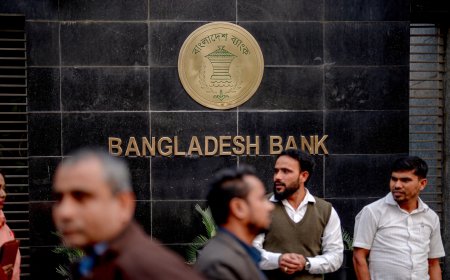
Bangladesh, a lower-middle-income country approaching graduation from the United Nations least developed country category, occupies one of the in-between rungs of the international hierarchy.
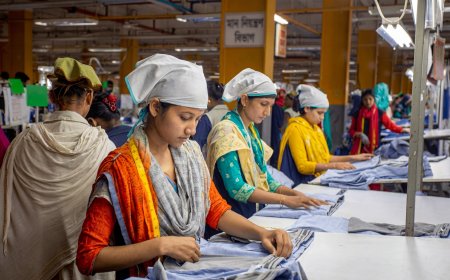
Its prosperity is closely tied to Western export markets. China remains an important source of investment and infrastructure financing.
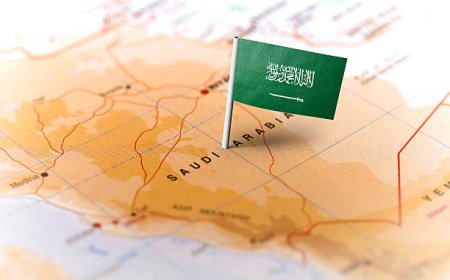
The Gulf is integral to its energy supplies, overseas labour market and remittance flows, while India, the regional hegemon in South Asia, remains politically critical.
These relationships serve different purposes. For Dhaka, maintaining room to cultivate all of them is a strategic necessity.
Mr. Carney’s argument lends this kind of statecraft added legitimacy.
Middle powers may provide much of the leadership, but a durable coalition would require the Global South’s willing participation. For middle powers, that means giving the Global South tangible influence over common priorities and showing more respect for their freedom to choose their partners.
The Global South’s resources, manufacturing capacity, workforces and fast-growing markets are also vital to advanced economies.
Recognizing that contribution would make cooperation more reciprocal and give the Global South a stronger hand in negotiating its terms.
For governments accustomed to having the terms of international engagement set elsewhere, that is a consequential proposition.
The challenge for Mr. Carney is now one of delivery.
Canadians will expect near-term progress on affordability, alongside movement on nation-building projects and the longer effort to diversify trading relationships.
Achieving those objectives while maintaining a firm posture towards the United States will be difficult. Canadians have given him considerable latitude so far. How long that lasts will depend on results.
His next task, beginning with his upcoming high-profile address to the European Parliament, is to persuade other governments that Canada’s policy toward Mr. Trump offers a workable template for them to follow.
The first test will be whether European policymakers begin converting agreement with that diagnosis into policies of their own, with early signs already visible in Europe’s efforts to reduce its dependence on Washington.
American politics could alter the balance as well. The forthcoming congressional elections may constrain Mr. Trump and give Canada and its partners additional influence in Washington. Mr. Carney should be prepared to use any such shift to advance Canadian interests.
The undertaking itself has to endure beyond Mr. Trump’s Presidency.
Mr. Trump has altered the terms of American politics, and the forces that produced this ongoing rupture are unlikely to disappear when he leaves office.
Canada, Europe and their peers therefore have reason to treat the capacity for independent action as a long-term strategic requirement.
It is a demanding assignment.
Mr. Carney’s success would be Canada’s and, in important respects, that of the liberal democratic world.
If his doctrine can also command support across the Global South, it could help lay the foundation for a more equitable international order than the one that emerged after 1945.
Countries across the Global South may be more prepared to entertain Canadian leadership than that of other Western powers in salvaging what remains of the rules-based order or helping fashion a new international settlement, precisely because Canada is influential enough to help set the table, but neither powerful nor inclined to dictate the menu on its own, and has long relied on multilateralism as a cornerstone of its foreign policy.
Mr. Carney has his shortcomings: critics argue that his international ambitions have not been matched by sufficient progress on Canada’s domestic economic challenges.
Even so, his domestic standing remains unusually high for a Western leader, with recent polls indicating that 62% of Canadians approve of Mr. Carney and another national survey putting approval of his government at 70%.
At a time when the world is looking for direction on how to contend with conditions that are anything but normal, he is better placed than any of his peers to shoulder the responsibilities and expectations that come with being the de facto leader of the global middle: Countries beyond the United States, China and Russia that may increasingly come to see themselves as a distinct strategic constituency.
Mir Aftabuddin Ahmed is a Canada-based public policy columnist with more than 150 articles published across Bangladeshi and Canadian media and policy outlets. He currently serves as a Policy Development Officer with the City of Toronto. He can be reached at [email protected]. The views expressed are his own.