
































![A Ledger of the Soul: Navigating the Allah-Bhagavant Nexus in a 19th-Century Puruṣākāra Jñāna Caupara [Gyan Chauper]](https://counterpointbd.com/uploads/images/202608/image_430x256_6a93baa3b09a7.jpg)


















Bangladesh's Political Transition and the Challenge of Extremism
Bangladesh does not need to choose between religion and secularism. It must choose between a democratic political system, where diverse beliefs co-exist under shared constitutional rules, and a politics where identity is weaponized to determine belonging.

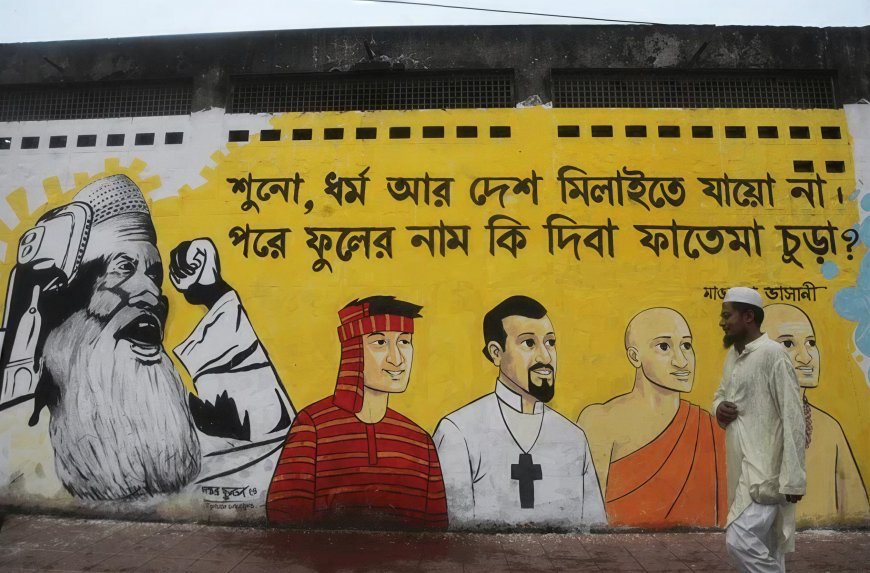
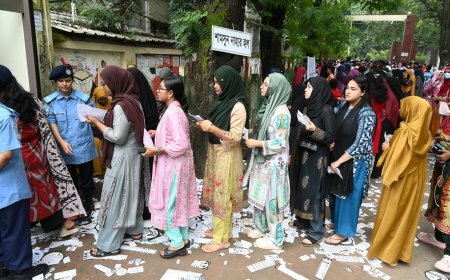
Since the February election, Bangladesh has entered a significant phase of its political transition, culminating in the appointment of an elected government after 18 months of interim governance.
Mohammed Shahabuddin's resignation in July was succeeded by the election of the experienced politician Mirza Fakhrul Islam Alamgir as president in August. Institutions that had been unsettled by the 2024 political upheaval are gradually taking shape.
The immediate question is no longer who will occupy these offices. A more consequential question is what kind of political order will emerge around them.
Bangladesh has an opportunity to rejuvenate its democratic institutions after a period marked by political conflict and the erosion of institutional structures. Nevertheless, political transitions carry inherent risks, including the potential elevation of religious identity, intolerance, and extremist ideologies within mainstream political discourse.
This matter should concern Bangladeshis across the political spectrum.
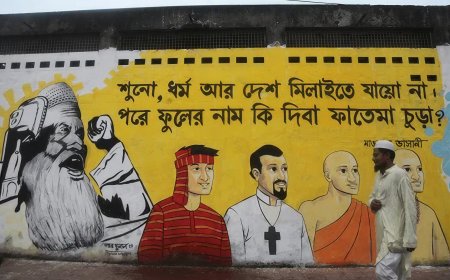
The issue does not pertain to religion per se. Islam is intricately embedded in the history, culture, and daily existence of the majority of Bangladeshis, analogous to how other faiths are integral to the lives of millions. Religious freedom persists as a fundamental democratic entitlement.
The peril arises when religion is employed as a tool to deny equal citizenship, intimidate minority groups, limit freedom of expression, or decide who has the right to engage fully in national life.
Bangladesh has addressed this question since its inception.
The Liberation War of 1971 originated from a struggle involving political representation, cultural identity, economic inequality, and national self-determination. The constitution adopted subsequent to independence codified nationalism, socialism, democracy, and secularism as core principles of state policy.
In that constitutional tradition, secularism was not designed to eradicate religion from society; rather, its underlying purpose was to prevent the state from employing religion as a tool for political discrimination and to safeguard citizens of diverse beliefs.
Bangladesh's subsequent political history complicated that settlement. Constitutional amendments altered the relationship between religion and the state, and political parties from different traditions at times used religious symbolism and formed alliances for electoral purposes.
Islam was eventually declared the state religion, even as secularism was later restored as a fundamental constitutional principle.
The outcome constitutes a constitutional framework marked by inherent tensions that Bangladesh has become accustomed to managing but has yet to fully resolve.
That history remains pertinent today because extremism seldom publicly declares itself as extremism when entering the political sphere.
It frequently manifests through more socially acceptable language: Safeguarding religious principles, defending traditional values, restoring moral standards, or opposing cultural threats. None of these notions are intrinsically extremist.
In a democratic society, religious citizens and religiously inspired political parties possess the same rights to engage in political processes as other participants.
The democratic boundary is transgressed when political movements deny equal citizenship, justify acts of violence, promote communal hostility, intimidate critics, or attempt to impose their beliefs upon others through coercion.
That distinction is especially important in the present environment.
Bangladesh should refrain from addressing the threat of religious extremism by seeking to exclude legitimate religious voices from the realm of democratic politics. Such actions could exacerbate societal polarization and propel political activities beyond the boundaries of constitutional institutions.
Furthermore, secularism should not be reduced to a mere label for suppressing political opposition, as this would contravene the democratic principles that secularism is intended to uphold.
The more sustainable approach is to establish rules that apply equally to everyone.
A political organization should be evaluated not based on whether its members are religious or secular, conservative or progressive, but on whether it upholds constitutional government, peaceful political competition, equal citizenship, religious freedom, and the rule of law.
The same standard should apply to all parties.
This is where the new government faces a critical test.
Prime Minister Tarique Rahman's administration assumed office with significant electoral legitimacy, thereby bearing both the opportunity and the obligation to reinforce democratic institutions.
Its effectiveness should not be solely evaluated based on whether it replaces officials linked to the prior political regime. A more profound measure will be the extent to which institutions become more autonomous, consistent, and unbiased.
That is equally important for addressing extremism and managing the economy.
Extremist movements tend to flourish in environments where institutional integrity is compromised. When law enforcement agencies exhibit partisanship, judicial credibility diminishes; elections become contentious, and citizens harbor doubts regarding the impartiality of justice, believing that political affiliations influence outcomes.
Consequently, individuals become increasingly receptive to movements that offer straightforward moral remedies to complex political issues.
Strong democratic institutions are therefore among the most effective protections against extremism.
Education is another.
The young population of Bangladesh exists within an entirely different informational milieu compared to the generation that experienced 1971. Political ideologies, religious messages, conspiracy theories, and misinformation can now reach millions via social media within hours.
The answer cannot simply be censorship.
Young people need the intellectual tools to distinguish argument from propaganda. Schools and universities should teach Bangladesh's history honestly, including the Liberation War, while also encouraging critical thinking, scientific inquiry, constitutional literacy, and knowledge of diverse religious and cultural traditions.
A young individual who understands both their personal identity and the rights of others is less likely to be recruited into politics rooted in animosity.
Minority protection serves as another significant criterion. Hindus, Buddhists, Christians, indigenous communities, and other minority groups should not require political sponsors to ensure their security. Their rights are derived from their citizenship.
Whenever temples, homes, or businesses are attacked, the state's response should therefore be swift and grounded in law rather than political calculation. The same principle applies when Muslims or members of any other community are targeted due to their beliefs.
A democracy's true character is most evident in how it treats citizens who lack the numbers to defend themselves politically.
Political parties also bear a particular responsibility.
Bangladesh's history illustrates the temptation to exploit ideological or religious groups tactically against political opponents. Such strategies may yield short-term electoral gains but can incur long-term institutional costs. Once intolerance becomes politically advantageous, it becomes increasingly difficult to contain.
Mainstream parties should therefore focus on competition over governance, economic performance, employment, education, healthcare, corruption, and institutional reform, rather than on which party can demonstrate greater religious authenticity.
There is a correspondingly significant obligation on individuals who engage in secular politics.
Secularism should not be equated with hostility towards religion or the suspicion of religious citizens in a political context. If secular politics adopts a dismissive stance towards the beliefs held by the majority of Bangladeshis, it inevitably fosters the polarization that extremist movements exploit.
Bangladesh requires a form of secularism that is sufficiently accommodating of religion to safeguard religious freedom, yet robust enough to prevent the exploitation of religion to deny others' freedoms.
This is why the challenge confronting the nation is more extensive than merely preventing the re-emergence of any specific organization or ideology.
Bangladesh must reestablish a democratic center.
That center should be sufficiently expansive to encompass religious conservatives, secular liberals, nationalists, social democrats, and other groups who hold significant disagreements about public policy but concur on several fundamental principles: Governments must derive authority through credible elections; political power must be subject to the rule of law; violence shall not be considered a legitimate means of political contest; minorities are entitled to equal citizenship; and disagreement does not constitute disloyalty.
Within those boundaries, democracy should allow vigorous argument.
Extremism lies outside them.
The transition since 2024 has already demonstrated how swiftly political arrangements once deemed permanent can undergo change. The election of 2026 and the subsequent transfer of authority have furnished another opportunity to bolster institutions rather than individuals.
The success of this opportunity will depend in part on government decisions, but not exclusively. Opposition parties, religious organizations, universities, journalists, civil society, and citizens all play a role in defining the limits of acceptable political conduct.
The principles associated with 1971 remain significant in this context. However, these principles are best safeguarded not by reducing them to mere slogans or by wielding them as weapons against political adversaries.
Instead, they are preserved when citizens can vote freely, criticize governments without fear, practice their religion without intimidation, enjoy equal protection under the law, and participate actively in national life, irrespective of their faith.
Bangladesh consequently does not need to choose between religion and secularism.
It must choose between a democratic political system, where diverse beliefs co-exist under shared constitutional rules, and a politics where identity is weaponized to determine belonging.
The first can accommodate Bangladesh's religious traditions, its Liberation War heritage, and its political diversity. The second risks reopening divisions the country has spent decades trying to overcome.
The new political order is still taking shape. Its lasting achievement will not be measured simply by who holds the presidency, who commands a parliamentary majority, or which political alliances prevail.
It will be measured by something more fundamental: Whether Bangladesh can establish a democracy confident enough to safeguard faith, freedom, and pluralism concurrently, while preventing extremism from gaining political influence and turning these elements against each other.
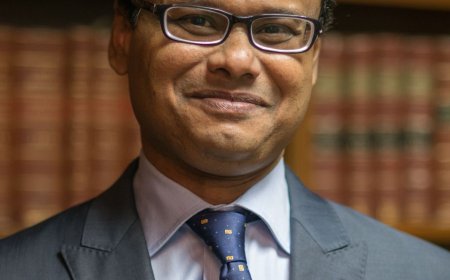
Dr. Mohammed A. Rab is a US-based economist and freelance consultant on economic policy, banking and financial risk management.