




























































The Rage Was Economic, Not Political
The critics are right: the system is unjust. But addressing anger without repairing the economic wiring that produces it has only ever muted the noise. We are not risking a tinderbox. We are responsible for the one we are already living in.

In a small workshop in Mymensingh, a welding machine goes silent, forcing the owner to burn expensive diesel. At that exact moment, in a corporate high-rise in Dhaka, the air conditioner hums uninterrupted, powered by a grid that pays plant owners millions to sit idle.
In Gaibandha, a farmer sells potatoes at a loss, while in the city, intermediaries control the margins, protected by invisible walls. In a graduate’s room, a degree gathers dust.
These are not isolated misfortunes. They are outcomes of the same design.
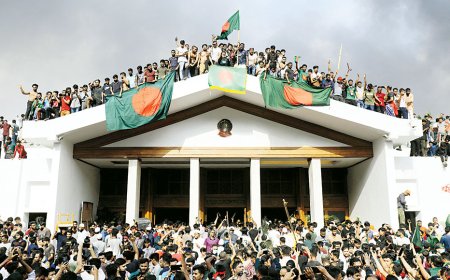
This is what the July uprising was really about. One of the legacies of that summer has been a broiling public debate about the anatomy of the anger that fueled it.
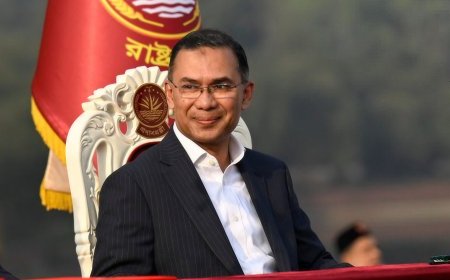
On one side, a prominent populist critic argues that the state collapsed because it lost insaf -- the moral imperative of justice.
His argument is visceral: he claims the “legal judgment” of institutions diverged from the “moral judgment” of the people, creating a “Parallel State” in the media that villainized dissent.
From this vantage point, the burning of institutions was not anarchy; it was a reclaiming of dignity.
On the other side, establishment voices warn that justice without procedure is merely domination, and that burning the shared spaces of disagreement destroys the very mechanisms needed for repair.
The populist is half right. The social contract did rupture because people felt a profound lack of justice. But the diagnosis stops short.
He frames injustice as relational: a grievance about disrespect, silencing, and humiliation.
The reality is harder, and colder. In the end, both camps are trapped inside the same failure: one substitutes moral language for economic repair, while the other uses procedure to mask extraction.
The people did not revolt simply because they were unheard. They revolted because they were forced to absorb the costs of a system designed to protect entrenched power.
This anger did not arrive suddenly in July. It accumulated quietly over years of policy choices that treated household resilience as an infinite resource.
The “Parallel State” was not merely a roster of editors or judges. It was a hidden infrastructure that routed risk downward to households while guaranteeing returns upward to capital.
It was not just about arrogance. It was about a political economy that had perfected a measurable system of extraction.
For decades, the unspoken premise holding this system together was simple: Bangladeshi households would absorb any shock, quietly.
The logic was identical across every sector. Risk was pushed downward to labor, while reward flowed upward to power.
For the youth, the uprising was the explosive realization of a broken promise. The numbers do not need embellishment.
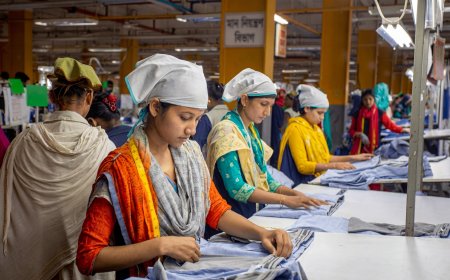
Nearly 40 percent of young people are now classified as NEET (Not in Education, Employment, or Training). Up to a third of graduates, by some estimates, were jobless for as long as two years. The economy created low-skill sewing jobs and high-skill elite roles, but almost nothing in between.
This extraction machine did not merely deny opportunity. It actively eroded survival. Inflation was not bad luck or an external shock; it was an internal transfer of wealth.
For 44 consecutive months, wage growth failed to keep pace with rising prices. Farmers sold harvests at a loss while urban retail prices surged, controlled by intermediaries who owned the gap and the profits.
The nation’s infrastructure split into two economies: one for Corporate Important Persons, and one for everyone else. In the energy sector, the state paid approximately Tk 320 billion in capacity charges in a single year, paying power plant owners to remain idle.
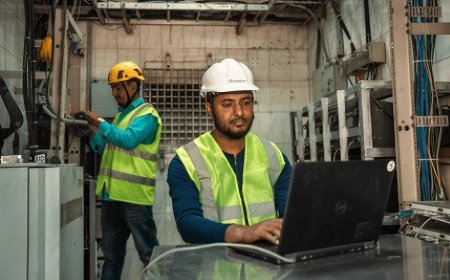
Capital was paid to rest. Meanwhile, rural workshops endured six to seven hours of load-shedding, burning diesel simply to remain productive.
The banking system mirrored the same design. Elite borrowers accessed capital at single-digit interest rates, while rural lending -- originally designed as concessionary, subsidized credit -- was outsourced to microfinance institutions charging 22 to 24 percent.
Labor was charged to endure. Tenant farmers were excluded from formal credit because they owned no assets, trapped in a Catch-22 where the poor could not access the finance they needed to escape poverty because they were poor.
The populist wants insaf to mean vindication. The establishment wants justice to mean procedure. But true insaf requires a third way. For decades, governance meant managing anger.
This is our opportunity to redesign the economy so anger is no longer required. This means rebuilding institutions so risk flows upward to capital rather than downward to labor. It means decentralizing infrastructure to favor rural producers.
It means shifting credit from collateral-based exclusion to cash-flow recognition, so a tenant farmer’s history counts as an asset. It means aligning education and training with actual labor markets, not credential inflation.
The critics are right: the system is unjust. But the anger did not coalesce because dignity was insulted.
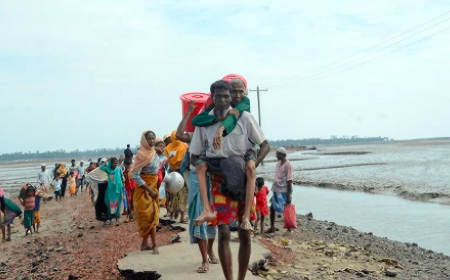
It happened because households were being impoverished: stripped of savings, forced to cut meals, and left to face each health shock as a financial catastrophe.
Addressing anger without repairing the economic wiring that produces it has only ever muted the noise. We are not risking a tinderbox. We are responsible for the one we are already living in.
Saba El Kabir is a development practitioner and founder of Cultivera Limited. He can be reached at [email protected].