










































Bangladesh Doesn't Need to Be a "Development Superstar" -- It Can Stand on Its Own
An article in The Economist shouldn't affect a country of this size, with fundamentals this strong.

The Economist says Bangladesh is no longer a development superstar -- and it's right. Bangladesh shouldn't want to be one.
What the Article Gets Right
On the facts, there isn't much to argue with. A third of all bank loans aren't being repaid, and the sector as a whole has negative capital. Lending to the private sector is growing at its slowest pace in more than three decades.
But the article stops at the diagnosis. It leaves out what the country has going for it, and it never asks what is actually holding it back.
What It Leaves Out
"Development superstar" is a title given to countries that are being helped. It measures how well a poor country performs on terms set by the people helping it. Bangladesh earned it.
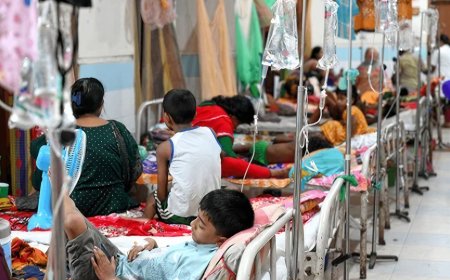
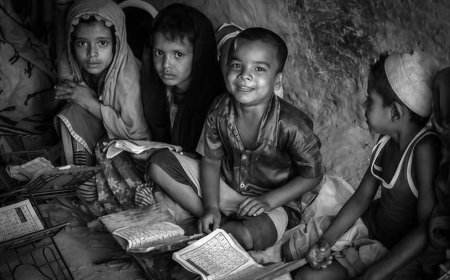
In 1971, life expectancy was under 45 years. Today it's 75. The average woman had six children at independence and has two now.
These gains came at the bottom of the pyramid. That is a development success story. It has also run its course. A country of 180 million people with a $500 billion economy needs bigger ambitions than being the best student in the class, doing what the teacher says for a year-end award.
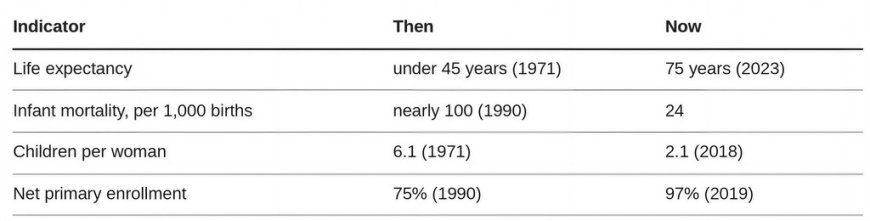
Sources: LSE South Asia Centre, World Bank, The Daily Star, UNICEF.
How the country got here matters. Bangladesh has grown at close to 6% a year since 1991, under governments of every kind. Policy was rarely optimal, and the banking losses now coming to light are part of the cost.
What held, whoever was in office, was the basic direction: Exports, remittances and private enterprise. Businesses could plan around that. Over the long run, stability beats optimal policy.
Indonesia grew at about 7% a year for three decades before its own banking crisis in 1998, which cost more than 50% of GDP. It paid the bill, rebuilt its institutions and is a $1.5 trillion economy still growing at 5%.
Bangladesh's bill, on the estimate The Economist cites, is around 10% of GDP, and it starts from modest government debt of about 40% of GDP. What businesses need now is what they have always needed: the ability to plan, and the capital to act on it.
The private sector is around 80% of the economy, and it has finally started to act. The government has made that easier, merging BIDA, BEZA and the PPP Authority into Invest Bangladesh, a single point of access for investors.
BD Invest Global (BDI) does the same job from the private side, as an investment engagement platform that connects global capital with Bangladesh's private sector. Then there's the talent. Bangladeshis abroad sent home a record $35.6 billion last fiscal year.
I can name over 5,000 Bangladeshi professionals abroad who could contribute in key areas like technology, finance and law. Close to 1,000 of them work at the six largest technology firms, and about 700 work in semiconductors.
At home, a deep pool of high-caliber technology talent is badly underused and could help the economy leapfrog.
None of this made the article.
What's Actually Missing
The banks are a serious problem, but a solvable one. They didn't get here alone.
The IMF said in 2020 that bad loans were probably double the official figure, and the development partners monitoring the sector saw the same numbers. Responsibility is shared, and treating it that way would make everyone's advice more credible now. A lot of the disappointment comes from expecting banks and local institutions to do something they were never built to do.
Banks can finance working capital, trade and expansion backed by collateral. They can't take risk on a new company or a new industry, and they were never going to. Neither can most local institutions, the business families included. The capacity isn't there. Once the banks are asked to do what they're actually good at, they become part of the solution.
39 commercial banks have already launched BSIC, a venture fund of Tk 425 crore -- about $35 million -- so that the risk they can't take themselves gets taken by a team built for it.
The real constraint is elsewhere.
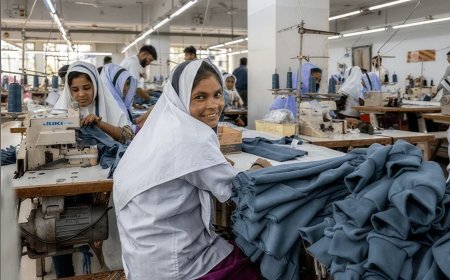
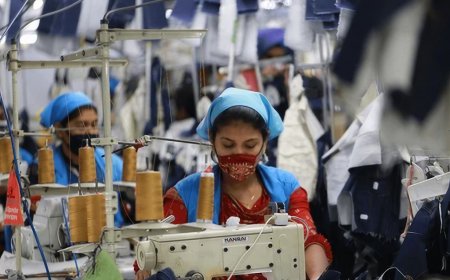
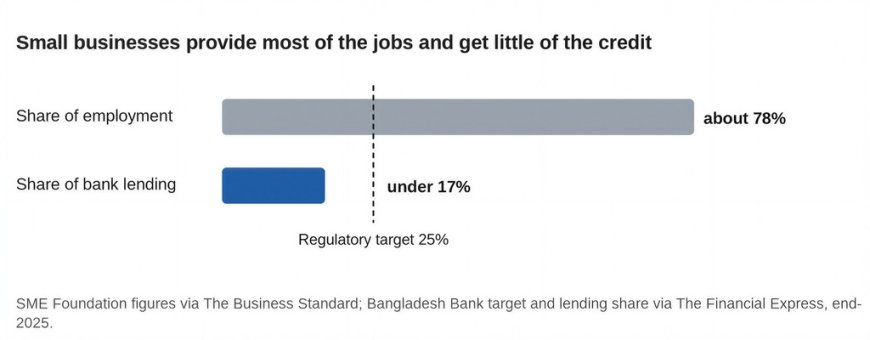
An economy this size grows when its small and medium businesses can borrow and its middle class can build wealth. Neither is being set up at scale. Cottage, micro, small and medium enterprises account for about 78% of employment and less than 17% of bank lending, against a regulatory target of 25%.
Small Businesses Provide Most of the Jobs and Get Little of the Credit
Microfinance, the thing Bangladesh was most praised for, was built on a separate track from the banks. It has its own regulator, and a borrower's repayment record rarely follows them to a bank. More than 30 million people borrow from microlenders, and few ever graduate to a bank loan.
What could change this is only now taking shape: Private credit bureaus, and companies like bKash and Pathao that can assess credit for the banked and the unbanked alike.
The middle class, meanwhile, has three places to put its savings: A fixed deposit, land or gold jewelry that loses up to 18% the day it's sold back. None of them gives it a share in the country's growth. A capital market that actually works would change that.
Pension products. Funds a regular saver can buy into. Part of the reason is that the money in the banks doesn't move. Deposits are around $180 billion and growing at 10.7% a year. This is where business families keep their surplus, and neither the capacity nor the incentives exist to do anything else with it.
A CFO gets blamed if a new investment goes wrong. Nobody gets fired for leaving money in the bank. Meanwhile, 8% inflation eats away at it every year, and a floating taka, in a country that needs to export more, should keep weakening.
The companies solving access to finance were built mostly on foreign capital. Pathao is majority foreign-funded, and bKash, though controlled by BRAC Bank, was scaled with money from abroad. That needs to change. Imagine what happens when local money goes into solutions like these.
For foreign investors, this is the opening. The ones who came early built the country's category leaders, and the next round can be done alongside local capital that is finally starting to move.
Shikho, which is leading the digital education charge in Bangladesh, just brought in one of the country's business families as a strategic investor.
After years of looking to the state, development agencies and embassies for direction, much of the private sector has forgotten that it can act on its own. Development, if anything, is now failing Bangladesh. This isn't about intent. Development money helped build the clinics and schools behind the numbers above.
But institutions designed to lift a country out of poverty aren't equipped to help it compete. The support architecture has a design flaw: It doesn't listen.
In two decades of investing in frontier markets, the last six from Dhaka, I've found that most development institutions and agencies don't talk to the private sector. They know only the deals put in front of them. Embassies, similarly, mostly hear from the same familiar circle.
The real work is being done around the country, by people neither tends to meet. Some of the smartest and most driven of them are underemployed, or can't scale their businesses for lack of funding -- debt or equity. The same goes for the diaspora.
Most of the 5,000 professionals I mentioned earlier have never been approached by anyone working on Bangladesh's economy. People reach out to who they already know, or to whoever visits Dhaka, instead of finding out who is out there.
After five decades, development capital has done something worse than miss these people. It made us comfortable. We have mostly courted aid, which came to $174 billion from all rich countries last year and is falling, while the world's asset managers hold $147 trillion -- and it has worn down the country's ability to think for itself.
None of this is complicated to fix. It starts with who gets asked. Right now the country turns to the same few people for help. There are other options, including global financial investors and qualified diaspora with exactly that expertise.
Business families should set up investment offices and give their finance teams a written mandate to take risk. Bangladesh Bank should hold banks to the 25% target for small-business lending, and the banks can get there by backing the fintech startups that already reach those borrowers.
The same private sector, once it's funded, will build the savings and credit products the middle class doesn't have. Development agencies and embassies should survey the market before prescribing for it, and they can start by talking to the founders, investors and diaspora professionals already doing the work.
Since the article came out, the question I've heard most in Dhaka is how it will affect Bangladesh. That question is the problem. An article in The Economist shouldn't affect a country of this size, with fundamentals this strong.
The country's brain trust, at home and abroad, can solve whatever problem comes its way. Anyone serious about what comes next for Bangladesh should start there.
Rahat Ahmed is Founder and Managing Partner of Anchorless Bangladesh, a New York-based investment firm focused on Bangladesh.