




























































Sometimes There is Fire Without Smoke
The success of a country's moral education cannot be measured by looking at children's lips. If you want to measure it, ask whether a seven-year-old child can sleep safely at night inside that institution.


I felt oddly reassured when I read the Amir's remark. At least one of the greatest threats to our children's safety has apparently been solved: Madrasa students do not smoke cannabis.
Then I remembered that the allegations appearing in the news about madrasas lately have not been about cannabis or cigarettes. They have been about child rape, sexual abuse, intimidation, attempts to suppress complaints, pressure to settle cases, and, in some instances, efforts to portray the child making the allegation as a liar or as somehow morally suspect.
So is the bar for the moral excellence of an educational institution really so low that "our students do not take drugs" can function as its character certificate?
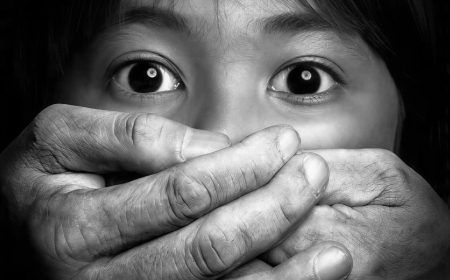
Smoking is harmful, certainly. Drugs are harmful too. But sexual assault is not a "bad habit" -- it is a serious criminal offence. And child sexual abuse cannot be softened into the language of mere "moral deviation." It is a violent assault on a child's body, safety, psychological development and fundamental rights.
It is fine to inspect children's lips. But who is checking whether their bodies are safe?
The recent case in Savar makes that question even more disturbing. According to news reports, a seven-year-old child was allegedly sexually abused by multiple students and teachers within the same institution, and a case was filed against ten people. More disturbing still is the allegation that some of the adults the child approached for help also exploited the child's vulnerability.
At that point, the theory of "one bad hujur" is no longer enough. One offender can abuse a child. But when a child cannot find even one safe adult to whom abuse can be disclosed, and when allegations arise that vulnerability was exploited across several levels of the institution, the problem is no longer simply an individual's moral failure. It is the collapse of the institution's safeguarding system.
Where is the child supposed to go? If a teacher is accused, who holds the teacher accountable? If the director is accused, who oversees the director? And if the institution itself is judge, investigator and mediator of the complaint, in whose hands does the child's safety actually rest?
How many "isolated incidents" must be placed next to one another before we are allowed to use the word pattern? One hundred? One thousand? Or must we first establish whether any of the accused had a cigarette between their lips?
Our public morality seems to have developed a peculiar hierarchy. Music is dangerous. Cinema is dangerous. What a woman wears is dangerous. Who forms a relationship with whom is dangerous. Cigarettes are dangerous. The radar of our self-appointed moral guardians is extraordinarily sensitive to all these things.
But when allegations of child sexual abuse emerge, that same radar appears to suffer a temporary technical fault. How can a society mobilise a crowd within minutes over an allegation of religious offence, yet remain so quiet when a seven-year-old child is allegedly sexually abused?
If you establish yourself as a moral guardian of society, the real test of your morality comes not when you identify the sins of your opponents, but when wrongdoing occurs within your own community. Condemning the other side is easy. Integrity begins when you can confront wrongdoing inside your own institution.
We saw an even more naked version of this in the case of the eleven-year-old pregnant child. Once the accused teacher publicly claimed innocence, the discussion shifted towards the child's age, behaviour, clothes, alleged "unruliness," even whether she observed purdah.
A grown man faces an allegation of raping a child, and somehow the child's "purdah" enters the defence. It is difficult to find a more precise illustration of patriarchy.
There is no rape-proof clothing for a child. No rape-proof character. No rape-proof religiosity. The responsibility not to sexually abuse a child lies entirely with the adult; the responsibility to keep that child safe lies with institutions and the state.
This is also why I find Shafiqur Rahman's statement politically troubling.
When a national political leader gives a collective moral certificate to the students of a vast and diverse education system, claiming without empirical evidence that they do not take drugs and that cigarettes are not seen on their lips, the statement no longer remains a simple anti-drug observation. It simultaneously constructs a moral identity: Madrasa identity itself becomes evidence of moral superiority.
The problem is that once an institution is declared morally superior in advance, discussing crimes within it becomes much harder. An allegation against an individual can quickly be reframed as an attack on the entire identity.
That is how institutional denial develops. First: "These things do not happen here." Then: "If they do, they are isolated incidents." Then: "The complainant is lying." Then: "You are damaging the reputation of the madrasa." Eventually the child disappears from the centre of the conversation and the institution's reputation takes the child's place.
I would propose the opposite moral principle: The more strongly an institution claims moral authority, the greater its accountability should be.
How many residential madrasas have a written child safeguarding policy? To whom can a child make a confidential and safe complaint? What is the protocol for immediately removing an accused teacher from contact with children while an allegation is investigated? Who carries out independent inspections? Where are the background checks for staff? What are the legal limits on an institution attempting to "settle" allegations of sexual abuse through internal mediation?
These are elementary questions of child protection. Religious freedom can never mean freedom from accountability.
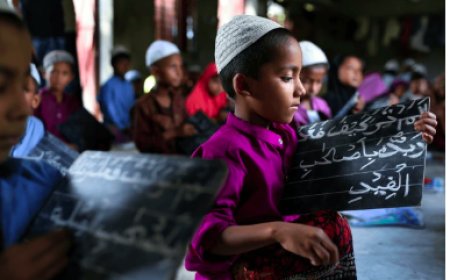
Another issue troubles me. When we speak of "moral education", we seem far more interested in what a child can memorise than in who has access to that child's body.
Yet the first lesson of morality in any civilised state should be remarkably simple: A seven-year-old child's body belongs to that child; the child's "no" matters; the child's fear matters; the child's allegation matters. And that child's safety matters more than any institution, cleric, teacher, political party or religious image.
The argument that "the madrasa's reputation is being damaged" also needs to be read in reverse. We must stop taking the intellectual shortcut that criticism of a madrasa automatically equals hostility to Islam. If a doctor commits a crime, we demand accountability from the hospital.
If a schoolteacher commits one, we demand accountability from the school. Why should demanding the same standard from a madrasa become Islamophobia?
If anything, the standard for a religious institution should be higher, because parents entrust not only their child's education to it, but also their faith and confidence. If we genuinely want madrasas to become places for the advancement of moral education, excellent. But then let us not begin the moral examination with yaba.
We have another problem: We have almost turned morality and obedience into synonyms. A child who does not smoke, does not question, keeps their head down and obeys adults is often described as a "good" and "moral" child.
Modern safeguarding, however, teaches children something almost opposite: Your body belongs to you. You may reject inappropriate touching by a teacher, religious figure, relative or any other adult. You may report someone in authority. If you are frightened, you should tell someone.
And "the huzur said so" can never be a legitimate reason for silencing a child. Without this education, obedience itself can become a source of vulnerability.
So yes, I will be happy if madrasa students do not take yaba. Happier still if they do not smoke cannabis. Wonderful if they do not smoke cigarettes either.
But if, in 2026, the moral benchmark of an institution educating children is still "our boys do not have cigarettes on their lips," while we cannot say with the same confidence that "every child in our care is protected from sexual abuse," then the problem is not the morality of the children. The problem is our definition of morality.
The success of a country's moral education cannot be measured by looking at children's lips. If you want to measure it, ask whether a seven-year-old child can sleep safely at night inside that institution.
Dr. Lubna Ferdowsi is an academic and researcher based in England.