




























































Why Bangladesh Should Bring SAARC Back From the Dead
The moment may have arrived for Dhaka to turn India’s need for regional legitimacy into an opportunity to reset the relationship on a more balanced and multi-lateral footing.

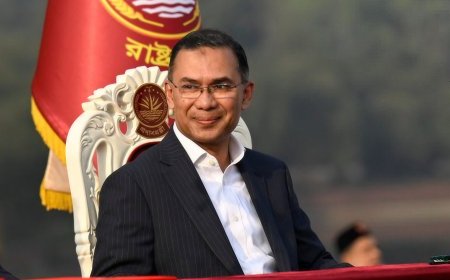
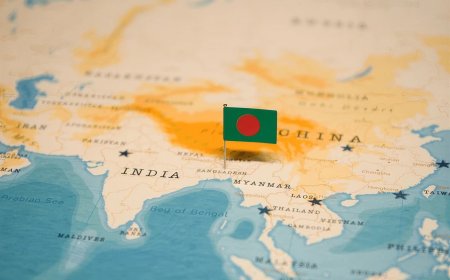
Imagine Bangladesh’s Prime Minister accepting India’s invitation to Delhi and, standing alongside the host at the sidelines of the BRICS Summit, announcing that the next SAARC Summit will be held in Dhaka.
Would that be an expression of what the people of the region want from their leaders?
This article invites readers to imagine precisely such an aspirational possibility -- not as diplomatic fantasy, but as a potential strategic move under a “Bangladesh First” policy: using the present moment, India’s regional ambitions, and Bangladesh’s own growing strategic agency to revive SAARC and reset its relationship with India through regional multilateralism.
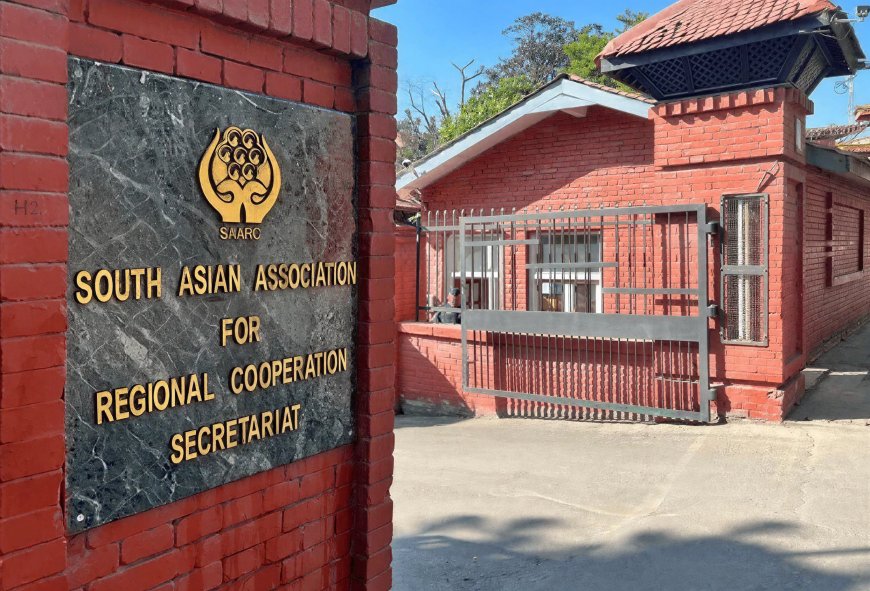
For nearly a decade, the South Asian Association for Regional Cooperation (SAARC) has existed mostly as a memory -- a summit that stopped happening, a secretariat in Kathmandu that keeps the lights on without much else to do, an idea that eight governments still nominally endorse and none quite dares to revive.
Since India suspended its participation after the 2016 Uri attack, SAARC has drifted from dormancy toward irrelevance, and most observers in the region have simply stopped expecting it to matter again.
That assumption deserves to be tested -- and Bangladesh, at this particular moment, is better positioned than any other South Asian state to test it.
A Moment of Leverage, Not Just Principle
Since the popular uprising that ousted the Awami League government in 2024, Bangladesh has been navigating a delicate transition -- rebuilding democratic institutions, prosecuting accountability for the crackdown that preceded the government's fall, and recalibrating a foreign policy that, for over a decade, had bent unusually far toward New Delhi's preferences.
That recalibration has not been smooth. Sheikh Hasina, convicted and sentenced in absentia by Bangladesh's International Crimes Tribunal (ICT-BD), remains in India. Dhaka's extradition request, filed under the two countries' own bilateral treaty, has sat "under examination" for months.
Noting the ICT verdict on Sheikh Hasina, the India’s Ministry of External Affairs reiterated to “always engage constructively” as close neighbour of Bangladesh.
In early August, Hasina was permitted to hold a virtual press conference from Indian soil, drawing a rare public response from Bangladesh’s Prime Minister Tarique Rahman, who urged India to create a "conducive environment" to boost ties between the two neighbours.
Dhaka's objection was spelled out more explicitly in a Ministry of Foreign Affairs press release, which stated that the ministry "deeply regrets that in spite of concerns conveyed a priori to the Government of India about the likely ramifications of this event on the reset of our bilateral relations, this public event was permitted to be held."
Foreign Minister Khalilur Rahman went further still, framing the episode as an attempt to “undermine the justice department of Bangladesh” a key pillar of the nation asserting Bangladesh will never again become a “client state.”
Yet in the same week, India's intelligence chief made a quiet visit to Dhaka, and its High Commissioner shuttled between meetings with Bangladesh's foreign minister and prime minister before flying home all while New Delhi kept open its invitation for Rahman to attend the 2026 BRICS Summit it is hosting, and to pair that trip with a bilateral visit.
The message embedded in India’s diplomatic choreography is not subtle: India wants the appearance of a settled, cooperative relationship with Dhaka, particularly with the world's attention turning toward its BRICS presidency, that would demonstrate that her position in the regional cooperation is real.
This is precisely the asymmetry that Bangladesh should recognize, articulate and strategically leverage, and the moment it should use.
The moment may have arrived for Dhaka to turn India’s need for regional legitimacy into an opportunity to reset the relationship on a more balanced and multi-lateral footing.
Bangladesh has considerable strategic agency, and South Asia faces challenges that cannot be effectively managed through bilateral relationships alone.
A SAARC revival could therefore transform Bangladesh from a relatively smaller bilateral interlocutor into an agenda-setting regional actor.
Reclaiming an Idea that was Never India's to Begin With
The tool available to Bangladesh here is not a new demand but an old one -- dusted off and pointed in a different direction.
SAARC was not India's creation. It emerged from the diplomatic initiative of President Ziaur Rahman in the late 1970s, formalized in Dhaka in 1985, built on the premise that South Asia's smaller states had as much right to shape regional cooperation as its largest one.
For 40 years, that founding fact has mattered less than India's ambivalence about the organization, since India's weight in the region meant SAARC could not function without its buy-in and could be paused whenever New Delhi's relationship with Islamabad soured.
But India's ambivalence toward SAARC was never really about Bangladesh. It has always been a proxy fight with Pakistan, fought using a regional institution as the battlefield.
Every other member state -- Nepal, Sri Lanka, Bhutan, the Maldives, Afghanistan, Bangladesh itself -- has effectively been held hostage to a bilateral rivalry that has nothing to do with their own developmental or diplomatic interests.
Reviving SAARC, then, is not merely a nostalgic gesture toward Zia's legacy. It is a chance for Bangladesh to make a pointed argument: that South Asian regionalism should not remain permanently frozen because of a conflict between two of its members, and that Dhaka -- as the country that first proposed it -- has both the standing and the responsibility to say so.
Why Now, and Why This Works Regardless of India's Answer
There is a strategic elegance to proposing this in the run-up to the BRICS Summit specifically.
India has invested heavily in alternative regional architectures -- BIMSTEC chief among them -- precisely because they let New Delhi engage South and Southeast Asia while sidelining Pakistan.
BRICS, similarly, offers India a global stage without a South Asian rival at the table.
A Bangladeshi call to revive SAARC, timed just before India hosts a summit celebrating its global-power ambitions, forces an implicit question into the open: Is India actually invested in South Asian regionalism, or only in the version of regionalism that excludes its most difficult neighbor?
Whatever India's answer, Bangladesh gains something.
If India engages seriously -- even cautiously -- Dhaka will have demonstrated that regional leadership does not require Delhi's permission, only its own initiative.
If India declines, or lets the proposal wither through diplomatic silence, the refusal itself becomes evidence for the very narrative Bangladesh is trying to establish: That India's regional diplomacy has been more about managing smaller neighbors than genuinely empowering them. Either outcome strengthens Bangladesh's position as a country willing to lead rather than simply react.
This is also, crucially, a way for Bangladesh to define itself on its own terms during a fragile transition.
The post-uprising government inherited a foreign policy widely seen -- fairly or not -- as having drifted into excessive deference to India under the previous administration. A SAARC proposal rooted explicitly in Zia's founding role offers a domestically resonant story: Continuity with a nationalist foreign-policy tradition, rather than a wholesale reinvention driven by grievance toward Delhi.
That distinction matters. A Bangladesh that appears to be reviving a dormant regional institution on principle -- one it helped build in the first place -- will read as something closer to statesmanship both domestically and internationally.
Building the Coalition Before the Ask
A SAARC revival proposal that arrives as a purely bilateral signal to India will be read as exactly that and will likely be dismissed as such. Its credibility depends on Bangladesh doing the quieter work first: Sounding out Nepal, Sri Lanka, Bhutan, and the Maldives -- states that have their own frustrations with a moribund SAARC and their own interest in a functioning regional forum that isn't perpetually held captive to India-Pakistan tensions.
None of these governments need to be persuaded that SAARC's paralysis has costs; they have lived with those costs for a decade.
What they need is a member state willing to spend political capital reopening the conversation, rather than waiting for India or Pakistan to do so. Bangladesh, unencumbered by the direct rivalry that freezes India and Pakistan in place, is arguably the only member with both the historical claim to SAARC's founding and the diplomatic distance to plausibly convene the others.
If Dhaka can bring two or three other capitals along before making its proposal public, the initiative stops looking like a bilateral card played against New Delhi and starts looking like what it claims to be: A genuine regional push that India can join or decline but not simply absorb into a bilateral dispute.
A Scene Worth Imagining
Picture the moment this proposal is designed to produce: Bangladesh's prime minister, having accepted India's invitation to New Delhi, stands on the sidelines of the BRICS Summit and announces alongside his host that the next SAARC Summit will convene in Dhaka. It is a small scene, a few minutes of joint remarks, but the symbolism would travel far beyond the room.
A regional institution founded by a Bangladeshi president, dormant for a decade because of a rivalry between two other members, revived in a moment when Bangladesh could easily have been consumed entirely by its own bilateral grievances with India.
Would that be what the people of the region want from their leaders?
There is good reason to think so.
Indeed, SAARC remains the least integrated region in the world. Intra-SAARC trade remains a fraction of what regional trade looks like in almost every other part of the world, a gap that shows up not in diplomatic communiqués but in the everyday cost of goods, the difficulty of travel, and the stunted ambitions of small and medium businesses across eight countries that share borders, rivers, and histories but precious little functioning cooperation.
A revived SAARC would not resolve those problems overnight. But the scene itself of two prime ministers standing together, announcing a shared regional future is the kind of gesture citizens across South Asia have had vanishingly few opportunities to see.
The Case for Restraint, and Why Bangladesh Should Proceed Anyway
None of this should be mistaken for an easy win.
The drifting of SAARC, spirit as an aspirational body for regional integration, from dormancy to irrelevance is, to some analysts, is structural, not accidental -- rooted in an India-Pakistan hostility that a Bangladeshi proposal, however well intended and timed, cannot resolve.
India's foreign policy establishment may read any Dhaka-originated SAARC push, arriving as it does amid the Hasina dispute, as an attempt to extract bilateral leverage through multilateral cover -- and respond by simply declining to engage, at little cost to itself.
New Delhi has other regional platforms it prefers precisely because they exclude Islamabad, and nothing about a revived SAARC changes the political incentives that make Indian engagement with Pakistan, even indirectly, a hard sell in Delhi.
The extradition issue, meanwhile, will likely be litigated on its own legal track regardless of what happens at the level of summitry, since the bi-lateral treaty obligations give India considerable discretion to slow-walk Bangladesh’s requests.
These are real constraints and Bangladesh should not oversell what a SAARC proposal can achieve. It may not expedite the extradition or produce a summit at all.
However, foreign policy is not only about the moves that succeed outright -- it is also about the moves that clarify where a country stands and what kind of neighbor it intends to be.
A principled but modest push to revive SAARC -- the oldest regional body, which Bangladesh helped found -- costs Dhaka little, commits it to nothing beyond its stated values, and offers a rare opportunity to demonstrate a genuinely Bangladesh First policy. More importantly, it could shift Bangladesh–India relations beyond a narrow bilateral lens toward what South Asia might build together.
As Bangladesh writes the next chapter of its own democratic story, this principled push towards regionalism is not a small thing to offer the neighborhood. It will also stand as a reminder for key regional players -- India and Pakistan alike -- that regional leadership cannot simply be claimed. It has to be earned by building something the people of the region want.
Dr Mohammad Zahidul Islam Khan, a retired Group Captain of Bangladesh Air Force and Chevening scholar, is a Visiting Research Fellow of the Department of Politics and International Relations, University of Reading, United Kingdom and the Registrar of the American International University-Bangladesh. He can be reached at [email protected].