





































































A Tale of Two Clans from Medieval Sylhet
Whereas Khwaja Usman’s lineage was swept into the sidelines of history, Raja Subid Narayan’s descendants gained prominence in the nation.

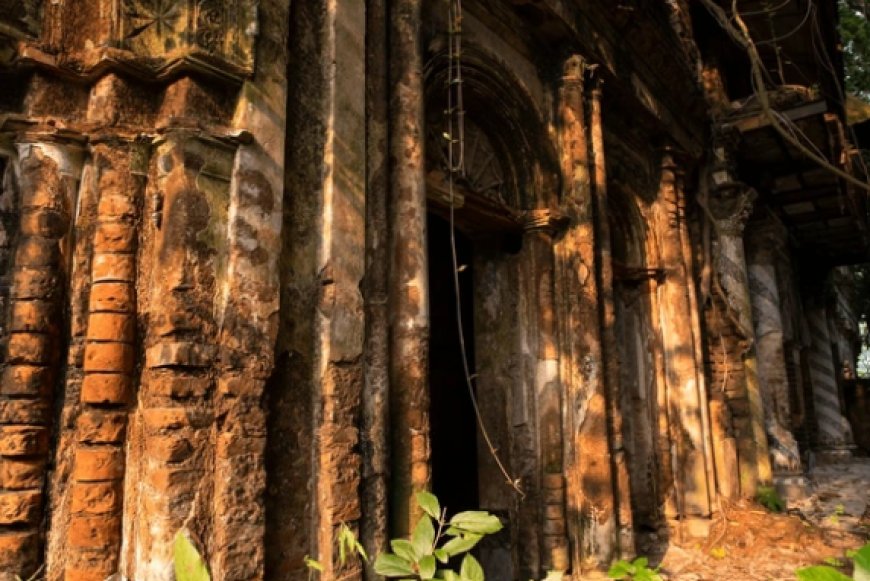
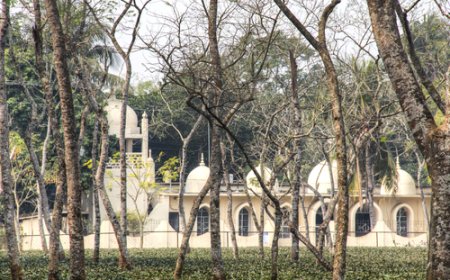
There is a tranquil two-story, wooden bungalow that showcases early 20th-century Bengali craftsmanship in Sylhet Division, one surrounded by forests and adjacent to a massive pond.
This is the Rajnagar Dewan Bari, also called the Zamindar Bari of Ita, built by Dewan Abdul Khalek Ahmed Chowdhury.
The family’s history was depicted by Info Hunter, a social media channel with 1.2 million followers that follows the nation’s history.
Today, 21 sons and 11 daughters of this clan have ownership of this zamindar-era household with its manicured gardens, and hold an illustrious position.
Dewan Shamim Afzal was interviewed for this documentary, as his family owns the storied estate.
His grandfather Dewan Abdul Hamid Chowdhury of the mid-1800s was a member of Assam Legislative Assembly, and received the Khan Bahadur title from the British India government for his social service. Also, his father Dewan Abdul Basit Chowdhury was Revenue and Commerce Minister of East Pakistan, and head of the provincial assembly.
Here’s the kicker: They are the descendants of Ita Kingdom’s ruler. He was defeated in an invasion by Pathan chieftain Khwaja Usman Khan Lohani in 1611, and this Afghan leader’s lineage also remains in Sylhet Division. Khwaja Usman was a noble in the court of Bengal Sultan Sulaiman Khan Karrani in the 1560s.
When the Mughal Empire defeated the successive Pathan sultan, Khwaja Usman’s uncle Qutlu Khan Lohani gained control of north Orissa in 1576. After the Mughals invaded this land as well in 1592, Khwaja Usman and his family were exiled to east Bengal.
In 1593, upon gaining a fort in Bokainagar, Mymensingh, Khwaja Usman and approximately 20,000 Pathan soldiers continuously battled the Mughal Empire, as Bengal was still contested territory after the fall of the sultanate. After eighteen years, he had to evacuate his mile-long fort due to Mughal advances, and decided to leave for south Sylhet.
In 1611, upon reaching Sylhet, Khwaja Usman seized the minor kingdom of Ita, or Manukula Pradesh, from Raja Subid Narayan, whose father Bhanu Narayan received the raja title. This extensive tract of land in south Sylhet gained the status of a small state under protection of Tripura kings, and had the following boundaries: Langla Hills on east, Manu River on south, Gopla River on west, and Kushiyara River on north.
Upon Khwaja Usman conquering this state, Raja Subid Narayan passed away, his sons converted to Islam, and were provided zamindaris in the area. What was once deemed a birthright for the raja’s sons was provided to them only in small portions by the new ruler.
Afterwards, Usman seized Taraf (Habiganj) and other areas of Sylhet as well. However, his newfound kingdom was short-lived as in 1612, the Mughals invaded Sylhet, and he lost his life in the war.
The power trajectory of Khwaja Usman descendants went on a downward slope, as none could match the wealth and influence of their forefather who controlled nearly 1,500 square miles of south Sylhet.
His son and nephew became commanders under the Mughal Empire, grandson from his daughter’s side became the military governor of Sylhet, great-grandson was deputy governor, followed by great-great-grandson who was a general under Bengal Nawab Alivardi Khan.
The family history was written by the general’s son Maulana Abdur Rahim Khan from the mid-1700s in Nala-e-Rahimia, a Persian book that is the primary record of this clan.
No remnants or estate remains of Khwaja Usman; even his grave was unmarked to prevent desecration by the conquering Mughals. However, Raja Subid Narayan’s descendants have maintained some of their estate, even after the abolishment of the zamindari system in 1956. Despite the devastating blow after the invasion of their homeland, this family managed to remain significant for centuries afterwards.
Whereas Khwaja Usman’s lineage was swept into the sidelines of history, Raja Subid Narayan’s descendants gained prominence in the nation. Out of the raja’s four sons, Haji Khan’s descendants contributed to sociopolitical developments, including the Bengal Muslims’ awakening as a political bloc in Assam.
An entire pargana (administrative unit) belonged to them during British rule, and they built masjids and madrassas with a fervent devotion to Islam.
Even today, five surrounding villages pay their respects to the family.
“When the Almighty has given to you plenty, you give to others, it’s not just for you! These people in turn help me,” mentioned the raja’s descendent Dewan Shamim Afzal when concluding the interview.
The tides of history never cease to amaze me.
Tamim Choudhury is a public affairs specialist for an international volunteering agency. The views expressed are of his own.