






















































Why Bangladesh Must Rethink Migration Policy Now
Climate mobility should not be viewed exclusively through the lens of loss and displacement. When supported by effective policies, mobility can contribute to economic development, strengthen resilience, and expand opportunities for affected populations.

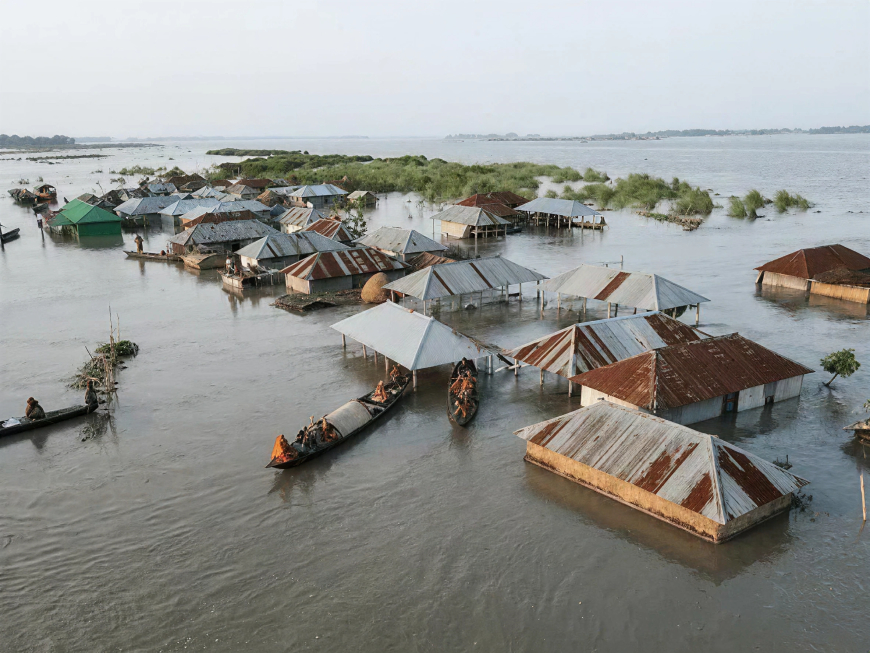
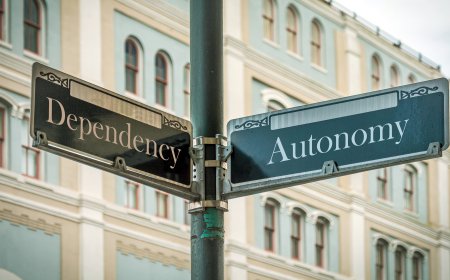
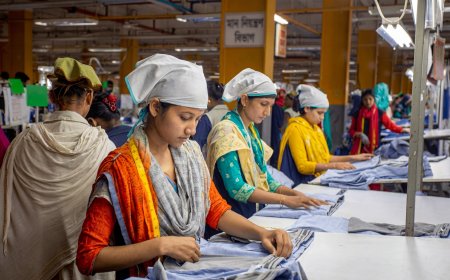
For decades, migration in Bangladesh has largely been viewed through economic and humanitarian lenses. People moved to cities in search of employment, while those displaced by floods, cyclones, or river erosion were often seen as victims requiring relief and rehabilitation.
However, the realities of climate change are forcing the world to rethink this narrative.
A new concept is emerging within international climate and disaster policy circles: Climate Mobility. Increasingly recognized by the United Nations, the International Organization for Migration (IOM), the World Bank, and climate adaptation experts, climate mobility refers to the movement of people in the context of climate change and environmental degradation.
Rather than treating migration solely as a crisis, the concept recognizes mobility as a potential adaptation strategy, a resilience mechanism, and a development opportunity.
For Bangladesh, this shift in thinking could not be timelier.
Bangladesh at the Frontline of Climate Mobility
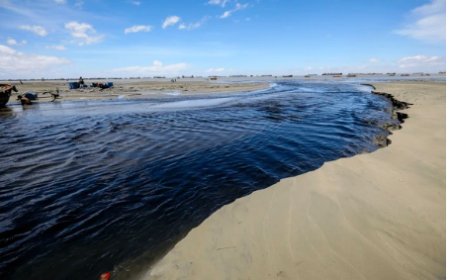
Bangladesh is widely recognized as one of the world's most climate-vulnerable countries. Rising sea levels, salinity intrusion, increasingly intense cyclones, riverbank erosion, flooding, and heat stress are already affecting millions of people across the country.
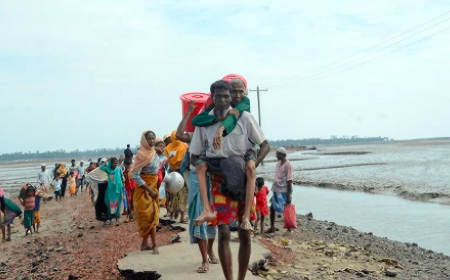
The impacts are not theoretical; they are visible in everyday life. Coastal farmers struggling with saline soils, fishing communities facing declining catches, families repeatedly displaced by river erosion, and young people leaving villages because livelihoods can no longer sustain them are all part of a broader climate mobility story.
Recent nationwide assessments conducted by IOM estimate that nearly five million people in Bangladesh are currently living in situations of disaster-induced internal displacement caused by floods, cyclones, river erosion, and other natural hazards.
The assessment found that displacement is occurring across all divisions, with particularly high concentrations in climate- exposed districts.
The recent monsoon floods and landslides in Bangladesh have temporarily displaced approximately 38,500 people (with over 1,000 to 1,700 emergency evacuation shelters opened), while leaving over 1.1 million people affected across parts of the southeastern and northeastern regions.
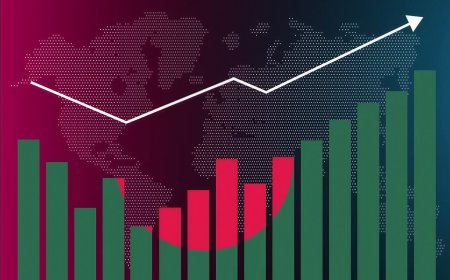
At the global level, the World Bank's Groundswell analysis warned that climate change could drive up to 216 million people to move within their own countries by 2050 if urgent climate and development actions are not taken.
South Asia is projected to become one of the major hotspots of internal climate migration. Bangladesh is likely to be among the countries most affected.
Understanding Climate Mobility
Climate mobility is not a single phenomenon. It encompasses several forms of human movement that occur in response to climate risks and environmental change.
The first is adaptive migration, where individuals or families voluntarily move to diversify income sources, secure employment, or reduce exposure to climate risks. Such movement can strengthen household resilience and reduce vulnerability.
The second is planned relocation, a process through which governments and communities relocate people from highly exposed locations when living safely in place is no longer possible.
International guidance increasingly emphasizes that planned relocation should be considered only as a last resort and must be participatory, rights-based, and locally appropriate.
The third is migration with dignity, a concept advocating that people affected by climate change should not be treated merely as victims. Instead, they should have access to informed choices, social protection, employment opportunities, housing, and public services that enable them to move safely and maintain their dignity.
The fourth and most recent concept is anticipatory action for population movement. Rather than waiting until people are displaced by disasters, governments can use early warning systems, forecast-based financing, and pre-arranged support to help communities prepare for potential movement before hazards strike.
Bangladesh has already emerged as a global leader in anticipatory action for cyclones and floods, creating an important foundation for future climate mobility planning.
Why Mobility Matters More Than Ever
Climate change is often discussed in terms of damaged infrastructure, lost crops, or economic costs. Yet one of its most profound consequences is its impact on human mobility.
When people lose their homes, land, livelihoods, or access to freshwater, mobility becomes a survival strategy. In many cases, migration allows families to diversify income, reduce risk, and invest in adaptation.
However, unmanaged mobility can also create significant challenges. Large-scale migration to urban centers places -- for example, in Dhaka, Chattogram, Khulna -- pressure on housing, water supply, sanitation systems, healthcare facilities, transportation networks, and labor markets.
Many climate-displaced households eventually settle in informal settlements where they remain exposed to poverty, social exclusion, and new environmental risks.
The challenge therefore is not whether climate mobility will occur. It is already occurring. The challenge is whether it will be planned or unmanaged.
A Policy Gap That Needs Urgent Attention
Bangladesh has made remarkable progress in disaster risk reduction. Investments in cyclone preparedness, early warning systems, community-based disaster management, and climate adaptation have saved countless lives.
However, climate mobility remains insufficiently integrated into national planning frameworks. Current policies often focus on reducing displacement but devote less attention to managing mobility as an adaptation pathway.
This creates a critical policy gap. Climate mobility cuts across multiple sectors, including disaster management, climate change adaptation, urban development, housing, social protection, labor migration, local governance, and public finance.
No single ministry can address the issue alone.
So, when the Government prepares its future national budgets and development plans, climate mobility should be recognized as a strategic development priority rather than solely a humanitarian concern.
What Should Policymakers Do?
First, Bangladesh should develop a comprehensive national framework on climate mobility that aligns climate adaptation, disaster risk reduction, urban planning, and migration governance.
Second, climate mobility considerations should be integrated into national adaptation planning, local government development plans, and sectoral policies.
Third, investments in secondary cities and emerging urban centers are essential. If future population movements are concentrated only in Dhaka and Chattogram, existing urban pressures will intensify.
Strengthening economic opportunities, infrastructure, housing, and public services in smaller cities can support more balanced migration patterns.
Fourth, social protection systems should become mobility sensitive. Cash assistance, livelihood support, skills development, and access to public services must be available to climate-affected households before displacement becomes a crisis.
Fifth, Bangladesh should expand anticipatory action mechanisms to include potential population movements triggered by cyclones, floods, river erosion, and other climate hazards.
Finally, more investment is needed in climate mobility data and research. Effective policies require a clear understanding of who is moving, why they are moving, where they are moving, and what support they need.
From Vulnerability to Opportunity
Climate mobility should not be viewed exclusively through the lens of loss and displacement. When supported by effective policies, mobility can contribute to economic development, strengthen resilience, and expand opportunities for affected populations.
The question facing Bangladesh is not whether climate-related movement will occur. It is whether the country will prepare for it strategically.
The nation's experience in disaster risk reduction has already demonstrated that proactive investment saves lives and reduces losses. A similar approach is now needed for climate mobility.
As climate risks intensify across coastal, riverine, and drought-prone regions, Bangladesh has an opportunity to become a global leader in developing people-centered, rights-based, and forward-looking approaches to climate mobility management.
The time to act is before displacement becomes a crisis, not after.
Inmanuel Chayan Biswas, a humanitarian and development practitioner, is working for a prominent NGO in Bangladesh.