






























![A Ledger of the Soul: Navigating the Allah-Bhagavant Nexus in a 19th-Century Puruṣākāra Jñāna Caupara [Gyan Chauper]](https://counterpointbd.com/uploads/images/202608/image_430x256_6a93baa3b09a7.jpg)



















The Iran War and Resilience of Bangladesh
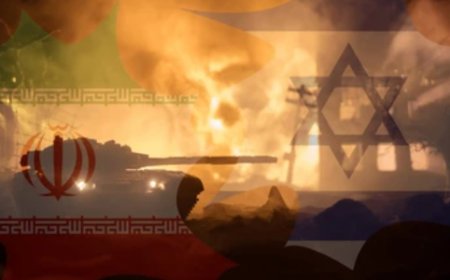
Both the USA and Israel have adopted evasive strategies influenced by various factors, such as diverting attention from the Epstein scandal, preventing Iran from developing a nuclear weapon despite Iran repeatedly denying its intent through negotiations in Geneva, the potential failure of Trump’s MAGA project, and notably, projecting a false sense of control over Iran before Trump’s visit to China to gain bargaining leverage. The length of the conflict will depend on the conflicting attitudes of the USA and Iran’s determination to withstand the war.

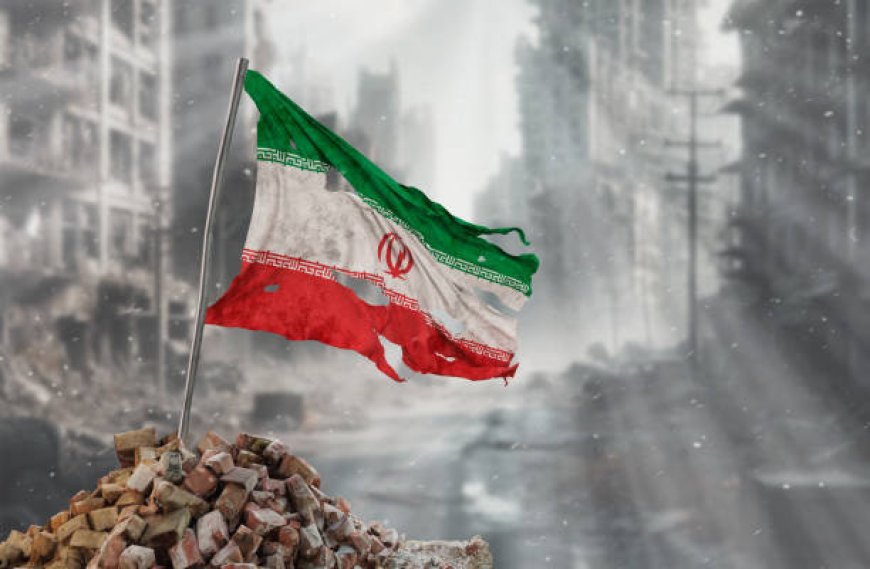
Iran is not a typical modern nation-state; instead, it relies on its long-standing imperial heritage from the Persian Empire. The ongoing conflict between the world's two most powerful countries, as assessed, that Iran could fall sooner than expected has already been nullified. The failure to recognize the unmatchable resilience of Iran by the USA and Israel has put global security in peril. Iran, as a nation, has shown extreme resilience in withstanding decades of Western pressure while fighting for its own heritage of Persian bravery.
The Persians have historically been distinct, contributing rich customs and norms to others rather than simply copying them. Their heritage is so profound that, over time and with civilization’s progress, they have adopted better ideas from others to adapt to global changes. However, these historical efforts to change often failed. For example, Alexander the Great's attempt to merge Greek and Persian cultures was unsuccessful; it remains a clear example.
What makes them resilient is their human capital, a political system infused with democratic enthusiasm -- though not Western democracy -- and, especially, their leadership system, which differs from individual leadership. These elements are unique and provide a solid foundation for enduring pressure from both inside and outside the country.
Iran possesses a large pool of human capital, not only educated to Western standards to support the globalized economic development model but also dedicated to national progress in line with Persian pride. The sizable educated population holds immense potential to help build a resilient economy that has faced sanctions for decades, while providing them with dignified livelihoods and high satisfaction.
The extensive scholarships offered to Iranian students at MIT by the U.S. during a time when Iraq was a major adversary of the U.S. form the foundation of Iran's large scientific human resources. Iran's advancements in armaments and electronics have given it an incredible capacity to challenge the two most developed countries in the world, partly due to the U.S.s subconscious support. The occasional resistance to the regime was highlighted by Western media, but this does not reflect the full reality.
The millions of people mourning their supreme leader's death on the roads do not indicate the regime's unpopularity as depicted from outside. Furthermore, choosing the son of the late supreme leader demonstrates the resolve of the nation amidst the threat of extinction in case the war escalates to the use of nuclear weapons.
Iran maintains political stability within its own governance system, which is guided by democratic norms but not aligned with the standards of a typical Western democratic model. It possesses a deeply rooted institutionalized power structure that extends beyond any single leader, featuring a deep state and security apparatus to safeguard its interests. Over the years, this power system has become embedded in a network of loyalists across a large state bureaucracy, with the IRGC functioning as a deep-state entity.
Its leadership system isn't vulnerable to the loss of any single leader, causing collapse. The people of Iran have a strong sense of national pride, rooted in their historical awareness and cohesion from their civilizational origins, which are hardly comparable to modern ideas of national pride. The shared civilizational memory and cultural narrative have built a strong national unity, helping them resist any form of foreign domination or interference.
Efforts to divide them by outside influences often prove difficult, given the legacy of governance since 1979, during Ayatullah Khomeini's time, and continuing to this day. The typical color revolution, such as those attempted at various times in the Middle East, or the recent success of Gen Z, does not necessarily indicate a similar uprising against the regime. The key difference from other regions is justice rooted in their governance, which fails to inspire any generation -- youth or old -- to stand against and overthrow it.
Underestimating Iran's resilience, the USA was driven into this war by Israel's insistence, which could have far-reaching costs for the entire world. Both the USA and Israel have adopted evasive strategies influenced by various factors, such as diverting attention from the Epstein scandal, preventing Iran from developing a nuclear weapon despite Iran repeatedly denying its intent through negotiations in Geneva, the potential failure of Trump’s MAGA project, and notably, projecting a false sense of control over Iran before Trump’s visit to China to gain bargaining leverage. The length of the conflict will depend on the conflicting attitudes of the USA and Iran’s determination to withstand the war.
The USA likely aims to end it quickly to break Iran’s will to fight for its future, whereas Iran seeks to prolong the conflict to pressure the USA globally due to its collapsing grip on international trade. The war’s outcome probably won't produce a clear winner for America, Israel, or Iran. If America wins, the rule-based world order may collapse, and the Middle East could fall under Israel’s dominance. If Iran prevails, global governance rooted in respect for institutions could endure. The culture of leadership might shift from charismatic individualism to a focus on systemic governance at both national and global levels.
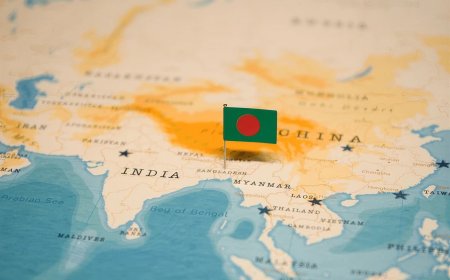
In the context of the Iran War and its global effects, it doesn’t necessarily distance countries like Bangladesh from continuing to engage only in internal politics; rather, it necessitates projecting itself beyond national boundaries. Bangladesh will need to strengthen all aspects of its national power to prioritize domestic use and prepare for involvement in any inter-state crisis. The fight for identity, the race to control key positions, rhetoric for national leadership beyond moderation, and the aim of securing party politics solely by capturing state power through elections can secure party politics, but are unlikely to ensure national security in a crisis.
Relying solely on good governance rooted in internal dynamics may not be enough for Bangladesh to remain significant to itself and influential in the region or beyond. Respect for the leadership system, decentralized but united efforts to achieve national goals, the ability to align national and global dynamics to sustain governance, and above all, practicing politics that build national resilience against global crises are essential.
The resilience of Bangladesh’s people has garnered enough attention for both global and regional powers to focus so keenly on its politics. Tensions could escalate quickly in South Asia, considering the security interests of global and regional powers. Lessons from the current Iran crisis indicate that Bangladesh’s new government should focus on preparing the nation and its armed forces to defend its sovereignty in the event of major regional security threats.
The resilience the country has demonstrated since its birth in 1971, living as a dignified nation, has been reinforced by the youth in the July Uprising, which toppled the government. The new government must focus on further training these politically active youth to build institutional resilience that complements the security forces and defends the country's sovereignty, rather than just pushing them to confront opposition politics.
Brigadier General AF Jaglul Ahmed (Retd) is a regular contributor to national dailies. He can be reached at [email protected].