






























![A Ledger of the Soul: Navigating the Allah-Bhagavant Nexus in a 19th-Century Puruṣākāra Jñāna Caupara [Gyan Chauper]](https://counterpointbd.com/uploads/images/202608/image_430x256_6a93baa3b09a7.jpg)




















From Davos to Dhaka: How Mark Carney Predicted Exactly What Just Happened to Bangladesh Cricket
The question isn't whether Bangladesh made the tactically perfect decision. The question is whether middle powers everywhere -- in cricket, in trade, in international relations -- are ready to stop performing compliance and start building alternatives. That's what sovereignty looks like when the old order collapses and the new one hasn't been built yet.
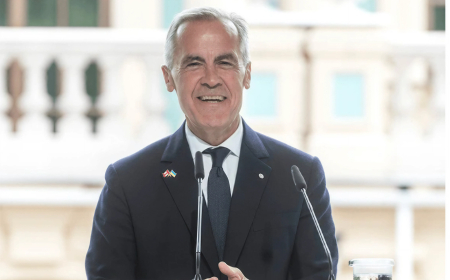
At Davos, Canadian Prime Minister Mark Carney declared the old world order dead. A week later, Bangladesh cricket proved him right by refusing to play along with the ICCs double standards. This is about what happens when middle powers stop pretending the system is fair and start building alternatives instead.
Back in the 80s when I was growing up in Mohammadpur, there was this kid in our neighbourhood who owned all the good cricket gear. Best bat, leather ball, proper stumps. Everyone else showed up with tennis balls and sticks as makeshift wickets. One kid even tried to use a badminton racket as a cricket bat. We were that desperate to play.
The "special" kid let us play with his gear, but only on his terms. He batted first. He decided when he was out. If you bowled him and the bail didn't fall, he wasn't out. Argue and you were out of the game entirely.
We hated it but played anyway. What else were we going to do?
Then someone's uncle got us a decent bat. Not as good as his, but good enough. We started our own games. Suddenly, Mr. Cricket Equipment wanted in. Suddenly, he was willing to follow actual rules.
Took us years to figure out what should have been obvious from the start: You don't negotiate with bullies. You build alternatives. Mark Carney just spent 20 minutes at Davos saying the same thing.
Why Carney Matters
Mark Carney is Canada's Prime Minister, former Governor of the Bank of England, and before that ran Canada's Central Bank. He's not some random politician with hot takes. When he talks about how power works in the international system, he's speaking from the room where it happens.
For those who don't follow global economics or politics: Davos is where the world's most powerful people gather every January for the World Economic Forum. Presidents, CEOs, central bankers -- people who actually move markets and shape policy. When someone speaks there, the world listens.
His speech this year wasn't the usual diplomatic nonsense about cooperation and shared values. It was a declaration that the old world order -- the one where rules supposedly applied to everyone equally -- is dead. And middle powers like Canada and Bangladesh (in cricket at least) need to stop pretending otherwise.
What does any of this have to do with cricket? Everything, as it turns out.
When the Lie Stops Working
Carney didn't mince words in his speech. We are in the midst of a rupture, not a transition, he said. The old order is not coming back.
For decades, middle powers -- Canada, Bangladesh, dozens of others -- participated in what everyone knew was partially a lie. The rules-based international order where rules applied equally to everyone. Where the strong couldn't just do whatever they wanted. Where institutions were neutral and fair.
We knew it was fiction. We knew the strongest countries exempted themselves when convenient. We knew trade rules got enforced depending on who broke them. We knew international law bent based on who was accused.
But the fiction was useful, so we went along. Carney quoted Czech dissident Václav Havel's essay about a greengrocer who puts a sign in his window every morning: Workers of the world, unite! The shopkeeper doesn't believe it. Nobody does. But he puts it up anyway to avoid trouble, to signal compliance, to get along.
That's what middle powers have been doing. Putting up signs we don't believe in because the alternative seemed worse.
Carney's entire speech was about why that bargain is finished. You cannot live within the lie of mutual benefit through integration when integration becomes the source of your subordination.
Bangladesh cricket just got a brutal lesson in exactly what he means.
How It Started
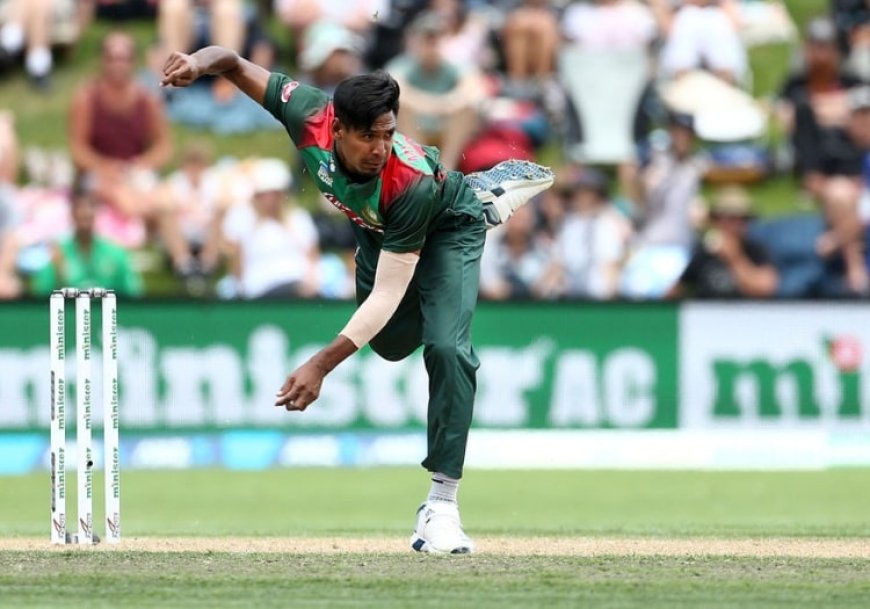
Early January, Mustafizur Rahman -- one of Bangladesh's best fast bowlers -- was set to play for Kolkata Knight Riders in the IPL. Good opportunity, decent money, exposure on the biggest cricket stage outside international tournaments.
Then the BCCI, India's cricket board, ordered KKR to release him. The reason? It was never directly given, but strong inferences about security concerns following Hindu-Muslim violence in Bangladesh were there, insinuating India couldn't guarantee Mustafizur's safety: Fears of retaliation against Bangladeshis.
Fine. Safety first. Nobody argues with that.
But then the T20 World Cup comes up, hosted primarily in India. Bangladesh looks at the Mustafizur situation and thinks: If it's unsafe for one player, how is it safe for fifteen? How is it safe for officials, support staff, potentially fans?
So they ask to play their matches in Sri Lanka instead. Simple swap with Ireland -- logistically trivial, hotels could switch overnight, one airline flies both teams to their new venues. Ireland gets an easier group in India, Bangladesh plays in Sri Lanka.
Everyone's better off except maybe India's pride.
India says no. Come play here, we guarantee your safety now. Bangladesh points out the obvious contradiction. You literally just said you couldn't guarantee Mustafizur's safety. What changed?
The ICC gives Bangladesh twenty-four hours to comply or get kicked out of the tournament. Vote was 14-2. Only Pakistan backed Bangladesh.
Bangladesh stood firm. They're out. Scotland's in.
The Pattern We've Seen Before
This isn't the first time Bangladesh has been forced to swallow whatever India serves. Take water. Bangladesh shares 54 rivers with India. We have a formal treaty for exactly one of them -- the Ganges, signed in 1996. On paper, it looks fair. If flow drops below 70,000 cusecs, we split it 50-50.
In practice? Between 1997 and 2016, Bangladesh didnt receive its stipulated supply 39 times out of 60 during crucial dry periods. India takes what it needs upstream, releases water when it's convenient for them, and we get whatever's left.
The Teesta River? We've been negotiating a sharing agreement since 2011. Fourteen years later, still nothing. West Bengal's Chief Minister keeps vetoing it. Bangladesh's previous government even said they'd only sign agreements with China for Teesta projects if India approved. India didn't approve. We waited anyway.
Trade tells the same story. Bangladesh's trade deficit with India was $7.16 billion in 2022-23.
That's not a typo. Seven billion dollars flowing one way while India erects tariff and non-tariff barriers keeping our exports out. This is the regional reality Carney is talking about. Bangladesh has always been expected to accommodate, to wait, to accept whatever terms India finds convenient.
Cricket was supposed to be different. It wasn't.
The Double Standard Nobody Wants to Mention
Here's what makes this whole thing absurd: Pakistan is playing all their World Cup matches in Sri Lanka. Same tournament, same hosts, same security concerns. ICC accommodated Pakistan without a second thought. Bangladesh asks for the same treatment and gets an ultimatum instead.
The swap Bangladesh proposed was simpler than what the ICC is now doing -- flying in Scotland's team on almost no notice, cobbling together a squad that isn't ready, dealing with visa issues and passport problems and hotels that weren't booked.
Bangladesh's Cultural Adviser Mostofa Sarwar Farooki laid it out clearly: If ICC truly wants to establish itself as a fair and neutral organization for all member nations, it must take Bangladesh's security concerns seriously and move the matches to Sri Lanka.
He mentioned Manjur Laskar, a West Bengal man lynched on suspicion of being Bangladeshi just days earlier. Mentioned warnings from Shiv Sena leader Aditya Thackeray about the Bangladesh-India match. Noted that the ICCs own internal security assessment rated the risk as moderate to high for the Bangladesh team, particularly with Mustafizur in the squad.
Our Sports Adviser Asif Nazrul put it even more bluntly: The ICC failed to do justice to Bangladesh's concerns. The Indian government made no effort to reassure Bangladesh regarding security.
Translation: We asked for the bare minimum consideration. You said no because you could.
What Carney Understands
This is where Carney's speech becomes devastatingly relevant. He talks about how middle powers negotiate from weakness when they only deal bilaterally with hegemons.
We accept what's offered. We compete with each other to be the most accommodating. This is not sovereignty. It is the performance of sovereignty while accepting subordination.
That's exactly Bangladesh's playbook for the last 50 years.
Accept India's terms on water. Accept the trade imbalance. Accept that our concerns don't matter as much as maintaining good relations with the bigger neighbor.
The cricket situation is just the latest chapter. Fourteen countries lined up to vote India's way. Not because Bangladesh's request was unreasonable -- it demonstrably wasn't. But because nobody wants to piss off the hegemon.
Think about what that vote actually meant. Fourteen cricket boards said: India's comfort matters more than Bangladeshs safety concerns. Indias pride is more important than basic fairness.
The ICC is supposedly neutral. But when push came to shove, they bent to Indias preference. Because that's how power works when you stop pretending there are rules.
Carney warns about this explicitly: When middle powers criticize economic intimidation from one direction but stay silent when it comes from another, we are keeping the sign in the window.
Most countries kept their signs up. They voted against Bangladesh while knowing Pakistan got exactly what Bangladesh was asking for.
Bangladesh took their sign down.
The Cost of Honesty
Missing a World Cup hurts. Players lose opportunities. Fans lose matches. The sport which almost tantamount to a religion in Bangladesh takes a hit. But heres what we learned from that neighborhood kid with all the cricket equipment: bullies only respect you when you're willing to walk away. They only change behavior when they realize youll find another game.
Carney's prescription for middle powers applies directly: build strength at home, diversify abroad, create variable geometry -- different coalitions for different issues. Because if we're not at the table, we're on the menu.
Bangladesh and Pakistan voting together is a start. Two middle powers refusing to automatically accommodate every demand from the big guy.
But real change requires what Carney calls reducing vulnerability to retaliation. For Bangladesh cricket, that means investing in domestic infrastructure, building regional partnerships, creating alternatives to India-dominated tournaments.
It means finding other bats and balls so were not dependent on one supplier.
What Comes Next
Carney ended his Davos speech with this: The powerful have their power. But we have something too -- the capacity to stop pretending, to name reality, to build our strength at home and to act together.
Bangladesh just demonstrated exactly that. They stopped pretending the ICC is neutral. They named the reality of how power works. They refused to trade safety for access to a tournament.
Will it cost them short-term? Absolutely. But that's what sovereignty looks like when the old order collapses and the new one hasn't been built yet.
The question isn't whether Bangladesh made the tactically perfect decision. The question is whether middle powers everywhere -- in cricket, in trade, in international relations -- are ready to stop performing compliance and start building alternatives.
Because the kid with all the equipment only changes when he needs you more than you need him.
Sometimes you have to be willing to play without him to find out if that's true. Bangladesh just called the bluff. Now we'll see who needs whom.
Faruq Hasan is a development worker and a political analyst.