










































![A Ledger of the Soul: Navigating the Allah-Bhagavant Nexus in a 19th-Century Puruṣākāra Jñāna Caupara [Gyan Chauper]](https://counterpointbd.com/uploads/images/202608/image_430x256_6a93baa3b09a7.jpg)



















Two Oppositions, One Problem
In functional democracies, losers succeed by diagnosing the situation precisely and organizing methodically. The goal is to defend the uncertainty of the next election. If an opposition misdiagnoses a policy defeat as a regime collapse, it loses the ability to speak to a combination of public segments.
The broken narrative of my “career” has led me to co-exist in Dhaka and Toronto. At this stage of my life, I am non-partisan, likely because no party would put up with me. As head of Opposition International, I spend my time looking for ways to assist opposition performance for the sake of the democratic system itself.
It is a niche interest, aimed at keeping dissenters from getting stuck in the rut of the old Groucho Marx lyric: “Your arguments may be good but let one thing be understood, I’m against it.”
Both countries face challenges. Effective democratic institutions are much needed to harness the now domineering public state. Two capitals currently confront parallel post-loss dilemmas. In each, opposition coalitions have been defeated, and new governments are moving with a certain brisk efficiency to consolidate their institutional advantages.
In both caucuses, a predictable split has emerged between “walk-out” factions favoring confrontation and “work-within” factions favoring engagement. Each side usually ends up accusing the other of something bordering on betrayal -- a common symptom of political grief that rarely yields a winning strategy.
The shared problem is one of narrative discipline: How to move past a loss and rebound with a reasoned plan, rather than randomly responding with the usual menu of cliché attacks that tend to alienate the very voters who just handed you the defeat.
The Diagnostic Tools
To understand these cases, we have to look past the personalities and toward the underlying plumbing of the state. It helps to use a few established lenses:
Hirschman’s Triad: Albert Hirschman’s Exit, Voice, and Loyalty (1970) suggests that when a system declines, one can leave (Exit), complain (Voice), or stay put to buy time for reform (Loyalty). These only generate genuine agency when supported by Recognition (being seen as a legitimate player) and Autonomy (the legal room to act).
Przeworski’s Uncertainty: Adam Przeworski famously defined democracy as "institutionalized uncertainty." The winners and losers must be unknown before the vote, but the losers must retain the right to organize and win again later.
The Gamboa Finding: Laura Gamboa’s research suggests that under institutional pressure, moderate strategies -- using the legislatures, courts, and elections -- actually succeed more often than radical confrontation, which often serves as a convenient pretext for a government to tighten the screws.
The V-Dem and DPI Benchmarks: To move beyond anecdote, we use the Varieties of Democracy (V-Dem) Opposition Parties Autonomy index and legislative oversight metrics to track whether institutional channels are expanding or contracting.
Complementing this is the Democracy Perception Index (DPI), which measures citizen views on electoral fairness and pluralism. If V-Dem shows the rules are open but DPI shows the public feels unheard, the opposition has a communication problem, not just a legal one.
Dhaka: The Problem of Promissory Rollback
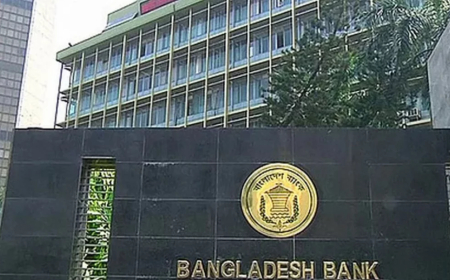
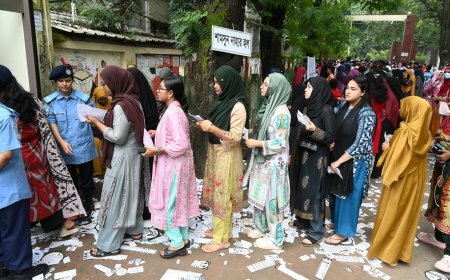
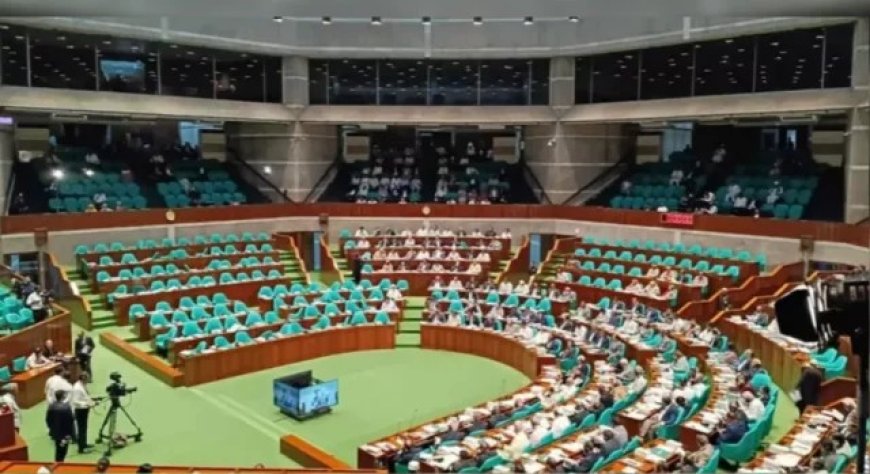
Bangladesh is currently navigating a post-autocratic recovery. Following the 2024 uprising and the credible election of February 12, the BNP under Tarique Rahman secured a massive majority. The 11-Party Alliance (incorporating the student-led National Citizen Party) now holds the official opposition.
V-Dem metrics suggest that the space for "voice" and "autonomy" is rebounding, yet the government is engaged in what we call "promissory rollback" -- a tendency to nod toward the National Charter while quietly dragging its feet on the actual implementation of reforms. It is a game of bad-faith delays played inside formal rules.
Observations for the 11-Party Alliance:
The Case for Participation: The Alliance might find more value in participating 100% in House proceedings and Standing Committees than in the traditional walk-out. When institutional channels are reopening, leaving the room only leaves the majority to its own devices.
The Charter as a Structural Anchor: Pushing for the full implementation of the July National Charter -- specifically term limits and judicial independence -- forces the majority to accept that their current power is a lease, not a deed.
Mobilizing the Diaspora: With 10 million citizens abroad, the "exit" of the diaspora can be converted into "voice" by securing biometric registration and voter inclusion, expanding the electorate beyond the reach of local patronage.
Ottawa: The Procedural Squeeze
Canada is a consolidated Westminster democracy, yet it is currently experiencing a "procedural squeeze." Mark Carney’s Liberals converted a 2025 minority into a majority through floor-crossings and byelection wins. They have since moved to restructure House committees and use closure to limit debate.
The challenge here is that the Democracy Perception Index (DPI) suggests the median voter does not perceive a regime crisis; they see a government exercising the math it was given. When an opposition frames a procedural change as an existential threat to democracy, it risks looking out of touch with the public’s sense of reality.
Observations for the Conservatives and Allied Parties:
The Utility of the Audit: Rather than relying on heated rhetoric, documenting exactly how a 7-4-1 committee split prevents the scrutiny of specific spending bills (citing precedents like the WE Charity or SNC-Lavalin) provides a more durable argument for the average voter.
The Sequential Path: Using the courts for Supreme Court references on Standing Order changes, or forging temporary alliances with the Bloc and NDP, preserves the opposition’s credibility as the defender of the "rules of the game."
Institutional Over Personal: Framing the contest around Westminster conventions rather than Mark Carney’s personality is likely more effective. Attacking Carney’s character often backfires because it plays into his image as a "calm technocrat." Attacking his procedural overreach, however, makes the "steady hand" look like an overreaching one.
The Common Discipline
In functional democracies, losers succeed by diagnosing the situation precisely and organizing methodically. Voice without recognition is just spectacle; exit without autonomy is just flight.
Whether in Dhaka or Ottawa, the goal is to defend the "uncertainty" of the next election. If an opposition misdiagnoses a policy defeat as a regime collapse, it loses the ability to speak to a combination of public segments.
Seeing the fight clearly -- without the fog of factional anger -- is usually the first step toward eventually winning it.
Owen Lippert is the Executive Director of Opposition International.