




























































NCP in the Age of Hyperpolitics
The theory of hyperpolitics does not claim that any single organization-centred solution can eliminate the thousands of divisions that have emerged in society. Rather, it suggests that becoming a participant in power by exploiting the existing political landscape should be seen as the beginning of a much larger struggle.

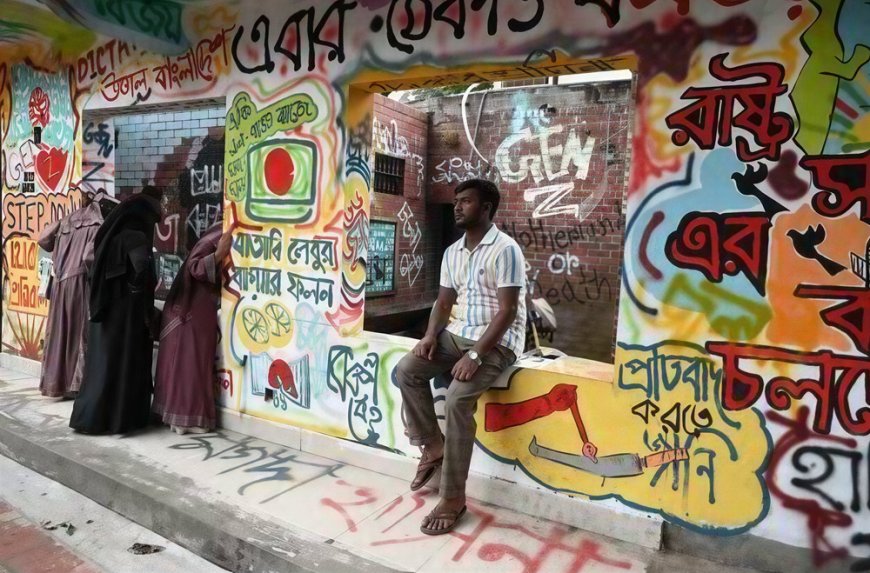
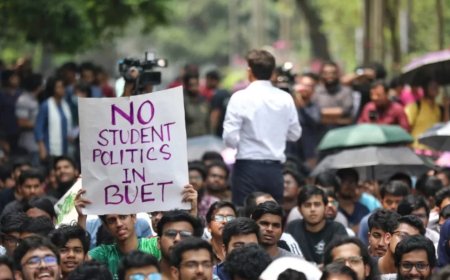
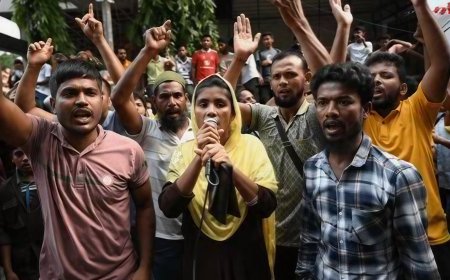
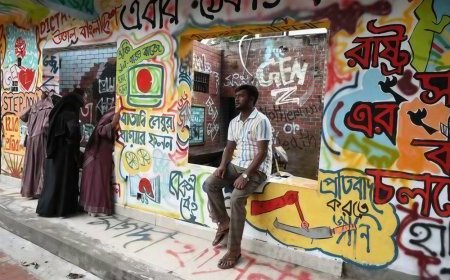
By any measure, the July Uprising was one of the most consequential political moments in Bangladesh’s recent history. Millions of young people who had never participated in a political rally before took to the streets. Through a sense of solidarity forged in the streets, they brought down the Hasina government, which had been in power for 15 years.
Yet, less than two years later, the National Citizen Party (NCP), the political party that emerged directly from the movement, won just six of the 297 parliamentary seats in the February 2026 election -- that too as a junior partner in an opposition alliance.
The ideological character of this alliance is so fundamentally at odds with the aspirations of the uprising that many of the NCP’s own founders now find themselves unable to recognize the party they helped create.
Within a week of the NCP forming an alliance with Jamaat-e-Islami, more than a dozen senior leaders resigned, arguing that an alliance with an Islamist party was incompatible with the uprising’s pluralist spirit.
The NCP’s rise and subsequent stumble closely mirror the trajectory described by the theory of hyperpolitics, developed by the contemporary historian Anton Jäger.
According to this theory, young people in our era are characterized by two seemingly contradictory tendencies: An abundance of emotionally charged political sentiments -- anger, solidarity, and viral protest -- coupled with a profound reluctance to join political parties to pursue their demands and secure their rights.
Global politics arrived at hyperpolitics after passing through several distinct phases. For much of the 19th century, politics centred on the formation of nation-states. Italy and Germany were unified during this period.
By the end of the century, as the Industrial Revolution reached its peak, politics had become increasingly organised around class-based ideologies. This phase continued until the Second World War.
The post-war decades ushered in an era of moderate social democracy, during which Europe moved towards the welfare state. By the late 1970s, politics had fallen under the sway of corporate domination, operating under the guise of neoliberalism.
The expansion of mass media was harnessed to elevate individual politicians such as Ronald Reagan and Margaret Thatcher into the principal forces shaping politics, deepening social divisions in the process.
At the beginning of the 21st century, the internet emerged as a universal medium of mass communication. The ability of political elites to shape public narratives began to decline, while people increasingly retreated into isolated spheres defined by their own opinions.
Finally, in the current era of hyperpolitics, social media has erased the boundaries between politics and everyday life, making virtually everything political.
Bangladesh, too, has passed through several stages of political development before arriving at hyperpolitics. With the end of the colonial era, the country entered a phase of mass politics, in which political parties and labour organizations became the principal vehicles of political activity. Right-wing politics struggled to gain much traction in the country.
By the beginning of the 21st century, Bangladesh had entered a post-political phase captured by the slogan “I Hate Politics”.
Instead of left-right ideological divisions, business-friendly party politics drained ideological conflict from public life. The 2010s ushered in the era of hyperpolitics, beginning with the Shahbag movement and continuing to the present. In this phase, the politics of culture and identity permeates social media, yet repeatedly fails to bring about meaningful social change.
The principal reason for this failure is the absence of a new kind of political party capable of converting the accumulation of political emotions in society into durable power. Existing parties have become ideologically hollow, captured by their patronage networks, and are consequently incapable of absorbing even a fraction of this political energy.
Like similar movements elsewhere, Bangladesh’s July Uprising fits almost perfectly into the framework of hyperpolitics. It was a leaderless popular uprising capable of dismantling an existing power structure in the short term.
But the harder task -- transforming the energy of that uprising into an institution capable of realising its social aspirations, maintaining internal discipline and surviving contact with the realities of power -- remains unfulfilled.
The question that confronts revolutionary movements around the world after a successful uprising is this: Whose views and whose group interests do they represent?
The moment they attempt to answer this fundamental question, they often find themselves unable to keep their coalitions united. This is the trap that hyperpolitics describes as “hyperpoliticization and low institutionalization.”
Whether it is Sri Lanka’s 2022 Aragalaya uprising, Nepal’s 2025 “Nepo Kids” uprising, or the Cockroach Janata Party of 2026, the lesson is the same: Unless any new party emerging from an uprising designs itself from the outset to avoid this trap, popular disillusionment is likely to be its ultimate fate.
One relatively successful example of a movement that capitalised on post-uprising discontent to approach political power is Spain’s Podemos. Emerging after the Indignados, or “Outraged”, movement of 2014, Podemos helped bring an end to Spain’s two-party political dominance within just eighteen months from its inception.
The party was created by a group of academics who devised a strategy for turning the energy of an uprising into a sustainable political organization. Their objective was to build a class-neutral unity by rejecting the established parties and their existing political ideologies.
Rather than fixing Podemos within the conventional left-right spectrum, its founders framed politics as a conflict between “the people” and a corrupt class of “political and economic elites”.
This class-neutral approach encouraged ordinary citizens to cross their traditional party boundaries and rally around a new political platform.
Disillusioned socialists, politically disengaged young people, small-business owners angered by the use of public money to rescue banks, and left-wing activists all began to see themselves as part of “the people” confronting the “economic elites”.
It was this class-neutral strategy that transformed Podemos, in just 18 months, from a manifesto signed by 30 intellectuals and academics in January 2014 into Spain’s third-largest political force.
Although the narrative of “the people versus the economic elites” proved effective in mobilising anger, it failed to maintain party unity when Podemos entered government and faced the realities of policy compromises.
Supporters began asking what political and cultural identity the party actually represented. Answering that question while keeping everyone satisfied became impossible.
Amid the confusion surrounding coalition-building and identity politics, Podemos fractured, lost a significant share of its vote and eventually became absorbed into a broader left-wing alliance.
The lesson is that organising a political party around a class-neutral narrative, rather than conventional ideological politics, can enable it to share power in the heated political environment following an uprising.
But to survive as a political force over the longer term, the party must move towards genuine institution-building. Otherwise, as the personal charisma of its founders fades, internal rivalries intensify and popular support collapses.
It is easy to mistake class-neutral politics for mere vagueness or a refusal to take a position. But the underlying principle of this strategy is to build unity by bringing together the grievances of different sections of society -- unemployment, inflation, rising rents, corruption and humiliation at the hands of state institutions -- and directing them towards a common adversary.
A crucial feature of this strategy is that the alleged abuses of the opposing force must be defined broadly enough for citizens across the ideological spectrum to identify with the accusations. At the same time, the narrative must contain sufficiently concrete elements to ensure that these abuses are not left as abstractions but are clearly and specifically identified.
Podemos’s strength lay in foregrounding the figure of the “economic elite”: a category specific enough to be credible, yet broad enough for a socialist, a small-business owner and a politically disengaged twenty-year-old to recognise themselves as its victims.
The weakness of this strategy emerges from the very source of its initial strength. A narrative built around a common enemy, rather than a shared programme, begins to break down precisely when a coalition must move from opposition to governing the state. To govern, the group must eventually agree on what it stands for. It can no longer get by simply declaring what it stands against.
Taken together, the theory of hyperpolitics and the experience of Podemos offer a fairly clear blueprint for a genuinely new political party. The NCP experience can also serve as a case study from which to draw lessons about the ideal strategy for such a party.
Even before its alliance with Jamaat-e-Islami, the erosion of its leaders’ charisma had begun to create problems for NCP’s internal cohesion.
When electoral realities subsequently asserted themselves, the party joined the Jamaat-led alliance, prompting a section of its own membership to leave. Now that the party must contend with parliamentary realities, whatever ideological direction it chooses, the likelihood of recovering its former momentum is slim.
In this age of hyperpolitics, any new party built from scratch must pay attention to several principles if it is to survive over the long term and become capable of fulfilling society’s aspirations.
First: Build a class-neutral and ideologically inclusive politics, supported by an accountable organizational structure rather than personality-driven leadership
NCP’s alliance with Jamaat-e-Islami imposed an ideological conflict within the organisation -- between secular pluralism and Islamism -- that divided the party precisely along that fault line. What it needed was a political narrative capable of bringing citizens from different social classes together under one umbrella.
Looking for a potential political narrative, we find that a network of brokers has, for decades, exercised a direct share of power in Bangladesh from behind the scenes. These networks have controlled the major political parties. The government bureaucracy, too, is either under the control of this class or is itself part of the same broker network.
Changes of government have done little to disrupt its operations. Regardless of who wins or loses elections, this network quietly maintains its grip on public procurement, licensing, job trading and the enforcement of laws.
Ordinary voters across the ideological spectrum have all experienced the direct or indirect effects of this broker network. Local power brokers who demand a cut at every turn, and public institutions where nothing moves without bribes or personal connections, constantly remind citizens of their powerlessness.
Modelled on Podemos’s “the people versus the economic elites” approach, a politics of “the people versus the brokers” (দালাল বনাম জনগণ) could provide a sufficiently broad platform to unite voters across the spectrum -- from Islamists to secularists, rural communities to urban populations, and business owners to the unemployed.
At the same time, it could offer a sufficiently concrete political narrative to attract citizens from every social stratum.
If this hidden adversary is identified not merely as an inner circle within a particular political party, but as a network that continuously shares in the exercise of power, the anger of citizens at every level can be redirected towards the very machinery that sustains their exploitation.
An anti-corruption and anti-impunity framework, accountability for the July killings, transparent public procurement, reform of the public service recruitment system, and an end to patronage politics: each of these themes, by exposing the workings of the broker system, offers a far more inclusive and powerful basis for political mobilization than an alliance with any single ideological bloc.
Second: Build a strong institutional foundation before the founders’ charisma fades
The central insight behind hyperpolitics is that spontaneous movements fail to translate the politicisation of their supporters into power because they never give sufficient priority to the unglamorous work of building organizational infrastructure.
Establishing local branches, maintaining membership registers and institutionalising internal democratic processes create pathways for recruiting members, retaining them and developing future leaders from within the organization. The organizational foundations built through this process can play a far more effective role in the political arena than reliance on any single charismatic leader.
One paradox of this new politics is that parties which identify the entrenched bureaucracy as part of an anti-national network of brokers must begin practising a form of bureaucratic organisation within their own ranks. They must demonstrate that, unlike authoritarian systems, they believe in democratic accountability.
Accountability requires transparent, written internal rules; clearly defined term limits for every party position; and open channels through which members can challenge leadership decisions. The organization must continually demonstrate, through its own example, that institutionalisation and accountability are not mutually exclusive processes.
NCP organised itself with remarkable speed in the seven months following the uprising. But it became heavily dependent on the personal credibility of a handful of student leaders. By contrast, it failed to distribute genuine organizational power more widely.
Ultimately, the core power of the organisation remained concentrated in the hands of its central leadership.
A new party must give its upazila-level committees genuine decision-making authority, establish a membership structure in which people formally join and contribute membership dues, and invest from the outset in a process for producing new generations of leaders. It must not become permanently dependent on a single cohort from the protest generation remaining in power indefinitely.
Part of this membership structure must be financial as well as organizational.
If a party campaigns against the broker elite and the entrenched bureaucracy but relies for its operating budget on the same small circle of wealthy donors, business groups or foreign patrons that finance established parties, it will quickly lose credibility. Such dependence reproduces within the new party the very system of patronage it claims to oppose.
The alternative is to build genuine infrastructure from the beginning for collecting and managing small, regular contributions from ordinary members.
Every member should be able to pay their dues through a simple mobile-payment system and receive a monthly account showing what proportion of the party’s budget comes from membership contributions and what proportion comes from large donors.
The priority should be to increase reliance on small-donor income rather than centralized financing.
Although the total amount raised initially may appear modest compared with the resources of established parties, a member who contributes every month does two things that a donor-funded party cannot readily replicate.
First, regular contributions help keep ordinary members invested in the party.
Second, they strengthen internal accountability. Most importantly, they protect the central principle of anti-broker politics from being captured by wealthy patrons.
Third: Street movements and parliamentary coalition-building require different messages and different skills
For this reason, it is better to keep the moment of protest distinct from the party’s political narrative. A new party should regard the July Uprising as a source of legitimacy and moral authority, not as a model for governing.
Legislative discipline, budget negotiations and coalition management are entirely different tasks. Confusing the two is one of the principal reasons for the internal divisions that afflict parties born out of uprisings.
Fourth: Harness the short-lived attention of hyperpolitics rather than fighting against it
Hyperpolitics thrives on viral moments and fleeting bursts of public attention. Instead of treating the fading of this emotional intensity as a problem, a new party can deliberately channel it into activities that do not depend on conventional ideological party politics.
These could include issue-based solidarity campaigns, advocacy for transparency, and real-time accountability journalism scrutinising the government in power.
At the same time, the party must gradually build institutional capacity so that, when the next viral moment of public anger arrives, it is prepared to capture that momentum and direct it towards meaningful political objectives. The moment must not simply disappear when the news cycle moves on.
Fifth: Maintain a balance between ideological openness and practical political clarity
The post-power fragmentation of Podemos and NCP’s crisis over its alliance with Jamaat-e-Islami illustrate the same trap, even though one unfolded after an election and the other before it.
Class-neutral parties born out of uprisings ultimately risk becoming confined to a narrow ideological constituency, either because their founders reveal their own ideological commitments or because they attempt to solve the arithmetic of coalition-building. As a result, they come under pressure from the broad, ideologically diverse constituencies that originally supported them.
To resist this pressure, they must deliberately remain broad on cultural and religious questions while maintaining a sharp focus on institutional reform and anti-corruption as the central pillars of their politics.
Ultimately, balancing the ideological and practical dimensions of politics becomes the defining test for these new political parties.
The theory of hyperpolitics does not claim that any single organization-centred solution can eliminate the thousands of divisions that have emerged in society. Rather, it suggests that becoming a participant in power by exploiting the existing political landscape should be seen as the beginning of a much larger struggle.
With this understanding, if parties born out of uprisings make it their guiding principle from the outset to maintain class-neutral politics while strengthening their organizations through institutional practices, they may eventually be able to free society from the politics of brokerage.
Syed Hasibuddin Hussain is a political activist with the Rashtro Songskar Andolon (State Reform Movement). He can be reached at [email protected].