



















































The Unending Spectacle of Pori Moni and Bangladesh's Theatre of Digital Morality
Pori Moni has spoken in the past about social media posts and personal moments being weaponized against her, about her child's photographs attracting hatred.
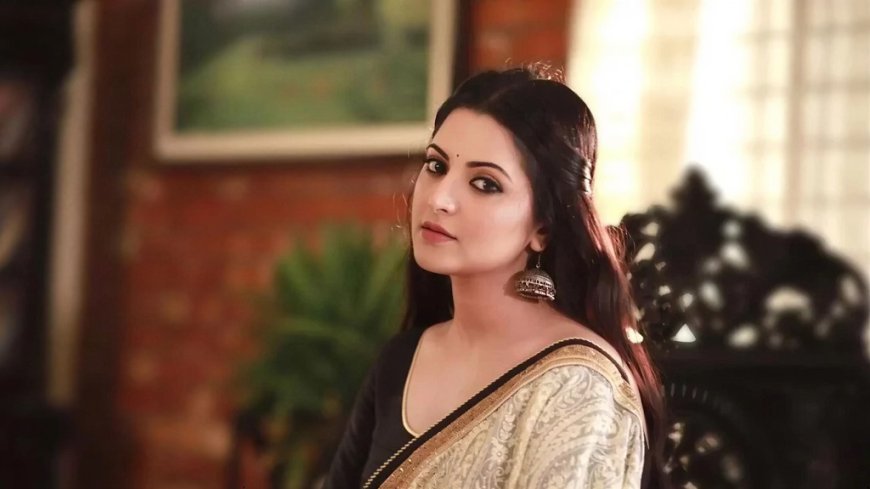
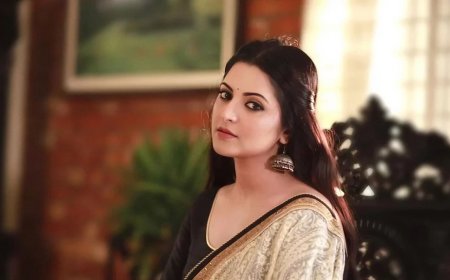
On a humid Dhaka afternoon in November 2026, Shamsunnahar Smriti, known to most as Pori Moni, walked into a courtroom and walked out with her freedom restored for the price of 500 taka. The warrant had been issued two days earlier, after she failed to appear for a witness testimony hearing. Her lawyer cited an allergy-related illness.
The prosecution called it evasion. The court cancelled her bail. Within 24 hours she surrendered, flanked by roughly ten security personnel, and the bail was granted again. The hearing was rescheduled for December 23. The cameras recorded everything.
For anyone who has followed this case since June 2021, the rhythm is familiar: The skipped hearing, the cancelled bail, the dramatic surrender, the media scrum, the bail restored, the trial postponed.
It is a loop that has now outlasted a government, survived a promised media revolution, and entered its sixth calendar year with no verdict in sight on either side.
What began as an allegation of attempted rape and murder at the Dhaka Boat Club has become something else entirely. Not a legal proceeding in any conventional sense, but a permanent feature of the Bangladeshi media landscape. A story that refuses to conclude because the spectacle itself has become the point.
The Two Cases That Mirror Each Other
The legal architecture of the dispute remains as tangled as it was on the night of June 9, 2021, when Pori Moni and her associates visited the Dhaka Boat Club in Savar. Two competing narratives emerged from that night and have hardened into parallel realities ever since.
Nasir Uddin Mahmud, the former president of Uttara Club Limited, filed his case in July 2022. He alleged that Pori Moni demanded a bottle of Blue Label whisky without paying, and when refused, verbally abused him and threw a serving glass and her mobile phone at him, injuring his head and chest.
The Police Bureau of Investigation submitted a charge sheet in March 2024, finding evidence to support allegations of assault and intimidation against Pori Moni and her costume designer, Junaid Bogdadi Jimmy. Charges were framed in January 2025. The trial has crawled forward in fits and starts.
Pori Moni's own case, filed in June 2021, accused Nasir and others of attempted rape and attempted murder. That case is being tried separately before the Women and Children Repression Prevention Tribunal-9. It has also stalled.
What the court documents do not capture is the theatre that surrounds each procedural step. The arrest warrant issued in early November 2026 was not merely a legal instrument. It was a headline generator. The surrender was not simply a legal obligation.
It was a performance, complete with a security detail and the familiar visual grammar of a celebrity under siege. The bail order was not a resolution but a pause, a stage direction signaling that the next act will come.
The Spectacle as Institution
Guy Debord wrote that the spectacle is not a collection of images but a social relation mediated by images. In Pori Moni's case, the mediation has become the institution. The legal process, the media coverage, and the public commentary now function as interlocking components of a single apparatus that produces not justice but visibility.
The case has outlasted governments. It survived the fall of Sheikh Hasina in August 2024 and the promises of media reform that followed. It persisted through the narcotics case that once threatened to bury Pori Moni entirely. And it has now entered 2026 with the same unresolved tension: two cases, two competing truths, and a public that has long since stopped expecting a verdict.
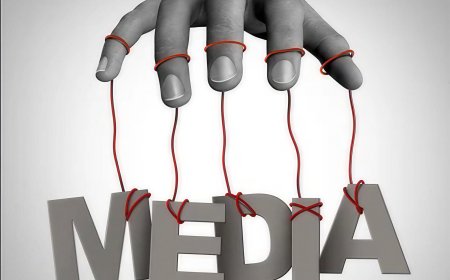
The media, for its part, continues to report each development with the same template. The Daily Star's headline on the latest bail was factual and restrained. Other outlets carried similar reports, attributing confirmation to the defense lawyer. These are not sensational stories by any measure. But they are fragments of a narrative that long ago ceased to be about what happened at the Dhaka Boat Club on June 9, 2021.
The promised media reforms have not changed this. The interim government that took power in 2024 pledged to dismantle the censorship apparatus of the previous regime, and the Media Reform Commission proposed structural changes.
Yet journalists remain wary, caught between government expectations and public mistrust . The same patterns of sensationalism, gender bias, and unverified reporting persist. Changing governments and regulations may matter less than the deeper cultural codes that dictate how women in the public eye are framed.
The Cost of Perpetual Performance
For Pori Moni, the performance has become indistinguishable from the life. She has spoken in the past about social media posts and personal moments being weaponized against her, about her child's photographs attracting hatred.
The courtroom now demands her presence as both defendant and complainant, in two cases that mirror and contradict each other. Each hearing requires her to embody one role while the other waits in the wings.
The November sequence will be added to the archive, cited in future reports, and folded into the portrait that has been assembled over five years. The trial will continue. The witness testimony scheduled for December 23 may or may not proceed. Another warrant may or may not be issued. The spectacle, in its institutional form, will endure.
And somewhere in the basement of a Dhaka courthouse, the file on the night of June 9, 2021, will continue to thicken. A paper monument to a truth that the theatre has long since swallowed.
Zakir Kibria is a Bangladeshi writer, policy analyst and entrepreneur based in Kathmandu, Nepal. He can be reached at [email protected]