






















































What Does the World Owe the Climate-Vulnerable?
We call the Earth a common inheritance, yet the benefits of its exploitation and the burdens of its warming are distributed very differently. Until that contradiction is faced, each summit will risk becoming a ritual of concern without a corresponding practice of repair.
A climate summit is a peculiar kind of theatre. Leaders arrive from distant capitals, speak of a shared planet and leave behind declarations that promise a safer future.
Yet the sea does not wait for the minutes of a meeting to be approved. A family forced from its land by saltwater cannot live on a pledge. And a country facing stronger storms cannot adapt by being praised for its resilience.
That gap between the language of solidarity and the experience of loss is where climate justice begins. It is not simply a plea from poorer nations for sympathy. It is a question of responsibility: Who helped create the danger, who is paying its price, and who has the means to reduce it?
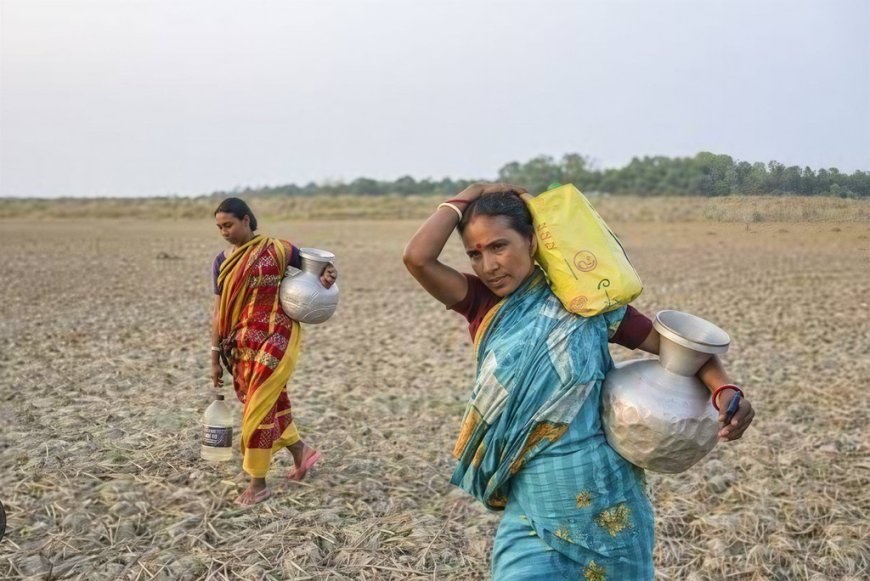
The answers are profoundly unequal. Countries that contributed least to the accumulation of greenhouse gases often have the least money, technology and institutional capacity to protect their people.
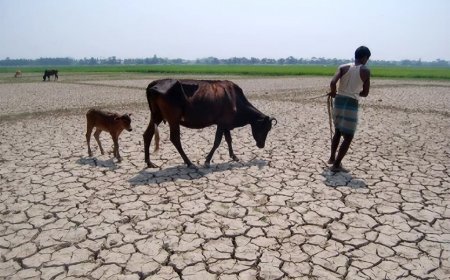
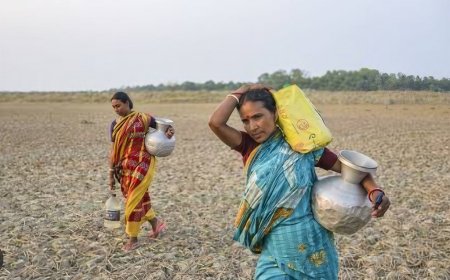
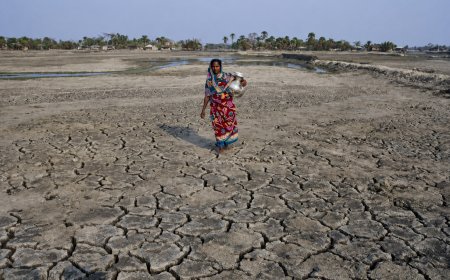
Bangladesh knows this imbalance not as an abstract argument but as a condition of life.
Salinity changes what can be grown. Floods and cyclones unsettle homes and livelihoods. Each shock can push families further from security, while the emissions that helped intensify the risk were largely produced elsewhere.
To describe this only as vulnerability is to miss half the story. Vulnerability can sound like a natural weakness, as though some countries were simply born closer to disaster.
But exposure is shaped by choices: where development is financed, whose energy systems powered industrial growth, and whose losses count when the bill comes due. Climate justice asks the world to see that history alongside the hazard.
The usual response is to promise more finance. That promise matters, but the argument cannot end with a headline figure.
What kind of money is being offered? Is it a grant or another loan that leaves a country more indebted after a disaster? Can it be accessed quickly by the communities that need it? Does it help people prepare for hazards, or only rebuild after they have been struck?
Finance that arrives late, carries expensive conditions or adds to debt may satisfy a diplomatic formula while deepening the very insecurity it is meant to relieve.
The same distinction applies to the language of compensation. For a family that has lost its land, a payment cannot restore the place where generations lived.
But that is no reason to treat compensation as an impossible demand. It is a recognition that some losses cannot be prevented, and that those who did least to cause the crisis should not be left to absorb them alone.
The question is not whether money can undo every loss. It cannot. The question is whether the global response will acknowledge those losses in practical terms.
COP31 in Antalya therefore matters less as a gathering of speeches than as a test of whether the world can turn responsibility into arrangements that work.
Bangladesh’s participation, including Prime Minister Tarique Rahman’s presence, gives the country a chance to put its concerns before the world.
But visibility is not influence by itself. A strong climate position must connect the demand for international support with a clear account of what that support should fund, how it should reach people, and how progress will be judged.
There is also a responsibility at home. International injustice is real, but it cannot become an excuse to postpone difficult choices within Bangladesh.
Adaptation requires planning that protects people rather than merely counting projects: Safer housing, reliable warnings, resilient crops, strong local services and support for those who must move.
Public money must be spent openly and with attention to who benefits. The more convincingly Bangladesh can show how finance protects lives, the harder it becomes for wealthier nations to dismiss its demands as rhetoric.
Still, local responsibility cannot erase international responsibility. A person who lives beside a river may need better protection, but that does not make them responsible for the emissions that altered the risks they face.
Nor should a nation have to choose between investing in its people and paying for damage it did little to cause. Climate action should expand a country’s capacity to care for its citizens, not narrow it through new debts and repeated recovery costs.
There is a philosophical discomfort at the heart of climate justice: Humanity speaks as though it shares one home, while treating the costs of keeping that home habitable as someone else’s problem.
We call the Earth a common inheritance, yet the benefits of its exploitation and the burdens of its warming are distributed very differently.
Until that contradiction is faced, each summit will risk becoming a ritual of concern without a corresponding practice of repair.
The measure of success in Antalya should not be how elegantly leaders describe a shared emergency. It should be whether they make it easier for people to survive that emergency, whether support reaches those carrying the heaviest losses, and whether promises can be tracked against delivery.
Climate justice will remain an appeal until it becomes an account with clear obligations and consequences.
The countries most exposed to the crisis have not stopped asking. Their persistence should not be mistaken for patience without limit. A promise delayed is not neutral when the damage continues.
The world’s leaders still have time to make their words mean something. For the people already living with the consequences, time is precisely what is running short.
H. M. Nazmul Alam is an Academic, Journalist, and Political Analyst based in Dhaka, Bangladesh. Currently he is teaching at IUBAT. He can be reached at [email protected].