
































































How to Fix Bangladesh-India Relations
Bangladesh does not seek to become India's rival. It seeks a friendly relationship that preserves its dignity, security and right to development. India’s legitimate security concerns and aspirations for prosperity must likewise be taken into account by Bangladesh.

There is no need for another seminar or roundtable to answer the question of what Bangladesh-India relations should look like.
Geographical proximity, shared rivers, history, culture, economic interdependence, and mutual security interests provide a compelling foundation for cooperation.
Yet distrust and discontent continue to cloud the relationship. In my assessment, the central problems are a lack of confidence, questions of fairness, and an insufficient understanding of each other’s national dignity and sensitivities.
Although I have travelled to many countries in both official and personal capacities, I did not develop a particular affinity for India for much of my life. This was shaped in part by experiences, memories and impressions formed early in my military career in the Chittagong Hill Tracts.
I began my career as an infantry officer in late 1982 in the Guimara Army Zone of Khagrachhari. During that period, I gained firsthand experience and received information from local sources about the armed activities of the Shanti Bahini, attacks on local people, and casualties among security personnel.
In 1984, while carrying out border demarcation between Bara Kuradia in Bangladesh and the Jarulchhari area near India’s Mizoram border, a soldier from my battalion, whom I held dear, was killed in a surprise attack by the Shanti Bahini.
At the time, allegations that the Shanti Bahini received support from across the border raised questions about the flow of information concerning our movements and how it reached the group.
My experiences deepened during my service in Mahalchhari, Khagrachhari, in 1990-91 and later in intelligence assignments, when I dealt with members of the Shanti Bahini who had surrendered or been detained.
Discussions were held through an intermediary about the possible surrender of an active sergeant named Mangsai Marma, although the initiative ultimately did not materialise.
These experiences and the information available to me at the time fostered deep resentment towards India. In 1992, when Santu Larma, leader of a five-member Shanti Bahini delegation, arrived at the Khagrachhari Circuit House for dialogue, I recall shaking his hand for the first time near the Pujgaon camp in the Panchhari area and helping arrange his boarding of a helicopter.
The presence of armed individuals accompanying him also raised questions in my mind: Where had they come from, and who had provided them with shelter and training over the years?
A group of journalists was with me that day, and photographs of conversations between them and armed members of the Shanti Bahini appeared in national and local newspapers. Nevertheless, I recognise the importance of independently verifiable evidence before reaching definitive conclusions about the roles played by the parties concerned.
In later years, I served in various locations, including Ruma and Jaminipara in the Chittagong Hill Tracts and Sreemangal in the plains. While serving in a command position in the Bangladesh Rifles, I developed excellent professional relationships with Indian Border Security Force officers of equivalent rank during flag meetings.
We also discussed border management and opportunities for cooperation between the two countries. These experiences taught me that dissatisfaction with a state's policies is not the same as hostility towards its people.
My personal experiences had created distance, but professional cooperation also showed me that such distance could be overcome. It is in this spirit that I offer proposals for improving Bangladesh-India relations.
Gratitude Should Co-exist with Legitimate Questions
India's assistance during Bangladesh's Liberation War in 1971, its shelter for refugees and its support for freedom fighters remain important chapters in Bangladesh's history. These contributions deserve gratitude. But gratitude does not require Bangladesh to refrain from criticising every subsequent policy or action.
Equally, past grievances should not close every avenue for future cooperation. The discontent towards India felt by sections of the Bangladeshi population cannot be explained away as a product of propaganda or emotion alone.
Border fatalities, water-sharing disputes, trade barriers, concerns about political interference and perceptions of unequal treatment all require substantive responses. India should take these sentiments among the people of Bangladesh seriously.
Eight Urgent Steps Towards Better Relations
First, mutual respect for dignity and sovereignty
India's government, political leadership and media should regard Bangladesh as an independent neighbour of equal standing.
Bangladesh's elections, government formation and domestic political decisions are matters for its own people. Bangladesh, in turn, should take India's legitimate security concerns into account and maintain a responsible relationship.
It is essential to dispel perceptions of unwelcome interference by either country in the other's domestic politics.
Second, end border fatalities
Effective measures are needed to end killings and the use of lethal force at the border. Coordinated patrols, rapid information-sharing, impartial investigations and accountability should be strengthened to address illegal crossings, smuggling, drug trafficking and human trafficking.
Where allegations arise that individuals have been forcibly pushed across the border, nationality must be verified and lawful procedures followed. Efforts to combat border crime must never come at the expense of innocent people's lives and dignity.
Third, transparency over intelligence activities
Concerns about unwelcome interference by foreign intelligence agencies in Bangladesh's politics, security and sovereign decision-making need to be addressed. Both countries should make a clear commitment that neither will allow its territory to be used for activities intended to undermine the internal stability of the other.
Fourth, fair sharing of transboundary river waters
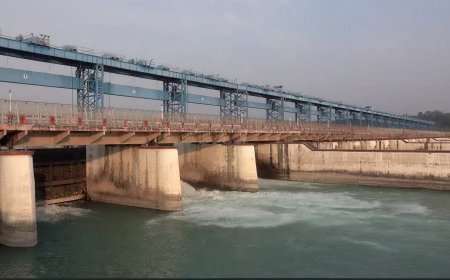
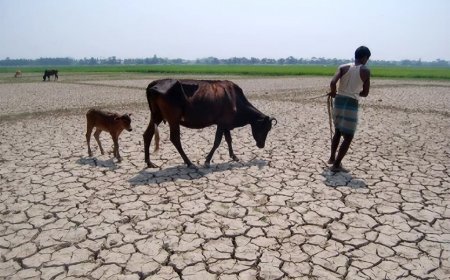
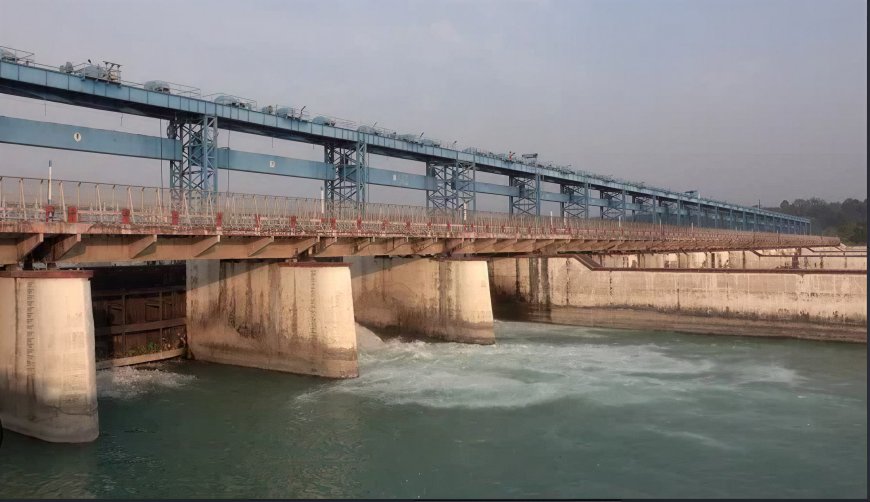
The 1996 Ganges Water Sharing Treaty is due to expire on 12 December 2026. Any new understanding must therefore ensure Bangladesh receives a fair share of water during the dry season.
Advance information-sharing and joint management mechanisms are also necessary to address excessive flows and flood risks during the monsoon.
The Teesta and other shared rivers likewise require time-bound solutions. The interests of both upstream and downstream countries must be considered, with water treated as a shared responsibility rather than a source of competition.
Fifth, mutual benefits in trade and investment
Market access for Bangladeshi products should be improved, non-tariff barriers reduced, land ports and customs made more efficient, and unnecessary complications in product certification addressed.
The bilateral trade discussions that have recently resumed should be translated into tangible progress. Agreements covering electricity, energy, railways, roads, inland waterways, transit and port use should be reviewed transparently to ensure a fair balance of benefits and obligations.
Foreign experts and businesses operating in Bangladesh must comply with the country's applicable tax laws and other legal requirements.
Sixth, lawful extradition and diplomatic cooperation
Requests concerning fugitives, accused persons and convicted individuals should be handled in accordance with applicable extradition treaties, domestic laws and due judicial process.
Bangladesh's legitimate requests should receive serious consideration, while the nature of the allegations, available evidence and human rights considerations must also be assessed lawfully. Sensitive cases should not be allowed to become enduring sources of political distrust.
Seventh, balanced communication through the media and among the public
Inflammatory propaganda, misinformation and the spread of ethnic hostility should be discouraged. Media organisations in both countries should verify information before publication and avoid insulting each other's people.
The possibility of reciprocal broadcasting access for an equal number of television channels from each country could be considered within the framework of applicable laws and broadcasting policies.
Opportunities for educational, medical, tourism, literary, cinematic and youth exchanges should also be expanded. Simpler and more predictable visa procedures would allow ordinary citizens to experience the benefits of better relations directly.
Eighth, respect for Bangladesh's development and diversified international partnerships
Bangladesh has every right to advance its economy, education, technological capabilities, intellectual capacity and defence. A strong defence capability is not necessarily preparation for war against a neighbour; it is part of protecting sovereignty, safeguarding national security and contributing to United Nations peacekeeping operations.
Bangladesh's decision to welcome investment and cooperation from China and other countries is a sovereign choice. India should not automatically interpret such engagement as competition against itself, but rather recognise the potential for a more stable and prosperous region.
Bangladesh, for its part, must ensure that its territory is not used for hostile activities against any neighbour.
The Need for a Time-Bound Action Plan
The two countries should jointly review major bilateral treaties and understandings to determine which commitments have been implemented, where obstacles remain and where fresh agreements are needed.
A six-month action plan could prioritise border security, water-sharing, trade, visas and extradition. Progress should be reviewed periodically, with the results made public.
Bangladesh-India relations should not depend on any single individual, political party or government. They must be built on institutional cooperation, transparency and mutual respect so that collaboration continues even when political leadership changes.
Bangladesh does not seek to become India's rival. It seeks a friendly relationship that preserves its dignity, security and right to development. India’s legitimate security concerns and aspirations for prosperity must likewise be taken into account by Bangladesh.
If both countries take each other's concerns seriously and fulfil their commitments, their people will benefit. My military career exposed me to experiences that fostered distrust, but professional cooperation at the border also showed me the possibilities of building confidence.
I therefore believe that it is possible to acknowledge the wounds of the past without allowing them to determine the future. Neighbours cannot be changed, but the way they treat one another can. Bangladesh-India relations can move towards genuine friendship when perceptions of dominance give way to equality, distrust to transparency, and rivalry to partnership.
Lieutenant Colonel Md Shahadat Hossain (Retd.) is a former infantry and intelligence officer in the Bangladesh Army. He is an Adjunct Professor at the Institute of Professional Language, Bangladesh Maritime University, and a writer and researcher on the Chinese language and on Bangladesh–China relations.