






























































When Survival Becomes the Guest’s Responsibility
Guests need accessible information about emergency exits and evacuation procedures; staff need regular training and drills. These measures are not substitutes for accountability after a disaster.

Girls, a practical reminder: Shah Rukh Khan is not waiting outside every burning building to carry you to safety. Learn to swim. Learn to run. Learn how to recognize an exit, move through smoke, and respond to an emergency. Boys should learn these things too. Survival is not a romantic genre.
But there is a serious problem with the advice that inevitably follows a tragedy: If only the victims had been faster, stronger, calmer, or better prepared, perhaps they would have survived.
Such arguments can begin as encouragement and end as a convenient transfer of responsibility from institutions to individuals.
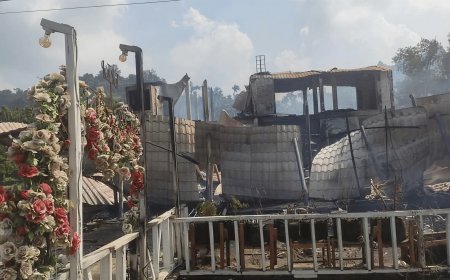
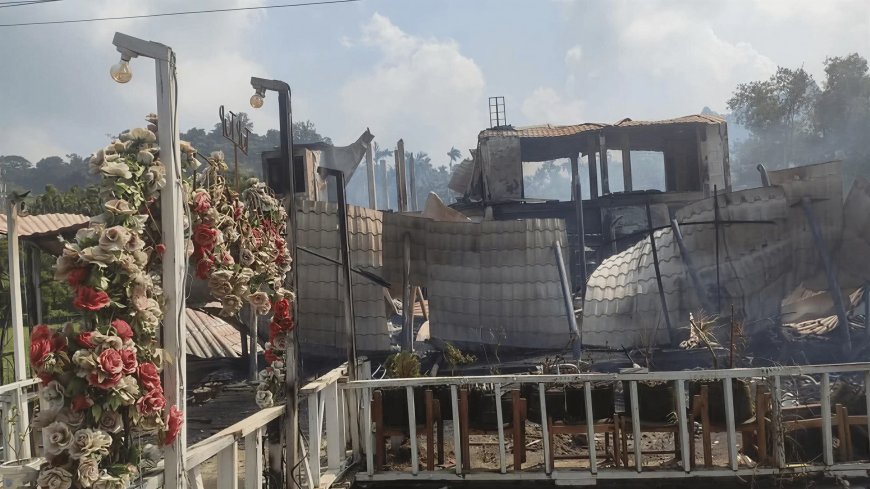
The deadly fire at a resort in Cox’s Bazar brings that contradiction into painful focus. Reports described Ashikul surviving after escaping through a window while members of his family, including his wife, died. According to his account, his wife had awakened him when she noticed the fire.
That detail should trouble anyone tempted to turn the story into a simple morality play about a husband who saved himself. We do not know that every person had the same escape route, the same exposure to smoke, or the same seconds in which to act.
Escape from a fire is shaped by architecture, visibility, heat, toxic gases, location, physical capacity and chance. Survival is not proof of virtue; death is not proof of incompetence.
Why did a paying guest have to break through a window and jump to escape a commercial accommodation in the first place?
Reporting on the fire raised a particularly disturbing regulatory issue. The fire service was reported as saying that the resort lacked a fire safety licence.
Accounts of the fire’s origin differed: One official suggested a kitchen stove might have been involved, while the resort’s side reportedly raised the possibility of an electrical short circuit involving a refrigerator.
Those are competing preliminary explanations, not an established forensic conclusion. Investigators must determine the ignition source. But the question of whether a business was operating without the required fire safety authorization is distinct from the question of precisely what sparked the flames.
That distinction matters because the public discussion of disasters often becomes hypnotized by the immediate cause.
Was it a stove, a wire, a cylinder, a careless employee?
Such facts are essential, but they are only the beginning of accountability. A small ignition should not so easily become a deadly event.
Fire protection is designed precisely because ignition is foreseeable. A safe building assumes that human beings, machines and electrical systems sometimes fail, and it provides layers of protection so that one failure does not become a catastrophe.
Accountability must extend beyond the first spark.
Were there sufficient, accessible escape routes? Were alarms installed and functional? Could sleeping guests hear them? Were corridors and exits unobstructed? Did the structure contain materials that accelerated fire spread?
Were staff trained to evacuate guests? Were extinguishers present, maintained and usable? Had electrical and cooking installations been inspected? And who had verified any of these things before guests paid to stay there?
These are not extravagant expectations reserved for luxury hotels. They are basic conditions of operating a business that invites people to sleep in an unfamiliar building, often in darkness, with no knowledge of its layout.
The customer cannot reasonably be expected to conduct a structural fire audit at arrival. Nor can the customer know whether a licence was obtained, an inspection completed or a safety recommendation ignored. That informational imbalance is exactly why public regulation exists.
Bangladesh’s Hotel and Restaurant Act 2014 provides a legal framework for registration and licensing, including safety requirements and other requirements. Its existence does not, by itself, establish which approvals this particular resort possessed or which agency failed in its duties.
Those facts require documentary investigation.
But it does make one question unavoidable: How was a resort able to receive guests if a required fire safety licence was absent? Did it hold other operating approvals? Were inspectors aware of the deficiency? Had notices been issued? If so, what happened next? If not, why not?
We should resist the temptation to assign all responsibility to a single official or ministry before the licensing trail is examined. Tourism oversight, local administration, fire authorities, building regulators and business licensing bodies can have different, sometimes overlapping responsibilities.
The answer is not to wave vaguely at 'the government' but to identify the precise statutory duty, the official responsible for it, the inspection record and the decision that allowed the business to keep operating.
Yet the tourism ministry cannot treat visitor safety as somebody else’s peripheral concern. A tourism strategy that celebrates visitor numbers, new resorts and investment while neglecting enforceable safety standards mistakes the growth of an industry for its governance. A destination is not successful merely because tourists arrive. They must also be able to return home alive.
This is a familiar pathology of development politics. We count hotel rooms, inauguration ceremonies and tourist arrivals because they are visible measures of progress.
Maintenance records, emergency drills, evacuation plans and unannounced inspections are less photogenic. They rarely feature in promotional campaigns. Unfortunately, fire does not care about the publicity value of a resort. It tests the parts of governance that photographs cannot show.
There is also a gendered contradiction worth examining. Girls are still frequently socialized to be careful, accommodating and respectable rather than physically confident, assertive and prepared for emergencies.
Practical skills -- swimming, first aid, navigating unfamiliar environments, recognizing danger, and leaving without waiting for permission -- can increase autonomy. That is a feminist argument for capability, not a claim that women who die in disasters failed to empower themselves sufficiently.
Indeed, feminist analysis should be particularly alert to the difference between agency and shifting responsibility. Encouraging a woman to develop survival skills expands her options.
Telling her that survival was ultimately her responsibility because institutions failed to provide safe exits does the opposite: It converts preventable institutional negligence into an individual test of competence.
The same reasoning is familiar elsewhere. Instead of making streets safer, we tell women not to go out late. Instead of preventing harassment, we tell them to dress differently.
Instead of fixing dangerous transport, we tell them not to travel alone. The potential victim is instructed to adapt while the dangerous environment remains remarkably undisturbed.
In a resort fire, that logic becomes almost absurd. The building is unsafe, so the guest must become an athlete. The alarm is absent, so the sleeper must become a person who never sleeps deeply.
The exit is inadequate, so the tourist must learn to jump. At this rate, perhaps booking platforms should ask whether guests can complete an obstacle course before confirming a reservation.
Humour makes the contradiction visible, but the deaths demand a practical response.
Investigators should publish a clear timeline of the fire and the response, establish the ignition source through evidence, examine the building’s layout and fire spread, and disclose the resort’s registration, licences, inspection history and any enforcement notices.
Responsibility should be assessed at each point where a lawful intervention might have prevented the tragedy or reduced the death toll. Findings should be public, not confined to another report that disappears after the headlines fade.
The authorities should also undertake targeted inspections of comparable accommodation, prioritising combustible construction, inadequate exits, crowded sleeping facilities and properties without verified fire safety clearance.
Inspections must lead to enforceable corrective orders, meaningful penalties and, where necessary, suspension of operations. Guests need accessible information about emergency exits and evacuation procedures; staff need regular training and drills. These measures are not substitutes for accountability after a disaster.
They are the ordinary work that should prevent the next one.
There is a grimly efficient rhythm to public disasters: Tragedy, outrage, investigation committee, promises of strict action, and gradual forgetting. The state can often assemble a committee remarkably quickly after people die. Its capacity to organize an effective inspection before people die is far less evident.
So yes, learn to swim. Run if you can. Take first aid training. Check where the exits are. Teach children, girls and boys alike, to respond to danger without waiting for a cinematic rescuer. These skills may save lives.
But do not confuse the last line of defence with the first duty of government. A tourist buys accommodation, not admission to a survival competition.
When the only viable escape from a paid room is a leap through a window, we should ask not only who managed to jump, but who allowed the building to receive guests without ensuring that they could walk out safely.
The survivor had to jump from a window. Those responsible for preventing such danger should not be allowed to walk away through the administrative exits.
Dr Lubna Ferdowsi is an academic researcher, geopolitical analyst and social commentator based in the UK.