


























































Two Knees and a Nation’s Grief
Remembering the man who was my uncle and Bangladesh’s President
How many days from your early childhood do you actually remember? Not the blurry impressions -- a colour, a smell, a fragment of sound -- but truly, viscerally remember, the way you can still feel the temperature of the air on your skin, the texture of the moment in your hands?
I can count mine on one hand.
May 30, 1981 is one of them.
I was being wheeled through the entrance of Bellevue Hospital, Kolkata, on a gurney -- a ten-year-old boy whose left leg bone had been quietly crumbling for months, infected and surrendering piece by piece. No surgeon in Bangladesh could perform what needed to be done. So here we were, far from home, in the hands of strangers who had become, in that particular way of Partition-era Calcutta, something far closer than strangers ever have a right to be.
The car that brought us belonged to Surinder Singh Soni -- my father’s oldest Kolkata friend, and quite simply, the most quintessential Sardarji you could ever hope to meet. Soft-spoken to his core, unhurried in movement and in manner, the kind of man who played golf every single morning as though it were a form of private devotion.
He had welcomed six daughters into the world before a son finally arrived, and if that long sequence had ever tested his patience, you would never have known it. He carried the whole thing with the serene, unshakeable dignity of a man who understood, instinctively, that life arrives on its own schedule and not a moment before. He had tied a rakhi on my mother’s wrist years earlier, making her his sister in the way that only feels true when it is genuinely, deeply meant.
That morning, he helped lift me from the car with the tenderness of a man who understood exactly what was at stake -- not just the operation, but all of it. The distance from home. The weight pressing on my parents. The particular vulnerability of a child who cannot yet name what he is feeling.
The operation was scheduled for the following morning. And yet, strangely, I felt no fear.
Then I saw them.
Two men in dark suits, moving with the particular gravity of people carrying news they wish they did not have to deliver. They approached my father quietly, almost apologetically. What passed between them took only seconds.
But the world, as I had known it, took considerably longer to reassemble itself.
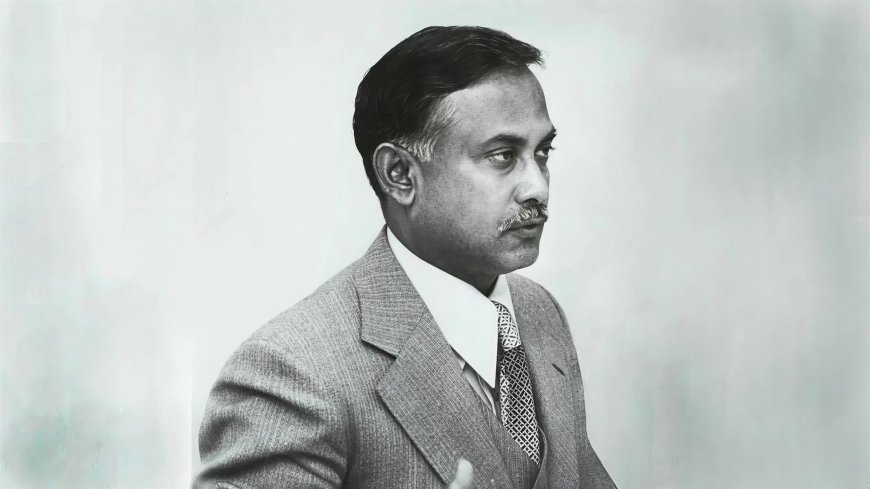
The Deputy High Commissioner had sent them. President Zia -- my mother’s cousin, a man whose name had hung over our family like a second sky -- was gone.
And then there was Barin Banerjee.
If Surinder Uncle was warmth and steadiness, Barin was something altogether more cinematic. Another of my father’s remarkable Kolkata constellation, he moved through a room the way certain men do -- effortlessly, as though the world had arranged itself slightly in his favour.
He looked, with almost unfair precision, like Vinod Khanna in his absolute prime. Same cheekbones. Same unhurried confidence. And those gold-rimmed Ray-Ban prescription sunglasses -- he wore them not as an accessory but as a feature, as though he had arrived into the world already wearing them and simply never saw reason to take them off.
He came to me after the news broke, deploying every ounce of that considerable charm in the direction of a stunned ten-year-old. Words, I imagine, failed even him that afternoon. So he did what elegant people sometimes do when words are insufficient -- he disappeared quietly, and returned from the HMV store with Nazia Hassan’s breakout album tucked under his arm. Disco Deewane. An early birthday gift, he said, with that trademark smile.
I held the record and said nothing.
Because this was not simply a head of state whose assassination had sent shockwaves across a nation.
This was my uncle.
The man who would settle into his chair and place me on one knee and his youngest son Coco -- my playmate, my co-conspirator, the boy I grew up running alongside -- on the other, as though the two of us together were exactly the right weight for the world. The man I adored with the uncomplicated, absolute devotion that children reserve for the adults who make them feel seen.
The man I looked up to in the way that leaves a permanent mark on who you become -- the kind of mark you only recognize years later, when you find yourself reaching for a standard you cannot quite name but have always, somehow, known.
His shadow has never quite left my shoulder.
It never will.
That night, the ward fell into the peculiar silence that hospitals manufacture after visiting hours -- that hollow, antiseptic quiet broken only by distant footsteps and the soft murmur of nurses on the night shift. I lay in my bed, the album resting beside me, Kolkata humming on indifferently outside the window.
My mother did not sleep. Not for a single hour.
She sat beside me and wept -- not loudly, not dramatically, but in that most devastating way, silently. Tears that asked nothing of anyone. Grief that had nowhere particular to go and no timetable for leaving. She was mourning a man she had known since childhood, a cousin who had become, in the strange alchemy of Bangladesh’s turbulent history, something far larger than family -- and yet, in her heart, remained precisely that. Just family. Just hers.
I tried to console her. I said the things a nearly eleven-year-old knows how to say. I reached for her hand. I told her it would be alright, in the way children do when they are reaching for words that belong to adults.
It wasn’t really helping. I knew it wasn’t helping.
But I kept trying anyway -- because what else do you do when the person who has always been your entire sky is quietly falling apart right beside you?
Dawn arrived, as it always does, without asking anyone’s permission.
And somewhere down that corridor, a surgical team was already preparing for morning rounds.
Kawsar “KC” Chowdhury is an entrepreneur, commentator, and Co-Chair of the Global Bangladeshi Alliance.