




































![A Ledger of the Soul: Navigating the Allah-Bhagavant Nexus in a 19th-Century Puruṣākāra Jñāna Caupara [Gyan Chauper]](https://counterpointbd.com/uploads/images/202608/image_430x256_6a93baa3b09a7.jpg)





















Bangladesh’s Border Anxiety After a BJP Victory in West Bengal
A double-engine BJP government could no longer blame West Bengal’s opposition for delays. If New Delhi and Kolkata are aligned, Bangladesh will expect results on both the Ganges and Teesta. The Teesta dispute, long blocked by Mamata Banerjee, is especially symbolic. With the Trinamool Congress out of power, Dhaka would expect movement.

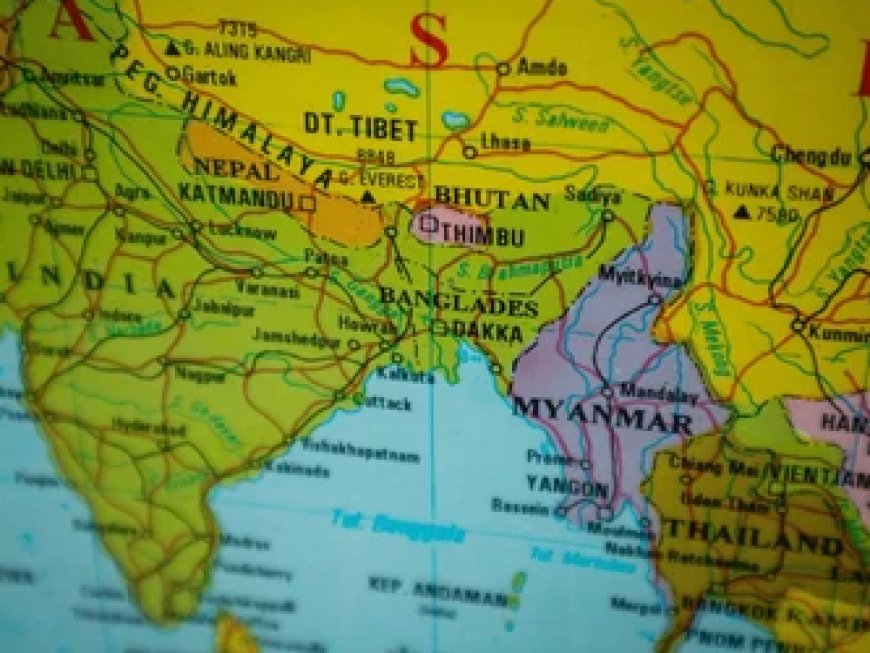
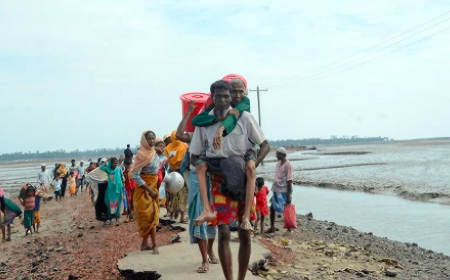
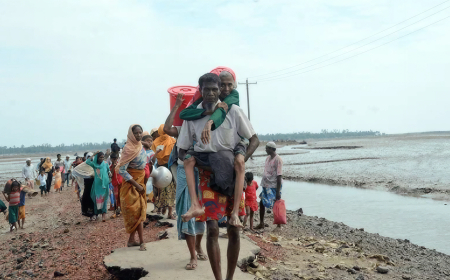
The most immediate concern for Bangladesh after a historic Bharatiya Janata Party victory in West Bengal would not be trade, transit, or even water. It would be the possibility of “push-ins”: the forced or semi-coercive movement of people identified by Indian authorities as “illegal Bangladeshis” across the India-Bangladesh border.
For Dhaka, this concern is not hypothetical. Bangladesh has previously experienced such tendencies along parts of the border, particularly near Assam, where the BJP has held state power. This has encouraged Bangladeshi analysts to draw a connection between “double-engine” government, meaning the same party ruling both the state and the center, and a more coordinated approach to citizenship, border control, and migration enforcement.
If such patterns emerged in Assam, Bangladesh would have reason to fear similar dynamics in West Bengal, a much larger and more politically sensitive border state.
The concern is rooted in the BJP’s long-standing emphasis on border security, citizenship verification, and the prevention of “infiltration.” These themes are closely tied to the party’s Hindutva politics and its broader national-security narrative.
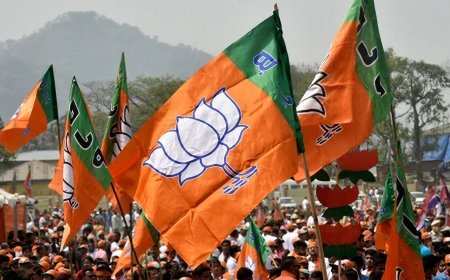
In West Bengal, the BJP’s manifesto, Bhoroshar Shopoth, promised stronger action against illegal migration, cross-border smuggling, and threats to national security. During the campaign, BJP leaders repeatedly framed border security and demographic change as central political issues, with Prime Minister Narendra Modi and Home Minister Amit Shah emphasizing action against “infiltrators” and border-linked insecurity.
For Bangladesh, however, the same political alignment could create a darker possibility. If New Delhi and Kolkata coordinate more aggressively on citizenship verification, border fencing, and anti-infiltration drives, Dhaka could face one of its most difficult border-management challenges in recent history. Bangladesh would not be able to treat the issue as an internal Indian matter if people are pushed across the border without proof of Bangladeshi nationality.
The memory of the Rohingya crisis is important here. When Rohingya refugees fled Myanmar, Bangladesh accepted them on humanitarian grounds. But that response also placed immense pressure on the state and created a perception that Bangladesh could be compelled, morally or politically, to absorb displaced Muslim populations from neighboring countries. If India were to push Bengali-speaking Muslims toward Bangladesh under the label of “illegal migrants,” Dhaka would face intense pressure not to repeat the Rohingya precedent.
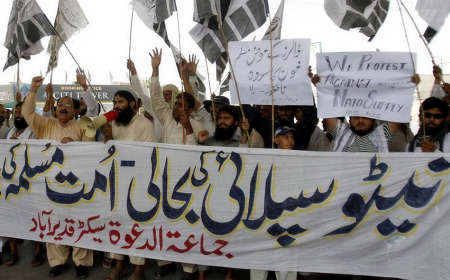
A Bangladesh Nationalist Party (BNP) government, driven by post-Hasina nationalism and anti-India sentiment, would be forced to take a strong stance against potential "push-ins" from India. Dhaka's response to an Indian "humanitarian crisis" could include refusing entry without proof of Bangladeshi nationality, boosting Border Guard Bangladesh deployments, suspending bilateral talks, and using international forums to voice accusations.
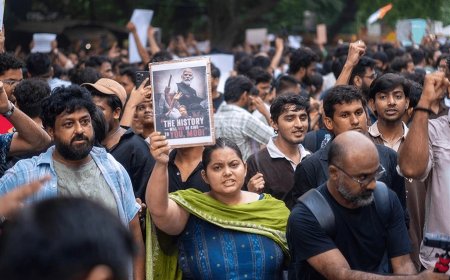
Domestically, a BJP victory in West Bengal could intensify existing anxieties among border communities, who frequently face push-ins, border killings, and harsh security practices, potentially leading to a rise in support for anti-Hindutva and Islamist political forces that gained ground in border-adjacent areas in the last election.
Already, many politicians from Bangladesh’s right-wing and nationalist blocs have used social media to warn that the country is under threat from “saffron” politics surrounding its borders. A BJP-ruled West Bengal would give these narratives new force. It would allow hardline actors to argue that Bangladesh is being encircled ideologically as well as geographically.
This could contribute to radicalization in several ways. In one scenario, an increase in push-in incidents could create local solidarity with those being forced across the border. Religious identity could then provide both emotional and organizational support for resistance. In another scenario, the rise of Hindutva politics in West Bengal could be framed by extremist groups as evidence that conflict between Hindu nationalism and Muslim communities is inevitable.
The idea of Ghazwatul Hind, already present in some jihadist narratives, could be revived as propaganda.
The timing of religious festivals could intensify these risks. Eid-ul-Adha, when cows are slaughtered as part of Muslim ritual sacrifice, often becomes a flashpoint in Hindu nationalist politics in India. If mob violence or lynching occurs in a BJP-ruled state around such a moment, Bangladeshi radical groups could use it to mobilize anger and present themselves as defenders of Muslims across the border.
The result could be dangerous polarization across Bangladesh’s border districts, as already in the last election of Bangladesh, Bangladesh Jamaat-e-Islami and the right-wing bloc won a stronghold in India's bordering states. Areas adjacent to West Bengal, Assam, Meghalaya, and Tripura are shaped by cross-border economic, familial, linguistic, and religious ties. If border enforcement becomes harsher, local communities may find themselves trapped between two nationalist projects.
On the Indian side, Bengali-speaking Muslims could face suspicion as infiltrators. On the Bangladeshi side, Hindu minorities could become vulnerable to retaliatory sentiment if Islamist groups use India’s actions to mobilize anger.
The borderlands could become laboratories of mutual suspicion. This would not only produce social tension; it could also disrupt trade routes, increase smuggling, empower local political muscle networks, and weaken confidence-building mechanisms between the Border Security Force and Border Guard Bangladesh.
India-Bangladesh relations have often survived political disagreement because of everyday pragmatism at the border. Once border populations are politicized through religious and demographic narratives, diplomatic repair becomes much harder.
A BNP government would inherit this resentment. It would still need relations with India for economic and geographic reasons, but it could not afford to appear submissive. Any sign of weakness before New Delhi would be attacked by domestic opponents, including Jamaat-e-Islami and nationalist student groups.
The government would therefore face a difficult balancing act: engaging India where necessary while proving to its own public that it can defend Bangladesh’s sovereignty.
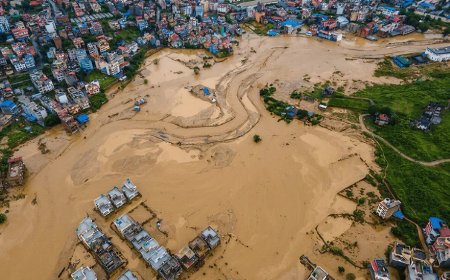
Yet a BJP victory in West Bengal would also create opportunities that previous governments could not fully exploit. The most important is water diplomacy. The 1996 Ganges Water Treaty is approaching expiration, and Bangladesh, as the lower riparian state, depends heavily on dry-season flows.
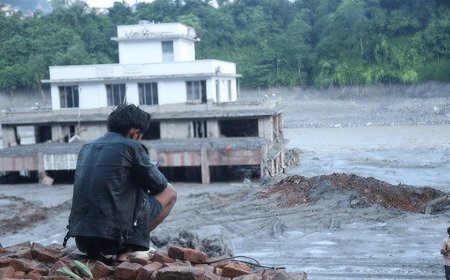
The Farakka Barrage remains emotionally charged because reduced freshwater flows have affected agriculture, river health, salinity, and the Sundarbans. For many Bangladeshis, the Ganges question is not merely technical; it is a test of whether India respects Bangladesh’s ecological survival.
A double-engine BJP government could no longer blame West Bengal’s opposition for delays. If New Delhi and Kolkata are aligned, Bangladesh will expect results on both the Ganges and Teesta. The Teesta dispute, long blocked by Mamata Banerjee, is especially symbolic. With the Trinamool Congress out of power, Dhaka would expect movement.
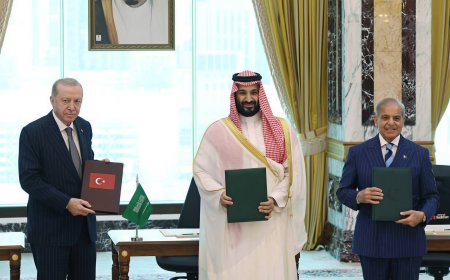
Beijing has already shown interest in Teesta basin management and other infrastructure projects in Bangladesh. But the BJP would also inherit the political costs of concession, especially in northern Bengal, where farmers fear reduced water access. India may therefore prefer incremental river cooperation over a grand treaty: Real-time hydrological data sharing, joint dredging, drought-management systems, environmental-flow guarantees, and basin-level restoration.
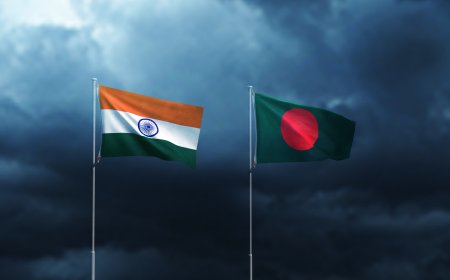
Ultimately, a BJP victory in West Bengal would give New Delhi both opportunity and responsibility. It could unlock stalled water talks, improve border management, and reduce federal excuses in dealing with Dhaka. But it could also sharpen Bangladesh’s fears over push-ins, NRC-CAA politics, border violence, and unequal transit arrangements.
For Dhaka, these issues would merge into a single sovereignty question; for India, they would test whether a double-engine government can deliver restraint as well as enforcement. If both sides fail, the border could become the main arena of confrontation in a more polarized Bay of Bengal.