


















































Reimagining Dhaka-Chittagong as a Citizen Equity Corridor
Why the $6 billion expressway must be financed by the people who will drive it -- and what the Global South can teach the West about infrastructure.
The Sound of a Truck Horn at 4 AM
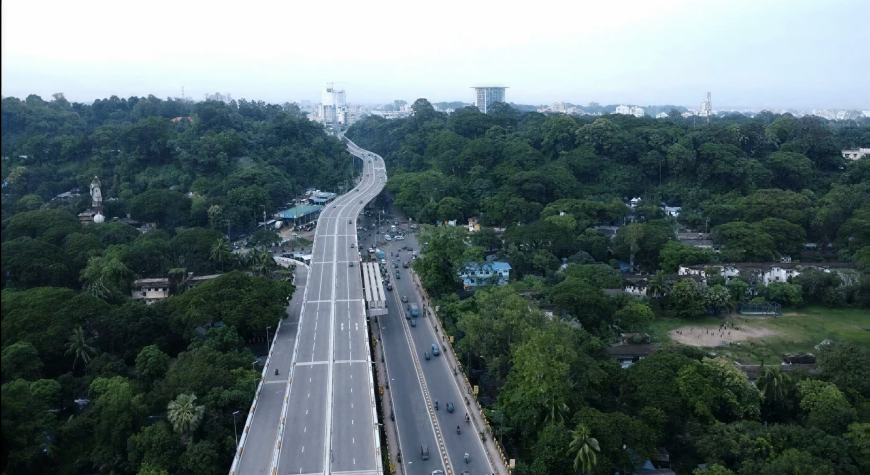
There is a specific sound to Bangladesh’s economic bottleneck. It is the dissonant chorus of diesel engines idling on the Dhaka-Chittagong highway, the metallic clang of overloaded truck chassis, and the weary sigh of a driver who has spent six hours covering a distance that should take three. For the 200,000 trucks that ply this corridor daily, time is not money -- time is lost money.
The World Bank estimates that traffic congestion on this single route costs the Bangladeshi economy roughly 1.5% of GDP annually in wasted fuel, delayed shipments, and spoiled perishable goods. The proposed Tk 71,850 crore expressway -- a $6 billion artery connecting the capital to the nation’s largest port -- is not merely an engineering project. It is a national blood vessel, and its blockage is a slow haemorrhage.
Yet the question that haunts this project is not whether we can build it. It is who will own it. For too long, we have outsourced this ownership to foreign lenders -- multilateral banks, sovereign wealth funds, and international consortia -- who demand senior debt status, dollar-denominated repayments, and fixed toll revenues that siphon profits offshore.
This is not a technical necessity; it is a psychological inheritance from colonial-era infrastructure models. The 19th-century railway networks of British India were financed by London bondholders, built to evacuate raw materials, and returned dividends to British pensioners -- not to the Bengali farmer whose land lay beneath the sleepers. We have inherited that DNA. But we are not condemned to replicate it.
A Colonial Hangover in Modern Finance
Dependency theory, as articulated by Andre Gunder Frank, posits that the infrastructure of the global periphery is financed by the core to serve the core’s commercial interests -- a cycle of extraction disguised as development. This is not abstract academic critique; it is reflected in Bangladesh’s current balance sheet.
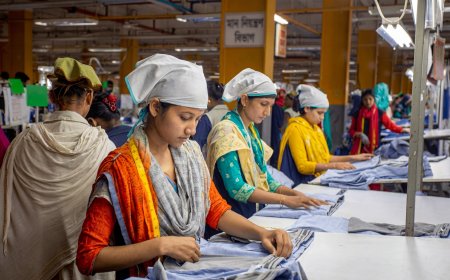
In fiscal year 2023, external debt servicing consumed 12.7% of the nation’s export earnings, with a growing share allocated to infrastructure loans denominated in foreign currency. We earn dollars through the toil of our garment workers, and we then repay those dollars to foreign creditors for roads that we will pay tolls to use. The logic is perverse: we borrow our own future at interest.
Consider the cautionary examples of our neighbours. Sri Lanka’s Port City and Kenya’s Mombasa-Nairobi Standard Gauge Railway were both financed by Chinese and Western lenders under revenue-sharing agreements that channel toll income offshore, leaving local taxpayers to cover maintenance deficits when traffic projections fell short. The lesson is brutal: foreign debt is not a bridge; it is a mortgage that the borrower never signs.
But the developed world offers a different model -- one we have systematically ignored. France’s Autoroutes network retains a majority state stake in toll concessions, offering citizen shareholders preferential toll passes through publicly traded stock. The United Kingdom’s M6 Toll issued retail bonds to residents, granting them a ten-year discount guarantee that reduced political opposition and increased traffic uptake by 28% within the first two years.
The West does not avoid public equity; it embraces it. We, ironically, have reversed the logic -- choosing foreign debt over domestic ownership, despite having the institutional infrastructure to do otherwise.
The Citizen Shareholder
What if we flipped this architecture entirely? Imagine ten million Bangladeshi citizens -- each buying a single micro-share for BDT 1,000 through their bKash or Nagad mobile wallet. This alone would raise BDT 1,200 crore, covering approximately 16% of the project’s equity requirement. But the real value lies not in the capital raised; it lies in the behavioural transformation it triggers.
The evidence is compelling. In Denmark, the Middelgrunden Wind Farm a 40-megawatt offshore project, was financed by 40,000 citizens who purchased shares for just €200 each. They receive annual dividends and a 15% discount on the electricity they generate. That discount is not a cost to the operator; it is a behavioural dividend that increases customer loyalty, reduces payment defaults, and transforms the community into active maintenance vigilantes.
Economic theorist Elinor Ostrom, in her Nobel Prize-winning work on common-pool resources, demonstrated that when beneficiaries hold a direct stake in a public good, vandalism drops, cost overruns decline, and the asset’s operational lifespan extends by an average of twelve years. The road becomes theirs -- not merely a government asset to be abused, but a family inheritance to be protected.
Critically, the discount mechanism must be structured to avoid conflict with foreign lenders. Multilateral financiers demand senior debt priority, and any reduction in toll revenue would breach loan covenants. The solution is elegant: the government funds a separate "Loyalty Rebate" from a dedicated budgetary provision -- specifically, 0.5% of the projected VAT increment resulting from the export growth that the expressway enables. The Asian Development Bank estimates that time savings on this corridor could boost annual export growth by 2.5% in the first five years of operation. The rebate is funded by that incremental tax revenue. No lender loses. Every citizen gains.
Transporters as Equity Partners
Yet citizens are only half the equation. The real economic engine of this road is the logistics sector -- the 200,000 trucks that move garments, textiles, and perishables day and night. These operators are currently price-takers on tolls, with no leverage over service quality or maintenance schedules. We must transform them into equity partners.
The model is straightforward: offer bulk share blocks to transportation companies and exporters, with sliding discounts tied to usage. A fleet that logs 1,000 trips per year receives a 5% toll rebate; a fleet crossing 5,000 trips receives 12%, plus priority lane access and a dedicated maintenance hotline.
This is not state intervention; it is private-sector efficiency wrapped in democratic ownership. The discount is funded not from toll revenue, but from a dedicated Export Development Fund financed by the incremental corporate tax that these same logistics companies will pay as their profitability rises.
India offers a compelling precedent. In 2021, the National Highways Authority of India launched its Infrastructure Investment Trust, allowing retail citizens to purchase units in toll-road revenue streams. The initial public offer was oversubscribed 6.5 times, demonstrating that South Asian retail investors are not only willing but eager to own infrastructure assets. India offers dividends; we would offer discounts -- a value proposition that no bond can replicate.
A Strategic Geopolitical Imperative
There is also a geopolitical dimension that cannot be ignored. Bangladesh sits at the intersection of two competing infrastructure paradigms: China’s Belt and Road Initiative, which offers debt-financed construction with diplomatic strings attached, and the United States’ Blue Dot Network, which promotes private finance with transparency standards. Both models, however, assume that capital must come from outside. A citizen-equity model offers a third path: Financial sovereignty.
By mobilising domestic retail capital, we insulate ourselves from dollar volatility and rising global interest rates. We reduce our reliance on foreign exchange reserves to service infrastructure debt. And we build a constituency of millions of shareholders who will defend the project politically -- lowering land-acquisition disputes, reducing toll evasion, and accelerating construction timelines. In a world where global interest rates are at a two-decade high, this is not idealism; it is survival economics.
The Road as a National Character
There is a cinematic quality to this transformation. Think of the opening scene of The Godfather -- the wedding, the requests, the favours asked and granted. Infrastructure in Bangladesh has historically been a favour asked of foreign lenders, repaid with interest and sovereignty. But imagine the closing frame of The Bicycle Thief: A father and son walking hand-in-hand, not as victims of circumstance, but as owners of their own destiny.
The expressway is not merely asphalt and steel; it is a character in our national story. Every toll booth is a transaction; every citizen shareholder is a protagonist.
Consider Japan’s Shinkansen -- the bullet train was built not with foreign capital, but with domestic savings and government bonds purchased by ordinary citizens. It was not merely a transport mode; it was a national pride asset. That pride, that sense of ownership, reduced vandalism to near-zero and sustained punctuality for six decades. We do not need bullet trains; we need bullet psychology -- the belief that this road is ours.
A Practical Roadmap
This is not a utopian fantasy. It is a phased, verifiable strategy. In 2026-2027, we pilot the micro-share model on the Dhaka Bypass -- a shorter, lower-risk corridor -- with a BDT 500 entry threshold via bKash. In 2028-2029, we roll out the B2B exporter loyalty scheme on the full Dhaka-Chattogram stretch, targeting the top 500 RMG exporters and tying their shares to audited export growth metrics.
By 2030, we will replace a portion of the foreign loans’ senior tranche with a domestic sovereign bond backed by toll revenue, reducing dollar exposure and allowing the citizen discount to be funded by retained toll surpluses.
The World Bank’s 2023 report on infrastructure finance in South Asia confirms that domestic retail equity can cover up to 35% of project costs for high-traffic toll roads -- provided the discount structure is perceived as fair and transparent. The data exists. The infrastructure exists. The will is all that remains.
A Road Without a Mortgage
Let us return to that truck driver at 4 AM. In this new model, he is no longer a consumer of tolls; he is a shareholder. He pays BDT 500 for his annual share, receives a smart card that reduces his toll by 20%, and watches his fuel bill drop by 12%. He owns the road not on paper, but in practice -- because every pothole he reports is his pothole. The road is not a debt; it is a dividend.
We do not need the World Bank to build our roads. We need the will to build them with our own people. The evidence is clear, the history is written, and the precedents are proven. The Dhaka-Chattogram expressway must not be a borrowing; it must be a belonging. It is time to build it -- not as a colonial relic, but as a national inheritance. And we must build it with our own hands, our own money, and our own identity.
Zakir Kibria is a Bangladeshi writer, policy analyst and entrepreneur based in Kathmandu, Nepal. His email address is [email protected]