




































































What's Happening at University?
The authority of a teacher should neither be absolute nor depend on the popularity of the teacher's opinions. It should emerge from knowledge, fairness, professional conduct and the confidence that institutional rules will be applied impartially.

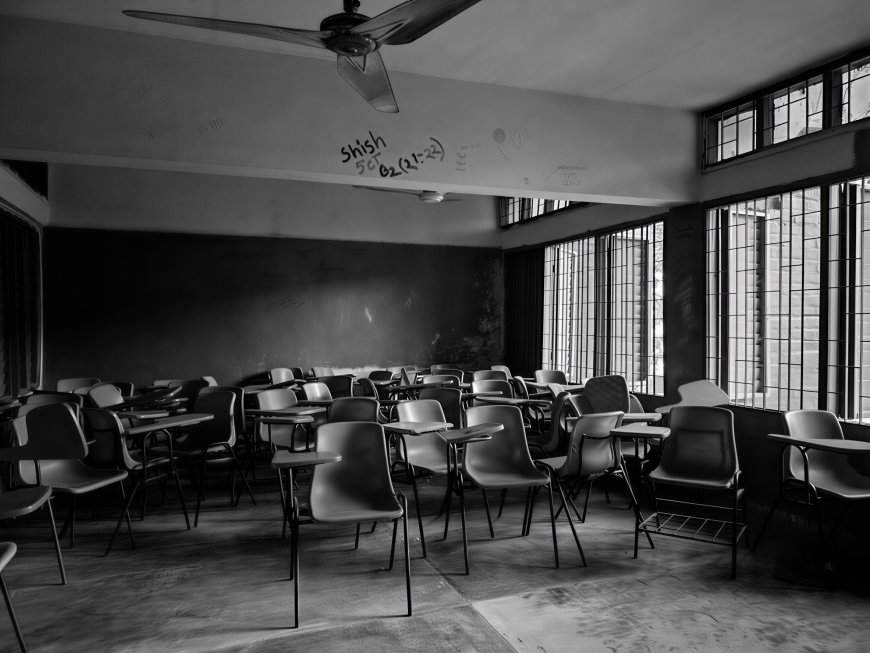
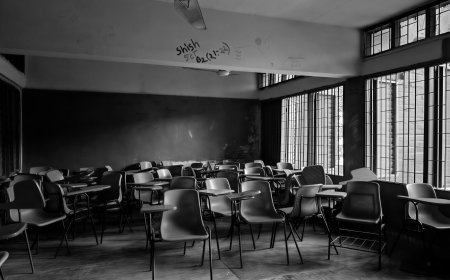
A university classroom is supposed to be a place where ideas are tested, assumptions challenged and disagreements resolved through reason.
In Bangladesh, however, an increasingly troubling question confronts higher education: Can a teacher still teach without fearing that a disagreement may become an allegation, a classroom exchange may become a social media controversy, or an unpopular opinion may invite demands for punishment before an impartial inquiry has taken place?
Equally important, can students trust that their teachers will evaluate them fairly, respect their dignity and never exploit the authority entrusted to them? These questions point towards a crisis deeper than indiscipline or generational conflict.
They reveal the erosion of trust between those who teach and those who learn.
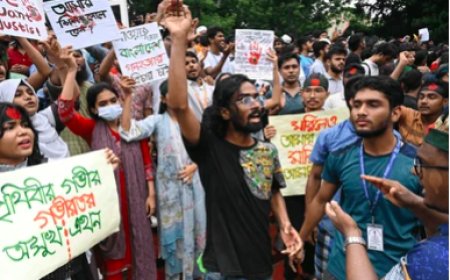
Recent incidents have brought this crisis into sharp focus. In October, a controversy at the University of Dhaka over an alleged exchange between an English department teacher and a student wearing a niqab resulted in the teacher being relieved of teaching duties while the complaint received attention.
In January, teachers at the University of Asia Pacific were dismissed amid student protests involving allegations of Islamophobia and political affiliation. Meanwhile, incidents of students harassing or physically intimidating teachers have raised concerns about the weakening of institutional authority.
These cases differ in their circumstances and must not be treated as interchangeable, but together they expose a troubling question about how universities manage conflict, disagreement and accountability.
The danger lies not in students questioning teachers. Questioning authority is essential to intellectual development, and universities should be among the first places where it is encouraged.
The danger emerges when questioning becomes a demand for unquestioning agreement, when protest substitutes for investigation, or when the public circulation of an accusation is treated as sufficient grounds for a verdict.
A university cannot teach critical thinking while allowing the loudest voices to determine what may be discussed and who may continue teaching. Nor can it defend academic freedom by demanding that students remain silent about genuine misconduct. The challenge is to distinguish criticism from intimidation, accountability from vengeance, and disagreement from abuse.
Part of the problem is that the traditional moral authority of teachers has weakened without being replaced by sufficiently reliable institutional procedures. Earlier generations often accepted a teacher's judgement because of the teacher's position, even when that judgement was unfair. Contemporary students are more willing to challenge authority, question grading decisions and demand explanations.
This change is not inherently undesirable. A university degree should not require intellectual submission, and a teacher's seniority cannot make an arbitrary assessment legitimate.
Yet a culture of questioning becomes destructive when students assume that an unfavourable grade proves personal hostility, that criticism constitutes humiliation, or that an allegation requires no examination before punishment.
Evaluation is a particularly sensitive point of friction. Students may suspect favouritism, retaliation, political bias or discrimination when marks appear inconsistent or feedback is inadequate.
Sometimes such suspicions may be justified. At other times, disappointment with a result may encourage an unjustified accusation. The answer is not to ask students to trust teachers blindly but to make trust less dependent on individual personalities.
Transparent rubrics, documented feedback, moderation of assessments and an independent appeals process can turn grading disputes into academic discussions rather than personal confrontations. Where decisions can be explained and reviewed, both students and teachers have less reason to fear arbitrary judgement.
The opposite danger, however, must receive equal attention. Teachers possess institutional power that students do not. They influence grades, recommendations, research opportunities and, in some circumstances, a student's academic future.
Allegations of sexual harassment, inappropriate personal demands, intimidation and manipulation of grades cannot be dismissed as attempts to undermine authority.
Such cases demonstrate why complaints must be investigated seriously, confidentially and fairly, rather than settled through personal influence or public pressure. A student's vulnerability deserves protection, and a teacher accused of misconduct deserves a fair opportunity to respond. Neither principle cancels the other.
The deeper institutional failure is that universities too often appear unprepared to manage the space between accusation and verdict. In an analysis published in The Daily Star in May 2026, law teacher Psymhe Wadud highlighted the uncertainty surrounding complaint procedures and the absence of sufficiently clear institutional policies governing staff-student relationships.
When procedures are ambiguous, complainants may feel abandoned, accused individuals may feel persecuted, and administrators may resort to hurried decisions to contain controversy. The resulting uncertainty damages everyone.
Universities need clearly defined misconduct policies, independent investigative bodies, protection against retaliation, reasonable timelines and reasoned decisions that respect confidentiality. Accountability must be a process, not a performance staged for public consumption.
Religious sensitivity adds another dimension to this fragile relationship. Teachers must respect students' religious identities and cannot use the classroom to humiliate them for their clothing or beliefs.
At the same time, no religious conviction, political ideology or cultural position should become immune from respectful academic examination. A discussion of religious practices, gender, history or philosophy may cause discomfort without constituting discrimination.
Conversely, invoking academic freedom does not excuse insulting a student's identity. The distinction depends on context, language, purpose and conduct, all of which require careful assessment rather than instant assumptions.
John Stuart Mill's argument in On Liberty remains relevant: “He who knows only his own side of the case knows little of that.” Education requires exposure to competing arguments, including those that unsettle deeply held convictions.
If a student can hear only opinions that confirm existing beliefs, intellectual development becomes impossible. If a teacher can express only ideas that guarantee approval, teaching becomes the cautious delivery of information rather than an invitation to think. The university must protect the right to disagree without granting anyone permission to discriminate, harass or threaten.
There is also a psychological dimension to this crisis. Teaching requires a degree of intellectual openness that fear can easily destroy. When teachers anticipate that an imprecise expression, an unpopular interpretation or a disagreement over a text may trigger public condemnation, they may retreat into safe, superficial instruction.
Students, meanwhile, may become reluctant to challenge teachers openly if they fear retaliation in their grades. In both cases, the classroom loses its most valuable quality: The freedom to make mistakes, reconsider assumptions and learn through disagreement.
The responsibility for restoring this environment rests primarily with university administrations, though teachers and students must also reconsider their conduct. Teachers should make assessment criteria clear, welcome reasoned disagreement, avoid personal or discriminatory remarks and maintain professional boundaries.
Students should challenge decisions through evidence and established procedures rather than threats, public shaming or collective coercion. Administrations must resist pressure from whichever group happens to be more influential and ensure that comparable cases receive consistent treatment.
Independent complaint mechanisms, academic freedom protections, transparent disciplinary procedures and meaningful avenues of appeal are not bureaucratic luxuries. They are the foundations of institutional credibility.
Ultimately, the authority of a teacher should neither be absolute nor depend on the popularity of the teacher's opinions. It should emerge from knowledge, fairness, professional conduct and the confidence that institutional rules will be applied impartially.
Similarly, student power should be measured not by its ability to force a resignation or silence an argument, but by its capacity to demand justice without abandoning fairness.
H. M. Nazmul Alam is an Academic, Journalist, and Political Analyst based in Dhaka, Bangladesh. Currently he teaches at IUBAT. He can be reached at [email protected]