



























![A Ledger of the Soul: Navigating the Allah-Bhagavant Nexus in a 19th-Century Puruṣākāra Jñāna Caupara [Gyan Chauper]](https://counterpointbd.com/uploads/images/202608/image_430x256_6a93baa3b09a7.jpg)




















How an Unhealed Society Keeps Reproducing Discrimination
Ultimately, the effectiveness of any anti-discrimination law will depend not only on its clauses but on the political will to confront uncomfortable truths, reform abusive structures, and build a future in which neither static nor dynamic forms of discrimination can take root. Only then can Bangladesh move toward a truly just and rights-respecting society.

Bangladesh is once again debating the introduction of an anti-discrimination act. Panels are being formed, roundtables organized, and experts -- from lawyers to economists as well as politicians -- are parsing constitutional clauses and proposed legal remedies.
This renewed urgency is understandable: After all, the July Uprising itself grew out of the Anti-Discrimination Student Movement, making the call for such a law both timely and foundational to the demands voiced on the streets.
I recently attended one such event: A civic dialogue on formulating an anti-discrimination act, held on November 8 at the Bangladesh-China Friendship Exhibition Center.
As participants, various marginalized communities were invited to speak as “representative categories,” and their struggles were neatly catalogued into identity-based boxes: Women, persons with disabilities, tea-garden workers, Biharis, Harijon communities, gender-diverse groups, and trade-union bodies.
This is undeniably a commendable initiative, and the need for an anti-discrimination act is both urgent and long overdue.
Yet while listening to the conversations, I tried to understand how closely they reflected the reality we are currently navigating. Identity-based discrimination is, of course, the most visible and historically entrenched form -- especially in a post-colonial nation-state where exclusion is often embedded from the very moment of formation. Bangladesh is no exception.
Over time, these forms of discrimination have only deepened, remaining unresolved despite surface-level attempts to address them.
Civil society has played an essential role in amplifying the voices of these historically marginalized groups, and dialogues like the one I attended continue that important work.
These static, foundational forms of discrimination -- rooted in the very architecture of the nation-state -- were well represented in the dialogue. However, what was largely missing was the conversation on the dynamic forms of discrimination, which are equally, if not more, pervasive in contemporary Bangladesh. This absence is troubling.
Discrimination in Bangladesh today is not only a matter of longstanding identity-based injustices; it is increasingly the product of an unhealed society -- a society carrying unresolved historical trauma, shaped by patterns of state violence, political propaganda, and narrative manipulation.
Together, these forces continuously manufacture new hierarchies, new exclusions, and new categories of people deemed unworthy of protection.
The Dynamic Forms of Discrimination
To understand discrimination in contemporary Bangladesh, it is necessary to move beyond static identity categories and examine what I call the dynamic forms of discrimination.These forms do not target any fixed community; instead, the identities of both victims and perpetrators shift depending on political context, institutional control, and narrative engineering.
While perpetrators are almost always those who control state machinery political actors, security agencies, and administrative institutions -- their targets are not predetermined by ethnicity, caste, or gender. They are manufactured.
In recent years, political actors have increasingly become both the primary perpetrators and the primary victims of these manufactured discriminations, often divided along ideological lines. This creates an ever-changing landscape where anyone who falls outside the dominant political narrative becomes vulnerable.
One of the earliest 21st-century examples of such dynamic discrimination in Bangladesh can be traced to the rise of extra-judicial killings carried out by the Rapid Action Battalion (RAB).
By its very nature, extra-judicial killing represents the highest form of discrimination: it denies the victim any access to justice, legal defence, or public accountability. Strikingly, these killings initially received public support -- because most victims were conveniently labelled as “criminals.” The label did the work. It made the act appear justified, even necessary.
The pattern soon extended to enforced disappearances and state-sponsored murders, whose numbers have grown so alarmingly that the current inquiry commission is still struggling to uncover the full scale of the violations.
Yet, the regime escaped accountability then. How? By manufacturing the belief that these victims somehow deserved their fate.
Here, binary narratives become a powerful instrument of statecraft. In Bangladesh, the “pro-liberation versus anti-liberation” binary has long been deployed to generate political legitimacy behind discriminatory violence.
Labelling opponents as “Razakars” became a tool to dehumanize them -- rendering their lives ungrievable, their suffering invisible, and their rights easily violable. Once a population is seen as morally tainted or ideologically treacherous, discrimination becomes political common sense.
This narrative architecture gradually politicized state institutions: The police, the administration, the judiciary -- and crucially, the media. Media outlets routinely echoed the official narratives, often compelled (or coerced) to reproduce state versions of events, thereby legitimising discriminatory violence.
From this environment emerged practices such as kneecapping -- a brutal method where security personnel allegedly shot or beat the legs of protesters and opposition supporters. Kneecapping ensured not only physical injury but social death: Victims lost their livelihoods, their mobility, and their place in social life.
It served as a long-term instrument of fear, embedding deep trauma in collective memory and eroding the possibility of accountability. Unsurprisingly, there was no justice for these victims; their suffering was publicly rationalized through the perpetrators’ narratives.
This is the essence of dynamic discrimination: It simultaneously erases opponents from public life and terrorizes those who dissent, while tagging them as “anti-liberation,” “terrorist,” or “criminal” to justify the repression.
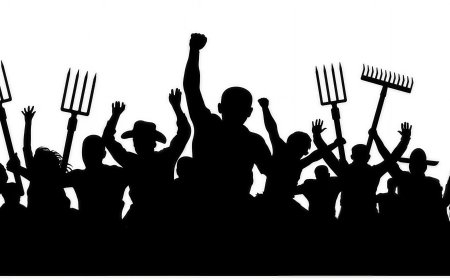
The July uprising displayed the most extreme form of this discriminatory machinery. Protesters -- many of them teenagers and university students -- were labelled “Razakars” and “drug addicts,” especially when they mobilized against the quota system that favoured the grandchildren of freedom fighters, a policy widely perceived as discriminatory against general students.
Believing the tagging culture would once again secure compliance, the regime responded with unprecedented brutality -- deploying lethal force that resulted in the extra-judicial killing of reportedly 1,400 protesters, many of them children, and leaving thousands blind or permanently disabled.
These are not distant memories. They are fresh wounds -- lived and witnessed by the nation.
Yet these dynamic forms of discrimination received little to no attention in the recent civic dialogue on the anti-discrimination act. Their omission creates an incomplete, even misleading, picture of how discrimination actually operates in Bangladesh today.
A society cannot heal, let alone legislate justice, if it ignores the mechanisms through which new victims are continuously produced.
How an Unhealed Society Reproduces Discrimination in Bangladesh
Having discussed the patterns and mechanics of dynamic discrimination in Bangladesh, it is essential to turn to a deeper question: Why does discrimination reproduce itself so consistently and so violently?
Bangladesh has carried unresolved wounds since its very birth, and these unhealed traumas strain the social fabric in ways that continuously generate new forms of discrimination.The fascistic practices of the last regime only deepened these wounds, shattering whatever remained of social trust.
From the very beginning, Bangladeshi society inherited a foundational wound in its relationship with Jamaat-e-Islami, whose opposition to independence -- and, by extension, its alignment with West Pakistani repression -- created a rift that has never healed.
This unresolved wound was later weaponised by the Awami League and took a decisive form during the controversial Shahbagh movement, which not only polarized the nation but also cast a shadow over the judicial process. In this way, one unhealed wound produced yet another form of discrimination.
Power transitions, too, remain some of the most deeply scarred terrains of Bangladeshi politics.
The 1975 massacre of the Sheikh family left a trauma that continues to shape political narratives. The assassination of President Ziaur Rahman generated another wound -- one that has been repeatedly reopened in partisan battles. The 1990 mass uprising that toppled military rule restored democracy, but it also left unresolved tensions that lingered beneath the surface.
Even when transitions were resolved, they added to the political scar tissue. The controversial February 1996 election, through which BNP briefly reassumed office prior to a re-election under a caretaker government, left yet another layer of distrust around transfer of power.
Then came the August 21, 2004 grenade attack on an Awami League rally -- a horrific event that created a massive wound in the political landscape. (In the later years, the Awami League increasingly weaponized this tragedy to politically corner BNP and Jamaat, casting their top leaders as central planners behind the incident and using the narrative to deepen political andideological divides).
The political tensions escalated sharply in 2006 amid allegations that the BNP-led government sought to influence the formation of the caretaker administration, sparking nationwide protests led by the Awami League-led alliance.
On October 28, Dhaka experienced one of the deadliest political clashes in recent memory, where scenes of brutal street violence -- including the killing of Jamaat and Shibir activists with logi and boitha -- left a deep scar on the nation’s collective memory.
The stalemate and escalating unrest ultimately paved the way for the military-backed 1/11 government, further entrenching distrust and adding another layer to Bangladesh’s long-standing cycle of political trauma.
From 2009 to the July Uprising of 2024, the Awami League government strategically leveraged accumulated national wounds -- Jamaat’s role in 1971, the 1975 assassination, the August 21 attack, the 1/11 caretaker crisis, and BNP’s past failures -- to produce new forms of discrimination.
Drawing on these unresolved traumas, the regime crafted and deployed narratives to justify the suppression of dissent, the destruction of state institutions, the erosion of voting rights, enforced disappearances, kneecapping, media control, and the mass atrocities committed in July 2024.
Historical trauma was used as political capital to legitimize contemporary injustice. After the July Uprising, Bangladesh finds itself confronting not only fresh wounds but the entire weight of its historical baggage.
Society has not healed -- nor has it been allowed to heal. Instead, the same political narratives that once justified authoritarian violence are being redeployed, this time by various actors against one another, even though many of these forces stood together during the uprising.
Mob attacks branding individuals as “collaborators of fascists,” newly created tags designed to silence dissenting voices (such as “Shahbagi”), and social media witch-hunts all reveal the persistence and replication of discriminatory logic.
These behaviours illustrate precisely how an unhealed society reproduces discriminations, julum and mazlum, the persecutor and the persecuted, over and over again.
Today’s victims become tomorrow’s perpetrators, and tomorrow’s victims are manufactured through fresh narratives of suspicion and betrayal.
In fact, unhealed wounds as a source of discrimination are not unique to Bangladesh. The ongoing atrocities in Sudan demonstrate how unresolved historical grievances -- politicized and weaponized through identity-based narratives -- can be transformed into tools of mass violence.
This shows that an unhealed society becomes a dangerous instrument: it not only reproduces discrimination but can also provide the conditions for large-scale atrocities and even genocide when exploited by regimes/political actors with ill intent.
It is encouraging that Bangladesh is finally discussing an anti-discrimination act. But such a law will remain incomplete -- perhaps even ineffective -- if it fails to recognize the unhealed nature of our society and the dynamic forms of discrimination that flow from it.
We must understand not only the static, identity-based injustices rooted in the nation-state’s foundation but also the shifting, narrative-driven, politically manufactured injustices that define contemporary Bangladesh.
Only then can we draft a law and imagine a future that protects citizens not just from discrimination of the past but from the discrimination that is continually being produced in the present.
We must recognize that no legal reform can succeed without inclusive institutions, strong legal safeguards, and genuine political accountability. A society fractured by decades of unhealed wounds will continue to reproduce discrimination unless we commit to a nationwide healing process that acknowledges past harms and prevents their recurrence.
We must also be cautious of political rhetoric that draws its legitimacy from these very wounds. As we have seen, such narratives are easily weaponised by political actors, deepening the fractures they claim to address and allowing the cycle of dynamic discrimination to persist indefinitely.
Unless we reject these divisive frames and commit to genuine national healing, Bangladesh risks remaining trapped in the endless reproduction of its own wounds.
Ultimately, the effectiveness of any anti-discrimination law will depend not only on its clauses but on the political will to confront uncomfortable truths, reform abusive structures, and build a future in which neither static nor dynamic forms of discrimination can take root.
Only then can Bangladesh move toward a truly just and rights-respecting society.
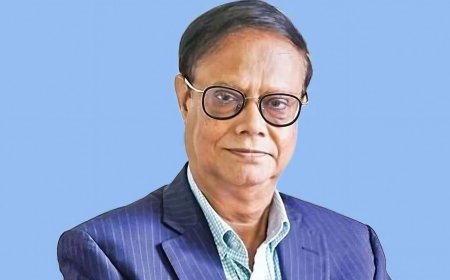
Md. Zarif Rahman is a researcher, columnist and activist. He currently serves as the Research Director at Sapran -- Safeguarding All Lives, a rights-based think tank. He previously served as a member and student representative on the Police Reform Commission of Bangladesh.