
















































Navigating Belief, Empathy, and Silence
To live fully is to stand barefoot on the razor's edge between what we know and what we can only feel -- embracing the magnificent chaos of a mind that refuses to be tamed.

There is a quiet, heavy kind of friction that comes with being both a believer and a skeptic -- someone who is deeply attuned to the unseen rhythms of the world yet constantly interrogates their own certainty.
For sensitive, artistic minds, this internal landscape is rarely black and white. It exists in the sprawling, uncomfortable gray areas between reverence and doubt, between the urge to speak out and the paralyzing fear of causing collateral damage to someone else's heart.
The Geography of the Unseen and the Mind of the Skeptic
To live as both a believer and a skeptic is to hold two contradictory truths in tension. On one level, acknowledging the limits of human perception is simple scientific fact. We know that certain animals perceive colors and sounds entirely closed off to our senses.
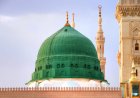
In cultural and spiritual traditions -- such as the batini (esoteric) dimensions of Islam or the profound mystical philosophies found across many faiths—there is a shared vocabulary for things that exist beyond the physical veil.
It is easy, and comforting, to look at nature, to quiet the racing mind, and to feel that there is something greater, higher, or angelic at work. Yet, the skeptic within immediately steps in to cross-examine that comfort. Can we prove it?
This constant oscillation -- where you believe deeply in an unseen reality one moment, only to dismantle your own belief the next -- can feel exhausting. It is not a lack of conviction; it is an acute awareness of how fragile our own thoughts are.
Reading Between the Lines of Myth and Cosmos
This dance with the unseen changes entirely when you stop reading religious and spiritual texts as rigid history and start reading them as poetry. When sacred figures and creation stories -- whether it is Adam and Eve, or cosmic cycles from Hindu philosophy -- are viewed as profound symbols and metaphors rather than absolute blueprints, they suddenly open up.
They become mirrors of the human psyche rather than dogmatic chains.
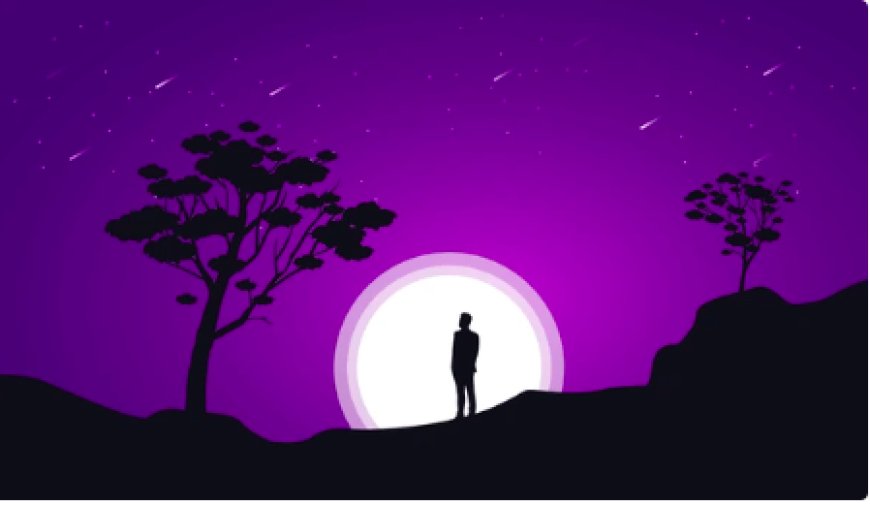
And science only deepens this poetic mystery. Look up at the night sky: many of the stars we gaze at with wonder are, in reality, already dead, their light traveling across millions of years just to brush our retinas in the present. The dead appearing as living. What is that if not pure, unadulterated poetry written across the universe?
Whispers from the Margins and the Edge of the Veil
Sometimes, this awareness breaks through not in grand philosophies, but in quiet, ordinary moments with the non-human world—or in realms far stranger and more frightening than the rational mind cares to admit. It happens when you sit and watch your pets observe something entirely invisible to you, or when you encounter life in its most unexpected forms.
Consider a moment shared with a tiny creature most people would shrink away from: Rescuing a baby snake from a cat, gently guiding it away from the danger of the sidewalk and into the safety of a hole.
Sitting quietly, waiting, and watching as the little creature re-emerges to look right back at you with a startling sense of recognition.
A soft touch on its head -- an unspoken, cross-species exchange of gratitude and acknowledgment before it slips back into the earth. Or consider what it feels like to stand beneath a towering, aged tree, feeling the immense, silent weight of its wisdom, knowing that the rational mind doesn't hold a monopoly on truth.
Yet these experiences can also cross from poetry into profound, bodily reality. One morning, I sounded entirely like a mad person.
Someone who has passed on -- my ex-husband's father -- had come to me with a terrifying warning that I was going to die that very night. Convinced and panicked, I forced my family to take me to the hospital.
Walking into the emergency room, I looked like I had lost my mind; I was trying to get admitted, insisting something was wrong, while outwardly I seemed fine and the doctors were reluctant to take me in.
And then, right there in the emergency room, I suffered a severe seizure. If I had been anywhere else in the city, or left at home that day, I might have passed on. Experiences like that make it impossible not to believe in the unseen.
Even so, the skeptic in me never fully rests -- I still question it, wondering if it was just a coincidence, a bizarre dream, or just the mind playing tricks. Yet when an omen meets a brush with death so precisely, it leaves an indelible mark.
The Cost of Complexity: Diagnosis, Censorship, and Refusing to Be Defined
This complexity becomes even more tangled when paired with high empathy and simplicity of thought. While some navigate the world through rigid intellectual frameworks, others prefer to drop out of the endless loop of analysis and simply feel -- finding peace in nature, in art, or in quiet spaces where the noise of the mind finally subsides.
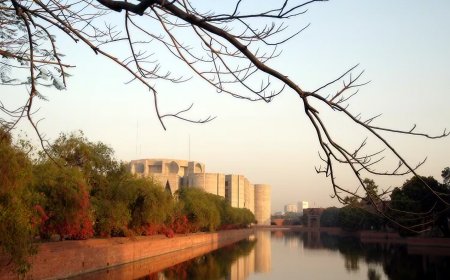
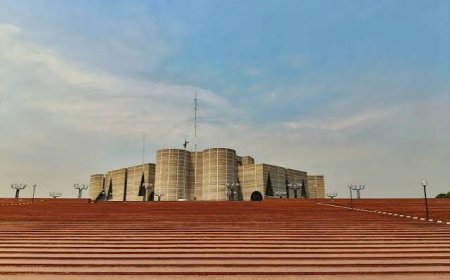
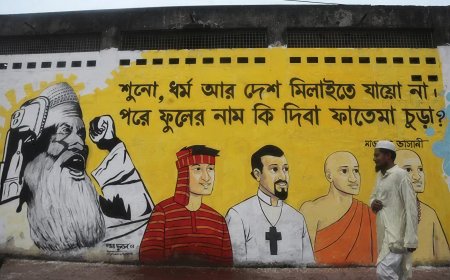
When you feel things deeply, you also feel the fragility of the people around you. Living in a place like Bangladesh, this creates a unique psychological weight. There are countless moments when you want to speak your truth, but you censor yourself -- out of fear, out of a desire not to shatter someone else's belief system, or simply for people-pleasing reasons.
Even so, if you find yourself censoring yourself less than others, that very refusal to wear a neat, socially approved mask comes with a heavy social cost.
This sort of fluid, boundary-crossing thinking has led me, since I was a young person, to be diagnosed by psychiatrists as bipolar.
A lot of people have tried to give me medicine for this so that I would no longer think this way, hoping to cure me into becoming neatly categorized -- either a pure, uncritical believer or a rigid skeptic.
I don't want to be stuck in either camp, and I am very comfortable living in the gray.
Living with me might be maddening for others at times -- and I know I haven't always been an easy child, an easy partner, or an easy mother. I’ve made very, very, very un-standard, unconventional choices throughout my life.
I can be a little messy and strange, cycling between phases of destruction and extreme creativity. Maybe I am the problem, in the eyes of a world that loves neat lines. Giving me medication to just be "normal" would probably be easier for everyone else. But I prefer this messy me.
I have never taken the medication, and I have never allowed that diagnosis—or the world's expectations -- to define me. I don't think you can truly define a human being, because we are so much more than we appear to be; we are never just one thing, we are a multitude of things all at once.
In fact, isn't everything around us fundamentally dual? We have two eyes, two hands, the feminine and the masculine, the sun and the moon, the night and the day. Isn't the whole world built on this dance of opposites?
This constant contradiction is not a pathology; it is simply who I am, and it is the very friction that allows me to write my songs, create my art, and see the world not in black and white, but in all the colors between the seven notes.
Finding a Place in the Contradiction
This tension leads to a very specific kind of internal comedy and confusion. People might call you a "confuser" because your thoughts don't conform.
Yet, it is entirely possible to sit down and listen to a deeply moving, philosophical exploration of a spiritual tradition and feel your soul expand, finding a deep and quiet comfort in its grace.
Then, moments later, you might watch a sharp, irreverent satire or a cynical critique of that exact same religion and find yourself laughing out loud, appreciating the comedic dismantling of dogmatic absurdity -- even as you dismantle your own beliefs in real time.
Does this make you a hypocrite? No. It makes you an observer. It means you are capable of holding space for both human devotion and human folly.
You can honor the sacred longing in people -- and the wordless understanding shared with a baby snake, an ancient tree, a visitor from across the veil, or a dead star's light -- while simultaneously recognizing the humor and hypocrisy in institutionalized certainty.
Ultimately, we are not meant to be neat equations solved by the world's arithmetic, nor are we meant to stay trapped inside the cages of our own certainty.
To live fully is to stand barefoot on the razor's edge between what we know and what we can only feel -- embracing the magnificent chaos of a mind that refuses to be tamed.
We are the music between the notes, the starlight traveling long after the star has vanished, and the quiet dawn waiting patiently on the other side of every dark and complicated night.
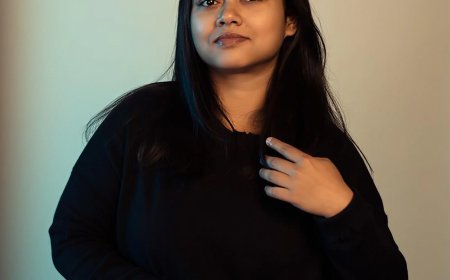
Anusheh Anadil is a Bangladeshi musician, artist, cultural activist, and social entrepreneur.