





































































What Do Young People Really Want?
Youth policy cannot simply mean another training activity, another freelancing scheme, a few youth forum talks, or loan access workshops that fail to simplify capital for young entrepreneurs.


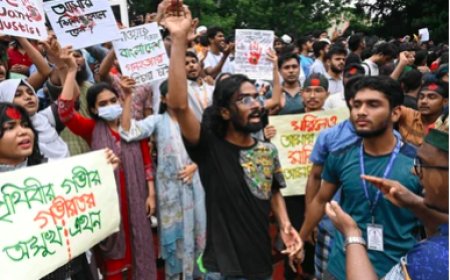
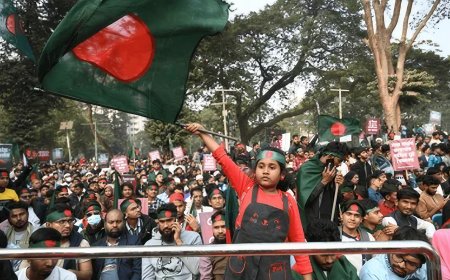
The July student movement is being called many things, but at its core, it was a collective refusal by students and ordinary citizens to accept a broken system.
It was a demand to dismantle a structure that served only a privileged, politically connected elite. Two years on, as political rhetoric threatens to settle back into business-as-usual, policy halls continue to ignore the fundamental question: what do young people actually want?
According to the 2022 Population and Housing Census, 28% of Bangladesh’s population is between 15 and 29 years old. Yet, the Bangladesh Bureau of Statistics (BBS) Labour Force Survey 2023 revealed that 1.94 million young people in this age bracket were unemployed -- representing a 7.2% youth unemployment rate. Damningly, 31.5% of those unemployed youth held tertiary education degrees. This reality demands immediate intervention.
To understand what lies behind these numbers, I asked young people directly on August 12, International Youth Day, engaging colleagues, young professionals, and a Facebook platform of over 45,000 professionals. While these responses may not constitute a statistically representative sample of all Bangladeshi youth, they offer a clear snapshot of current thinking.
The answers were striking in their consistency. Financial independence came first, followed immediately by enjoyable, dignified work where they are heard, trusted, and recognized. Building close relationships came later. These are not unrealistic demands, yet they expose a glaring aspiration mismatch with current state policy.
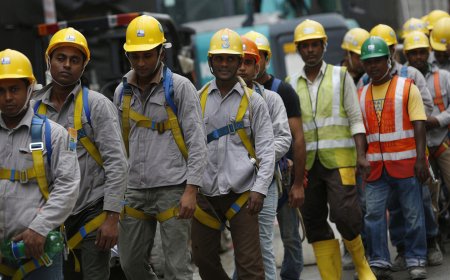
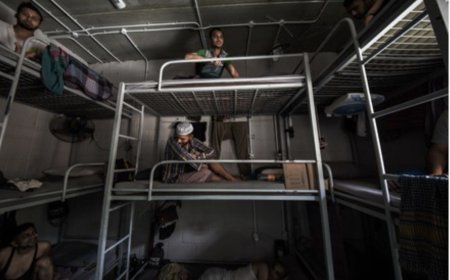
Numerous project-based initiatives across various ministries repeatedly urge young people to enter manufacturing and Technical and Vocational Education and Training (TVET), pouring funds into courses, equipment, stipends and industry partnerships. But policymakers fail to ask why young people reject these jobs even after receiving training.
Youth are making a rational calculation about the life those jobs offer. A 2024 CPD study of 600 current and former technical students revealed that 73% of graduates earned less than Tk10,000 a month; a mere 1% crossed Tk30,000. Combined with a mismatch between acquired skills and market demand, telling a young person that TVET leads to a "good career" is an insult to their intelligence.
If technical qualifications offer decent wages, professional recognition, and clear pathways to management, higher education, or entrepreneurship, they become desirable. Furthermore, if TVET is to yield higher incomes, the government must ensure training programs provide globally recognized skills so graduates can secure decent work abroad.
Young people are already voting with their feet. The British Council’s Next Generation Bangladesh 2024 study surveyed 3,081 youth aged 18-35 in late 2023, revealing that 55% were interested in moving abroad due to economic concerns, unemployment, and limited opportunities.
A 2025 World Bank analysis confirmed this exit trend, showing that 46% of respondents aspired to migrate. This is not an awareness problem; it is a failure of the state's value proposition.
Nor is entrepreneurship the silver bullet state rhetoric suggests. For a young person from a low-income household, starting a business without capital, a credit history, or collateral is nearly impossible. We preach self-reliance while maintaining financial structures that refuse collateral-free loans to first-time entrepreneurs.
This institutional disconnect extends directly into workplace culture. Young women entering formal jobs demand basic rights: safe and inclusive environments, fair remuneration, recognition, and professional growth.
As one young woman in the development sector bluntly put it: women should build careers through skills, hard work, and competence -- not based on appearance or political proximity to leadership.
Across sectors, young professionals describe senior colleagues taking credit for their labor, workplace progression requiring toxic "oiling," and political affiliation, family background, or social circles overriding qualifications. When institutions reward connections over competence, they destroy the incentive to study, acquire skills, and work hard. Merit must become a non-negotiable economic principle.
We label young people "future leaders," yet deny them agency. Parents dictate career choices well into adulthood, while workplaces demand blind obedience over independent judgment -- shifting blame to the youngest staff when mistakes occur.
Senior colleagues bring essential institutional memory and wisdom, but younger professionals bring fresh perspectives. Seniors guiding juniors remains important, but silencing the next generation yields nothing.
Security, too, dictates youth choices. Financial stability, law and order, clean air, clean water, and safe food dictate whether young people believe they can build a future here. This environmental and economic uncertainty heavily informs changing attitudes toward starting a family among educated youth, as raising children requires confidence in public healthcare, education, and safety.
Stripping away bureaucratic fluff reveals four core demands: agency, dignity, security, and purpose.
Youth policy cannot simply mean another training activity, another freelancing scheme, a few youth forum talks, or loan access workshops that fail to simplify capital for young entrepreneurs. Initiatives like the EARN project -- designed to reach 900,000 NEET (Not in Education, Employment, or Training) youth aged 15-35, 60% of them women -- represent substantial investments.
But we must evaluate what happens after the ribbon-cutting. Does training lead to rising incomes? Do women remain employed? Are skills actually utilized? Too often, key lessons from these projects remain buried in unread drive folders.
Quality of work remains the structural bottleneck. BBS 2022 data shows that 84.9% of employed people remain in informal employment -- surging to 92.7% for youth aged 15–27, and 96.6% for women. This points to a failure to hold the private sector accountable to hire certified, skilled labor for decent wages.
To fix this, immediate policy priorities must shift to the following. The youth policy actions plans need to have Action Plans that are accountable to ensure these changes with time bound deliverables:
· Build visible, credible career pathways: Show TVET and manufacturing workers where their careers can lead in ten years, including options for sustainable self-employment and career abroad.
· Enforce meritocracy: Establish uncompromising accountability in hiring, promotion, and pay across institutions without nepotism.
· Grant genuine agency: Move beyond superficial youth consultations where adults make all final decisions.
· Measure outcomes over activities: Stop celebrating training statistics and start tracking post-training job quality and income retention.
· Create a livable country: Last but not least, deliver the environmental, social and institutional security so staying in Bangladesh becomes a viable choice for youth.
The UN’s 2026 International Youth Day theme, “Different Contexts, Common Aspirations,” highlights shared global demands for dignity, participation, and opportunity. Bangladeshi youth are asking for nothing different.
They are asking for a system where effort yields return, competence holds value and work carries dignity. If the July movement was a call for systemic reform, this is precisely where reform must begin.
Tasmiah T. Rahman is a PhD candidate in the SOAS/Brac joint initiative and an Advisor at Innovision Consulting. Views are her own.