























































Why Is It Only Majoritarian Religious Sentiment That Matters?
Here is the cruel asymmetry that exposes the game. Hurt religious sentiment is always, unfailingly, something felt by the majority or by those who claim to speak in its name. No minority, no freethinker, no ordinary citizen can ever demand accountability for the trampling of their own emotions.

A state’s legitimacy rests on a simple promise: To protect rights, deliver justice, and shield citizens from tangible harm. It is meant to be a neutral guarantor of liberty and an impartial enforcer of objective law, not a guardian of comfort, a censor of offense, or a therapist for emotional distress.
Yet in Bangladesh, from the Awami League years to the present interim government, one toxic idea has persisted: That the state must prioritize protecting citizens’ religious sentiments over protecting citizens’ rights.
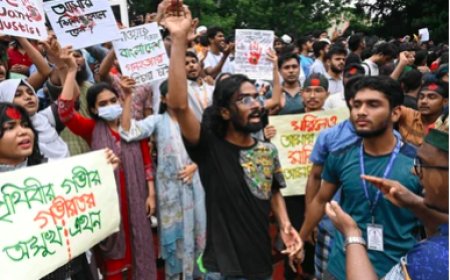
Whenever someone’s feelings are supposedly bruised, a chorus rises led by groups now branding themselves as Tawhidi Janata, alongside Islamic religious political parties, their supporters, sympathizers, and opportunistic allies, demanding prosecution, imprisonment, mob justice, or worse. And too often, the state bends.
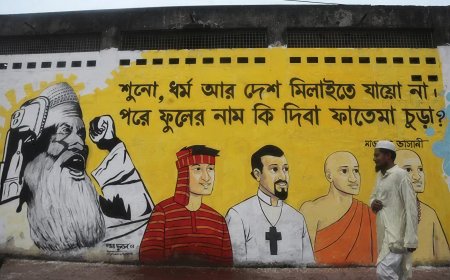
Who gets accused in these waves of alleged emotional injury? Ordinary citizens. You, me, our nephews and nieces, our neighbor. A teacher sharing a history lesson, a student posting a meme, a writer questioning dogma, a Hindu celebrating Durga Puja, an Ahmadiyya praying quietly, a woman refusing the veil, a blogger defending secularism, or a singer performing folk songs.
In short, anyone who thinks, speaks, worships, dresses, or simply exists outside the narrow lines drawn by the self-appointed guardians of faith. Yet when the mob demands blood, it is always everyday people, never the powerful clerics or politicians who proclaim their party as Islam’s only savior, who face arrest, exile, or death.
This shift from rights to emotional appeasement is not only unsustainable, it is dangerous. More than one hundred and fifty Sufi shrines and syncretic cultural sites have been attacked or destroyed in the name of protecting religious feelings. Women face renewed demands for veiling in public, gender segregation, the removal of music and art from school curricula, and moral policing on the streets, all justified as safeguarding the sentiments of Islamists.
Minorities live in fear. Free expression withers. And here is the cruel asymmetry that exposes the game. Hurt religious sentiment is always, unfailingly, something felt by the majority or by those who claim to speak in its name.
No minority, no freethinker, no ordinary citizen can ever demand accountability for the trampling of their own emotions.
When leaders of Islamic political parties declare that Islam can only be saved by voting for them, and promise a ticket to Heaven with the implied claim that their political party alone embodies Islam, no case is filed, no mob is restrained, no apology is extracted.
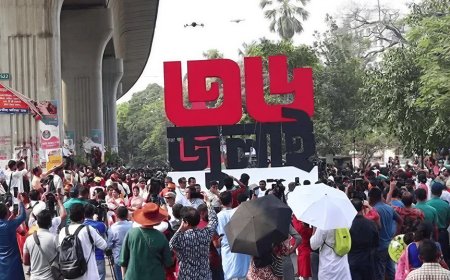
Their blasphemy against pluralism goes unchallenged because the state polices emotional injury in only one direction. Just a couple of weeks ago, Baul singer Abul Sarkar was arrested and jailed in Manikganj for alleged derogatory remarks during a folk performance at the Khala Pagli fair. This arrest sparked mob violence by supporters of Tawhidi Janata who besieged the court and assaulted his followers.
Feelings cannot be legislated. What offends one person leaves another completely unmoved. No government can fairly or consistently define emotional harm. When it attempts to do so, it abandons objective law and enters a realm where the loudest, most mobilized, or most violent set the boundaries of public life.
Bangladesh is sleepwalking toward a shadow blasphemy regime, one not yet written into law but enforced through fear, selective prosecution, and state capitulation. The region offers a stark warning.
Pakistan’s descent into blasphemy madness did not begin with a single statute. It began with appeasement, with courts, leaders, and institutions too timid to confront mobs waving the banner of hurt feelings. Over decades, those feelings hardened into legal weapons wielded by the intolerant.
When governments protect emotional sensitivities, they inevitably empower those most willing to weaponize them. Minorities become permanent suspects. Women’s autonomy is curtailed. Writers, artists, and journalists self censor. Public debate shrinks. The rule of law becomes selective.
Accusation replaces evidence. Outrage substitutes for due process. A democratic society demands resilience. Citizens must learn to encounter ideas, beliefs, art, and speech they find objectionable.
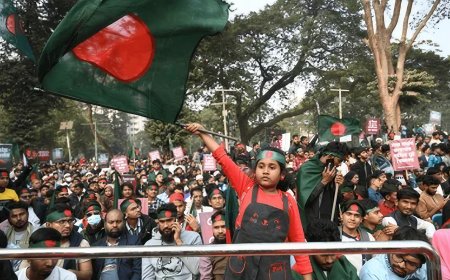
The remedy for speech we dislike is more speech, not state censorship dressed up as compassion for emotional harm. Bangladesh’s future hinges on drawing a clear line inspired by the deep green of the national flag.
The state must protect rights, not feelings. It must defend the right to worship without granting anyone the right to silence others. It must safeguard free expression rather than punish disagreement. It must protect every minority, including the small but often persecuted Ahmadiyya community. It must guarantee the rights of women instead of sacrificing them to Islamist outrage. And it must enforce the law uniformly, without cowering before groups that believe their emotions deserve the force of public policy.
A nation that polices emotions cannot protect liberty. If Bangladesh continues down this path, it will not only endanger its minorities, it will forfeit its own democratic soul. The choice is stark.
The state must reaffirm that its purpose is the protection of rights, not the soothing of the easily offended or the surrender of the republic to those who believe their feelings should govern everyone else’s liberties.
I can only hope that Bangladesh chooses liberty. My hope rests on the legacy of a once in a generation visionary, Dr Muhammad Yunus, and the values he has championed throughout his life: Equality, women’s empowerment, the elimination of poverty, and a commitment that earned him the Nobel Peace Prize.
My hope rests on a future where peace prevails for all of us.
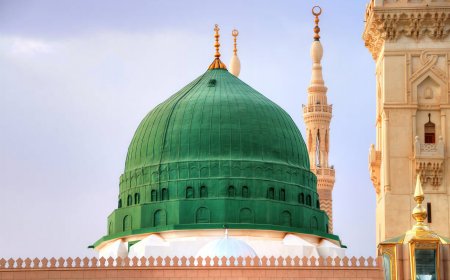
The alternative is grim. The green of the national flag, a symbol of the land’s richness and vitality, could fade into an Islamic green, becoming a daily reminder that a single interpretation of a single religion has claimed the authority to dictate the lives of an entire people.
Mirza Ahmad is an independent writer with a strong interest in politics, religion, and human rights.