








































































The Ceasefire That Solves Nothing
For civilians, of course, the distinction between pause and resolution may seem academic. The absence of immediate violence is a tangible relief. But from a structural perspective, the conditions that produced the war remain unchanged.

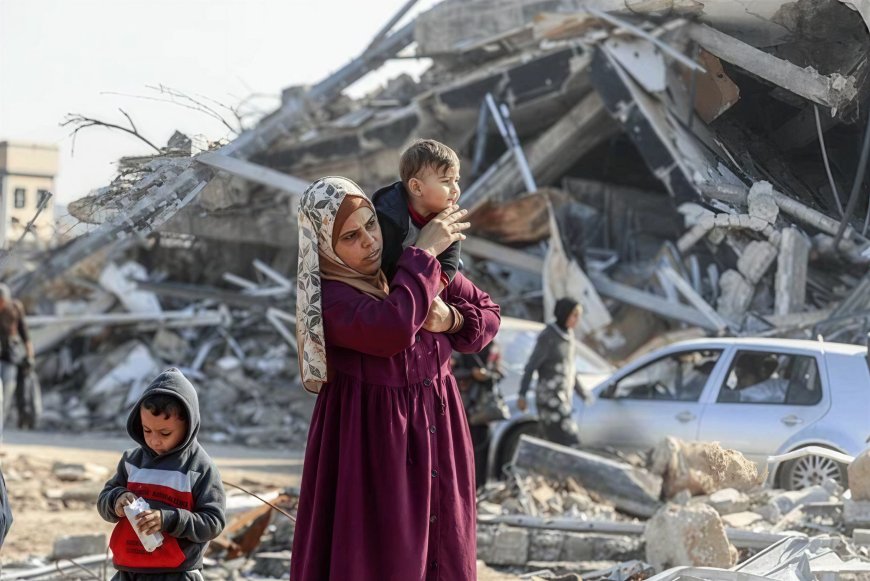
The silence that follows war is often mistaken for resolution. In reality, it is usually an interval. The current ceasefire between the United States and Iran belongs to that uneasy category of pauses that relieve immediate suffering without altering the trajectory of conflict.
It has slowed the tempo of violence, but it has not redefined its logic. If anything, it has clarified the deeper structural tensions that made the war possible in the first place.
To understand why this ceasefire changes so little, one must begin with the mismatch between military action and political objectives.
The United States, supported by Israel, entered the confrontation with an expansive strategic imagination. The rhetoric was not confined to deterrence or containment.
It extended to the possibility of regime change, to the dismantling of Iran’s political and military architecture, and to a reordering of regional power. Yet the outcome of the conflict has exposed the limits of that ambition.
Iran’s state structure remains intact, its leadership is not only surviving but negotiating, and its strategic capabilities, though degraded, are far from neutralized.
This is not merely a failure of execution. It reflects a deeper contradiction in contemporary warfare. Military superiority can destroy infrastructure, disrupt command structures and impose costs, but it cannot easily manufacture political outcomes inside a sovereign state, especially one that has spent decades adapting to external pressure.
Iran’s political system, shaped by a history of sanctions, isolation and intermittent confrontation, is designed to absorb shocks. The expectation that it would collapse under a short, intense campaign underestimated the resilience that such conditions produce.
At the same time, Iran’s own claims of victory require careful scrutiny. The narrative emerging from Tehran emphasizes endurance and deterrence. It highlights the ability to sustain missile and drone operations, to retain command over key strategic assets, and to force the United States into negotiations that appear to acknowledge Iranian terms. But endurance is not the same as advantage.
Iran has suffered significant material and human losses, and its economy, already strained, faces further uncertainty. What it has gained is not dominance, but leverage. And that distinction matters.
The most tangible expression of this leverage is the Strait of Hormuz. For decades, its importance has been understood in abstract terms as a critical artery of global energy supply. This war has transformed that abstraction into a concrete instrument of pressure.
By demonstrating both the capability and the willingness to disrupt maritime traffic, Iran has elevated the strait from a latent vulnerability to an active bargaining chip. The implication is profound. Control over geography is no longer just a strategic asset. It is now explicitly integrated into diplomatic negotiation.
This shift has implications that extend far beyond the immediate conflict. The global economy is structured around assumptions of continuity in the flow of energy. Those assumptions are now conditional. Even if the ceasefire allows shipping to resume under Iranian coordination, the precedent has been established.
The next escalation, whether deliberate or accidental, could again place this chokepoint at the centre of global anxiety. Markets can absorb shocks, but they struggle with persistent uncertainty. What Iran has introduced is not a one time disruption, but a recurring possibility.
The ceasefire also exposes the fragility of trust, or rather, its near absence. Both sides have entered this pause with fundamentally incompatible expectations. The United States seeks to translate its military campaign into constraints on Iran’s nuclear and regional ambitions.
Iran seeks recognition of its strategic autonomy, relief from sanctions, and compensation for damages. These positions are not simply divergent. They are structurally opposed. One demands limitation, the other demands legitimization.
In such a context, the timeline of diplomacy becomes critical. A two week window to bridge these differences is not a negotiation. It is a test of whether tactical necessity can override strategic divergence. Previous rounds of talks, particularly those in Geneva, demonstrated how quickly apparent progress can unravel.
The resumption of hostilities at that time was not an anomaly. It was a reflection of unresolved contradictions. There is little reason to assume that relocating the talks to Islamabad, without altering their underlying framework, will produce a different outcome.
Another dimension of this ceasefire that warrants closer examination is its selective application. While it has reduced hostilities between the principal actors, it has not produced a comprehensive de-escalation across the region. Continued strikes in Lebanon illustrate a pattern that has become increasingly common in modern conflict.
Ceasefires are often geographically and politically bounded. They stabilize one front while allowing others to remain active. This fragmentation of conflict zones complicates any attempt to define what “peace” actually means in practice.
For Israel, this raises a strategic dilemma. The military campaign against Iran was expected to deliver not only immediate tactical gains but also long term security benefits. Yet the persistence of Iranian influence, combined with ongoing tensions in neighbouring theatres, suggests that the underlying security environment has not fundamentally improved.
Domestic political pressures further complicate this assessment. In an election context, the gap between perceived success and actual strategic gain becomes more politically consequential.
The United States faces a different, but equally significant, set of challenges. The conduct of the war, particularly the rhetoric surrounding it, has implications for its global credibility. Threats that approach the language of total destruction do not operate in a vacuum. They are interpreted by allies and adversaries alike as indicators of strategic disposition.
For European partners, already navigating a complex security environment, such signals introduce an additional layer of uncertainty. Alliances are not only built on shared interests but also on predictable behaviour. When that predictability erodes, so does confidence.
In the Gulf, the response is likely to be more pragmatic than dramatic. States in the region have long balanced their reliance on the United States with a cautious awareness of its shifting priorities. The recent conflict reinforces the need for diversification. This does not imply a rupture in relations, but it does suggest a gradual recalibration. Security partnerships may become more transactional, more hedged, and less exclusive.
It is within this context that China’s role becomes particularly significant. Its involvement in facilitating the ceasefire is not an isolated diplomatic gesture. It is part of a broader strategy to expand its influence in regions where the United States has traditionally been dominant.
By positioning itself as a mediator rather than a combatant, China offers an alternative model of engagement. Whether this model will prove sustainable is an open question, but its appeal lies precisely in its contrast to the volatility displayed by other actors.
Despite these shifts, the fundamental structure of Middle Eastern geopolitics remains intact. External powers continue to project influence, regional rivalries persist, and internal political dynamics remain deeply entrenched. The ceasefire has not altered these realities. It has merely paused their most violent expression.
What makes this moment particularly revealing is the speed with which the discourse has shifted from existential threat to diplomatic engagement. One day, the language of annihilation dominates. The next, the same actors speak of workable frameworks and negotiation.
This rapid oscillation is not a sign of flexibility. It is a sign of strategic inconsistency. It suggests that policy is being driven as much by immediate pressures as by coherent long term planning.
For civilians, of course, the distinction between pause and resolution may seem academic. The absence of immediate violence is a tangible relief. But from a structural perspective, the conditions that produced the war remain unchanged. The balance of power is still contested, the grievances that fuel hostility are still unresolved, and the mechanisms for managing conflict are still inadequate.
This is why the ceasefire, despite its immediate benefits, does not represent a turning point. It is a moment of recalibration within an ongoing process of confrontation. It provides an opportunity for diplomacy, but it does not guarantee its success. It reduces the intensity of conflict, but it does not eliminate its causes.
In that sense, the most accurate way to understand this ceasefire is not as an end, but as a continuation. It is part of the same cycle of escalation and de-escalation that has defined the region for decades. Each phase creates the conditions for the next, without fundamentally altering the pattern.
The danger lies in mistaking this pattern for progress. Temporary stability can create the illusion of movement, encouraging the belief that the system is evolving towards resolution. But without structural change, such stability is inherently fragile. It can be disrupted as quickly as it is established.
H. M. Nazmul Alam is an Academic, Journalist, and Political Analyst based in Dhaka, Bangladesh. Currently he teaches at IUBAT. He can be reached at [email protected]