




















































The Parliament and the New Democratic Journey
The hopes and dreams of the people in society like ours die in the Westminster system of parliamentary governance, which prefers to suppress the opposition under legal cover; the space for morality wanes completely.

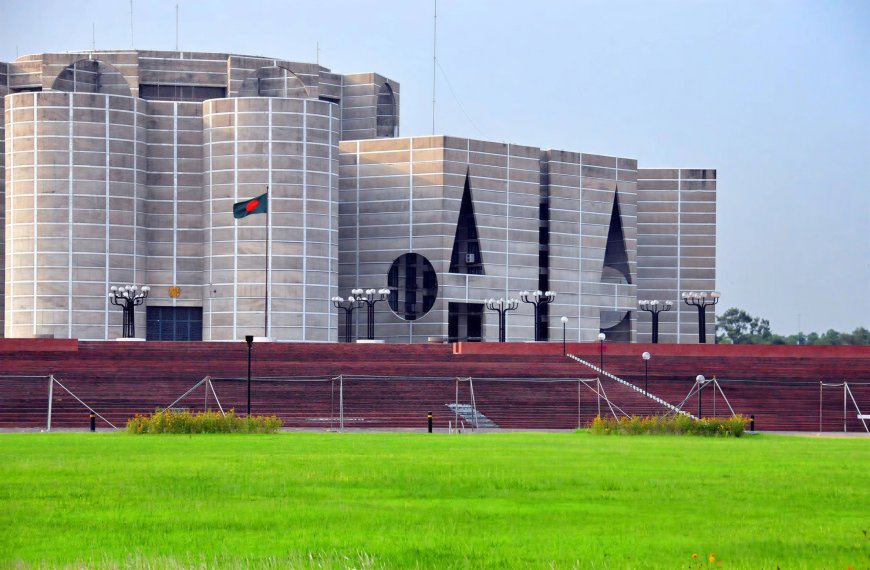
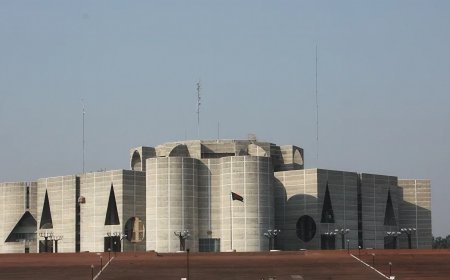
The change in governance in the Second Bangladesh draws curious eyes as people watch what unfolds in Parliament and immediately perform autopsies. The Parliament is shifting from a blindly loyal chorus for the leader of the house to a place of heated debate among opposing members.
The Law Minister's advice to an ordinary member like Hasnat Abdullah to read Hobbes, Locke, and Rousseau prompted Hasnat to appear at the next session with books by those political philosophers. This clearly signals a remarkable shift in the quality of the future Parliament and a failure to establish an absolute majority that would enable it to ignore genuine points raised by the small but effective opposition.
On the other hand, members are discussing the need to develop communication within their constituencies, demands suitable for local governance. At the same time, experienced parliamentarians, such as the speaker and other senior members, are trying to hinder the new members' expression, citing parliamentary norms and rules, as in the Westminster style.
There are conflicting opinions: One group advocates adopting the Westminster model of parliamentary procedure to improve the conduct of new members, while another believes the expectation for this new parliament is to address issues that ordinary citizens can understand in their own language.
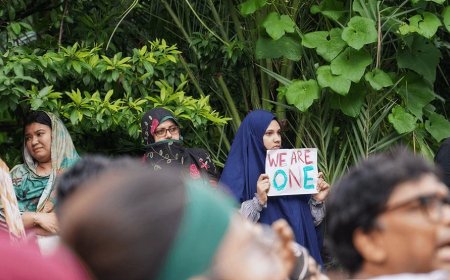
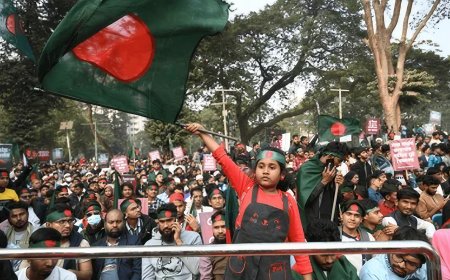
The journey of the Second Bangladesh and the new parliament was initiated by the sacrifice of ordinary citizens' blood against the democratic oppression of a democratic government. The election, laws, and use of state force under the guise of the Westminster style of democracy sailed well legally, but were challenged morally by the citizens, the owners of the state, as stipulated in the constitution.
The boundary between laws and morals is not clearly defined in a democracy; laws loom large while morals take a back seat, remaining only in the realm of the non-executable. The ideas of Hobbes and Locke have been misapplied under the cover of Parliamentary governance in many underdeveloped countries to use somewhat monarchical power, claiming the sovereignty of parliament rather than the sovereignty of the people.
The bright guys like Hasnat Abdullah in parliament and his peers outside, who are initiating political discourse on Hobbes, Locke, and Rousseau and challenging the seasoned politicians, beckon hope for a bright future and a return to pristine democracy, where people can claim state ownership.
Let's look at what Hobbes, Locke, or Rousseau thought of the democratic state under the Westminster-style of parliament. Thomas Hobbes and John Locke belonged to the central notion of two thoughts: The contract of submission, where the existing social group agrees under certain conditions to submit to a monarchial ruler, and the other is that these social groups organize themselves into a group or society, but without necessarily sacrificing their autonomy or rights.
Further amplification reveals that there were two kinds of interpretation of these: Most educated Europeans didn’t prefer the contract theory despite its monarchial influence, but believed that the King had the divine right to rule, which they saw as the origin and basis of social organization, and the other camps favoured this contract theory, which again favoured the monarch to rule the consent of the subjects.
But Jean Jacque Rousseau made a significant change, arguing that the contract is a clear sign that monarchist theories of the state are to give way to democratic ideas, with the people having an active rather than a passive role. Rousseau argues that the source of political authority lies not in the parliamentary government passing laws with the votes of the majority, but in the people as a whole.
The question is how the will of the people as a whole can be secured in parliamentary decisions? Rousseau exemplified the idea that the life of an ordinary citizen was so important that, even at the height of the power of King Alexander the Great in Macedon couldn’t execute a person unless he defended himself and unless the whole body of his assembly was convinced, not the senate, consuls, or majesty had the authority to do so.
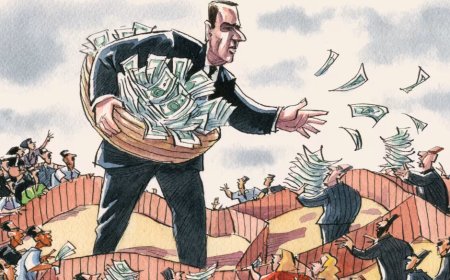
He further said that a bad government elected democratically with a brute majority has the legal authority to enact laws that favor the rich to preserve the usurpation and keep the poor wretched. The issues of morality don’t legally limit them; rather, they put them in a stronger position in establishing the sovereignty of parliament rather than that of the people.
The hopes and dreams of the people in society like ours die in the Westminster system of parliamentary governance, which prefers to suppress the opposition under legal cover; the space for morality wanes completely.
As a spectator of the future session, I would be more curious to see whether these bright young parliamentarians engage in debate on Hobbes, Locke, and Rousseau rather than cry for the construction of roads for their constituents or focus more on learning the norms of a Westminster-style parliament.
Debates, as such, would enlighten parliamentarians; if the Westminster system offers what a nascent democracy demands, if it allows small opposition to block the passing of laws that go against the benefit of the ordinary people, or how does it prevent the head of the government from turning into a despot under the legalistic cover of the parliamentary system of democracy?
Debates, as such, would push both members and ordinary people to discover who they are, what they aspire to, and how to prevent the state from becoming Hobbes's Leviathan under a ruler like an absolute monarchy or the idea of Locke for individual liberty to help the survival of the fittest, with complete ignorance of social equality.
The journey to a new Bangladesh, to a new democracy, should help us return to our roots, speak our own language, dress as ourselves, and serve the needs of ordinary citizens. Let our new parliament give birth to a model that turns into a model for the underdeveloped world, where the Leviathan is the people and liberty is shared by both the state and the people to establish a just and equal society.
Brigadier General AF Jaglul Ahmed (Retd) is a regular contributor to national dailies. He can be reached at [email protected].