
































































A 90-Day Report Card on the Prime Minister

All things considered, Mr. Rahman receives a “meets expectations” grade. The BNP government, as a team, receives a “needs improvement” grade, but not a failing one.
May 12, 2026 - 10:09
May 12, 2026 - 11:31
A 90-Day Report Card on the Prime Minister
Photo Credit: Shutterstock

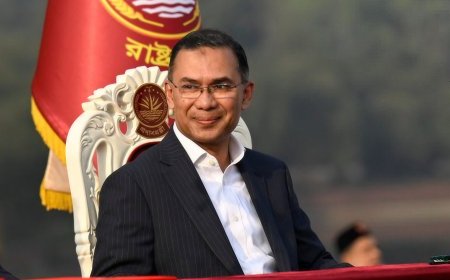
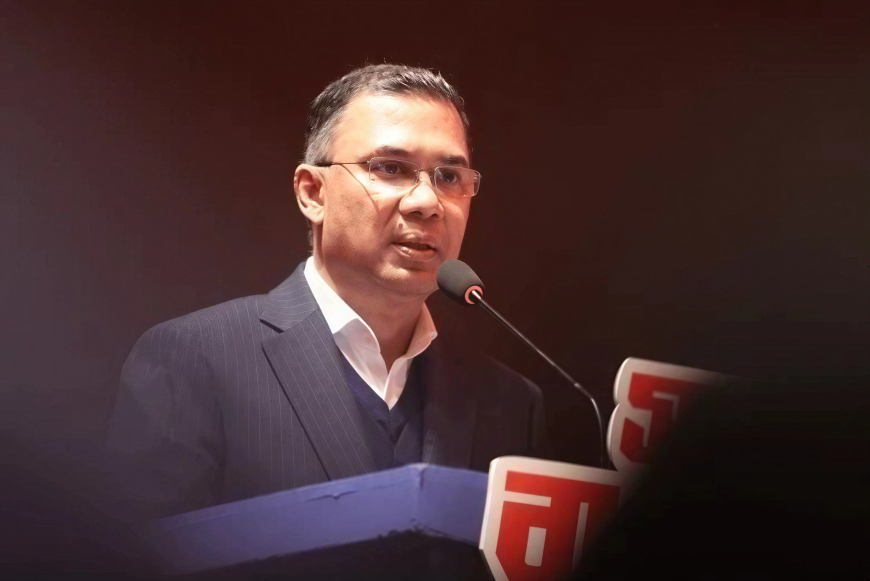
A verdict on the legacy that Prime Minister Tarique Rahman will leave behind after completing his five-year term remains premature. The morning tends to show the day, however, and Mr. Rahman seems to understand that citizens are watching his every move closely, critically, and, judging by the discourse on social media alone, with little patience.

The context he inherits is extraordinary. The BNP government is a by-product of Bangladesh’s first credible election in nearly two decades. It is an administration that materialized in the wake of a mass uprising that toppled an authoritarian regime responsible for orchestrating state-sponsored killings on a scale unmatched in the country’s independent history.

Mr. Rahman faces a citizenry that remains anxious, sceptical, and, at the same time, highly opinionated about the Bangladesh it wants to see after a transitional period led by the country’s most internationally revered personality, Muhammad Yunus, fell short of the hopes placed in it.

In a nutshell, Mr. Rahman has his work cut out for him.

Sheikh Mujibur Rahman was dealt the most unwinnable hand in Bangladeshi history after the Liberation War. Colossal public reverence for Bangabandhu receded as his government struggled to deliver good governance.

After August 2024, Dr. Yunus was dealt the next most difficult hand since Bangabandhu.

Mr.Rahman now carries the elected extension of that post-2024 burden. His success in government will be Bangladesh’s success, and vice versa.

The BNP’s two-thirds parliamentary majority is conditional in nature. It was a cautious endorsement from a coalition of progressive, centrist, and moderate voters, many of whom wanted to prevent Bangladesh’s overarching character from sliding toward right-wing Islamism.

For Mr. Rahman, the thumping mandate carries personal meaning. Given his years in exile and the controversies, or at least public perceptions of them, attached to his role during the BNP’s 2001 to 2006 period in government, the election result has given him a dual opportunity: A chance at redemption to repair his image and a full term to implement his public policy vision.

Mr. Rahman returned to Bangladesh only to lose his mother almost immediately. Begum Khaleda Zia was, by then, more than just another politician and certainly more than his mother.

Frail, ill, and in her final years, she had, through her uncanny tenacity in remaining unbowed against authoritarianism, staying defiant in her refusal to compromise with the Awami League, and enduring the persecution imposed on her, come full circle: The shy housewife of an assassinated President, whose first act in politics was resisting General Hussein Muhammad Ershad’s dictatorship, ended her career as a symbol of national unity and a democratic icon.

Mr. Rahman faces the expectation of filling her shoes while carrying a fourfold burden: His own personal history, his parents’ combined legacy, his party’s chequered past, and an uncertain future for the country.

The weight of the world may be an apt description of what rested on his shoulders when he was sworn in as Prime Minister. So far, the central achievement of his premiership is that Bangladesh has returned to a measure of normalcy and baseline stability.

A comprehensive assessment of the BNP government’s performance, rather than simply the Prime Minister’s, is required. Having said that, several aspects of Mr. Rahman’s conduct over the past three months offer an early interpretation of the kind of head of government he is becoming and the model of governance he is trying to establish.

Symbolic Austerity Measures to Nudge Behavioural Change

The first marker is a basic one: Mr. Rahman has tried to align his personal conduct with the message he has been communicating. That message has two parts.

First, Bangladesh needs to implement austerity measures, given the condition of its public finances and the pressures of a global economy reeling from multiple wars. Second, public office requires a standard of conduct that reflects discipline and service.

In his framing, government functions as a channel for delivering on the trust voters have placed in it, rather than as an entitlement machine for those who win power. To start, Mr. Rahman has not minced words in socializing his view that elected representatives and civil servants need to maintain strong work habits and be selfless.

Admirable, if he continues to lead by example. The state apparatus, however, will not reform itself by instruction alone. It is too early to say whether that framing is being applied in any meaningful institutional sense, although the idea has been reinforced through a series of symbolic choices.

Mr. Rahman has reduced the size of the Prime Minister’s convoy, avoided stopping traffic for his movements, and travelled through the roads of Dhaka city like ordinary citizens.

He has used personal funds to cover fuel costs for the vehicle he uses. Under his direction, the BNP endorsed foregoing duty-free privileges for car purchases and avoiding the use of government properties for personal accommodation.

Mr. Rahman has kept his public attire simple, often wearing a plain white shirt, jeans, and sneakers. When possible, he has walked short distances instead of using a car to move between locations and has used a bus when travelling with larger groups of people.

He has conducted Cabinet meetings at the Secretariat and spent more time working from there. This marks a shift away from a Prime Minister’s Office-centred model of top-down governance. With Mr. Rahman, Ministers, and civil servants working from the same location, the arrangement has the potential to make more efficient use of time and improve day-to-day coordination.

He has made a point of arriving at work early in the morning, which serves as a behavioural nudge for public servants to do the same. During the ongoing energy crisis, he has reduced electricity usage in his office and asked his Ministers to follow suit. He has lowered the per-person cost of meals served to the Prime Minister and his team and has opted for simpler food.

Much of this is, inevitably, public relations and branding exercises. Few are complaining, however, because it represents a principled departure from a very different tradition that Prime Ministers in this country have developed over time.

Mr. Rahman deserves credit for maintaining a by-the-book, public servant-like posture over the past three months. The more difficult task is to make it last over his entire term in office and to ensure that the habits he is showing diffuse to his party colleagues and the civil service.

 A Leader Who Does Not Pretend to Know It All

The second marker lies in Mr. Rahman’s recognition of his own limitations, especially in what he chooses to communicate directly to the public. Put differently, he has shown an instinct for strategic restraint.

He is cultivating the image of a social policy-focused Prime Minister, with public remarks that have leaned heavily on BNP manifesto commitments, including the family card, health card, farmers’ card, and other welfare-oriented pledges aimed at the household level.

On economic, foreign affairs, and energy issues, he has left much of the public communication to his colleagues. A similar pattern is visible in debates over the July Charter. He has avoided placing himself at the forefront of those discussions, whether inside or outside Parliament.

Doing so is a double-edged sword. Mr. Rahman will predictably, and rightly, face criticism if he is seen as too quiet on these issues, and one can argue that he has been too muted so far. At the same time, principles of good governance do not require a sitting Prime Minister to speak on every issue or retain operational oversight over every file.

A Prime Minister needs to appoint qualified people, trust them to lead, give them autonomy to oversee the delivery of public services and policies, and step in when required.

That model of leadership gives him distance from files that may turn into liabilities down the road. That distance, however, will offer only limited protection if the opposition succeeds in making those failures about him personally.

One challenge is that several members of his Cabinet continue to display below-par administrative competence and governing expertise. Mr. Rahman’s standing would improve if, after the first 180 days, he takes a hard look at which Ministries have performed, which have fallen short, and which Cabinet portfolios require changes in personnel.

Based on that pulse check, he would need to make difficult, necessary decisions to let go of underperforming Cabinet members and bring in fresh talent in the national interest.

Home Minister Salahuddin Ahmed is playing something close to a de facto Deputy Prime Ministerial role. Formally elevating Mr. Ahmed to such a position has merit, considering that he is also the most probable candidate to eventually replace BNP stalwart Mirza Fakhrul Islam Alamgir as the party’s second-in-command.

Mr. Ahmed has taken on many of the politically sensitive issues that Mr. Rahman has chosen not to make part of his own daily public rhetoric. There is logic in that division of labour.

On the surface, this brings the new administration closer to a Westminster-style Cabinet model of government, where Ministers are expected to take ownership of their own files and defend their own decisions, rather than an elected authoritarian model in which the Prime Minister becomes the only relevant source of authority for the full five-year term after an election.

In that sense, Mr. Rahman’s leadership style resembles a private sector-inspired chief executive officer genre more than the centralized Prime Ministerial culture Bangladesh has seen in the past. Based on his colleagues’ accounts, he is monitoring all Ministries and providing strategic direction, as he needs to. Only time will tell whether this model is working well.

There is also a familiar BNP precedent. During her terms in office, Begum Zia backed senior Ministers, including Finance Minister Saifur Rahman, to speak on, design, and defend her administrations’ economic policies. Some of the BNP’s major successes came on the economic front, including trade liberalization, private banking expansion, and market-oriented reforms.

Begum Zia refrained from steering the economic discourse herself because she fundamentally understood the limits of her own knowledge and instead relied on subject-matter experts.

She placed personal emphasis on social policy priorities such as girls’ education and food security, while stepping in, when they were under fire from the opposition, civil society, and the media, to support Ministers handling more technical files. She also avoided becoming personally entangled in issues that carried significant political risk.

Over her long career, that distance became part of her armour. Even among critics of the BNP’s policy record, Begum Zia retained a reservoir of goodwill because she had carefully shaped an image of rhetorical restraint, listened more than she spoke, and projected personal decency.

Mr. Rahman is following in his mother’s footsteps. His leadership style is remarkably different from that of former Prime Minister Sheikh Hasina, who, by the end of her final term, had morphed into the judge, jury, and executioner on nearly every major ministerial file.

Every good decision taken by the Awami League was advertised as Ms. Hasina’s achievement. Every bad decision, in turn, became part of the public case against her.

Mr. Rahman has been more selective. He is choosing where to spend political capital, where to let his lieutenants lead, and where to hold back. That selectiveness carries inherent hazards.

With competent people around him, delegation can be a strength. With underperforming Ministers, it can begin to look like aloofness, or even absence, from a Prime Minister who does not have control over his government. Several Cabinet members are not yet meeting the standard this form of leadership requires, particularly in two portfolios: Power, Energy and Mineral Resources, and Health.

Consulting Beyond the BNP Machinery to Signal Inclusive Governance

The third marker is Mr. Rahman’s deliberately designed open-door policy for consulting non-political stakeholders and remaining accessible to them. On his own initiative, he has reached beyond BNP personnel and sought advice from people outside the party infrastructure. It is likely that he will continue to devote time to public engagement activities and outreach efforts.

That is indicative of an effort to normalize a more accommodative and inclusive spirit in government, one built around a simple, necessary message: Political disagreement does not have to mean personal enmity.

That instinct has been visible in his recent meetings with journalists, including Anis Alamgir, who was arrested in dubious circumstances, and Abdul Noor Tushar and Masud Kamal, who faced online harassment during the interim government period.

These are not figures who have always been sympathetic to the BNP. More often than not, they have critiqued and challenged the party’s decisions, and they will continue to do so. Mr. Rahman’s willingness to engage them shows that he understands the importance of making critics feel that the Prime Minister is prepared to listen.

Furthermore, whether through one-on-one private meetings, group settings, or personalized letters followed by meetings, Mr. Rahman has made a point of reaching out to literary and cultural figures, editors of prominent newspapers, civil society groups, and others.

A word of caution: His engagement with the media and business community requires the drawing of boundaries. Open channels of communication are healthy. Excessive closeness creates dangers for the very idea of a liberal democracy.

Both sectors must remain at arm’s length from government because they have their own responsibilities and interests, which will not always align with those of the government of the day. Mr. Rahman should continue hearing them out, but neither the press nor business should become an extension of government. Their input carries value precisely because it comes from outside government, as external partners in nation building.

There is a recognizable echo here of his father, General Ziaur Rahman, whose big-tent political umbrella eventually became the modern-day centrist BNP: A coalition of convenience rather than ideology. After 1975, General Zia tried to draw ideas and individuals from different corners of society, particularly from among those instinctively wary of the Awami League.

Today’s context is different. Bangladesh is now divided less by old party loyalties alone than by a more big-picture question: Whether the country will remain pluralistic or lean toward Islamism.

Seen in that light, Mr. Rahman’s engagement with religious leaders is a critical element of maintaining social harmony. So is his repeated message that Bangladesh belongs to people of many faiths and of no faith.

By becoming the first Prime Minister in independent Bangladesh to acknowledge atheists and agnostics, he has tried to make one idea clear: Human rights protections are not conditional on religious belief, and the state must protect everyone.

His language and preliminary policy decisions on women and girls are also significant. He has stood firmly as an ally of women and girls, including through his support for female sports and his framing of the family card as a tool for women’s empowerment.

Misogynistic rhetoric continues to grow unabated on social media, and the post-uprising period has seen a troubling rise in sexism and violence against women and girls. In this climate, ardent defence of this population’s rights needs to remain Mr. Rahman’s priority.

Overall, his consultative orientation is encouraging. It gives different stakeholder groups a sense that they have some vested interest in the governing process, or at least that their concerns and recommendations can reach the Prime Minister’s ear.

It also reveals Mr. Rahman’s views on press freedom, culture, literature, pluralism, and the relationship between state power and society. At its best, this is the conduct of a Prime Minister trying to act more like a statesman than a partisan operator running a one-man show.

At its worst, it is shrewd retail politics from the BNP Chairperson, who understands the benefit of avoiding unnecessary enemies.

Attempting to Make Parliament Function by Respecting the Opposition

The fourth marker is Mr. Rahman’s decision to treat the parliamentary opposition as a legitimate and non-negotiable component of a well-oiled liberal democratic governance infrastructure, rather than as an inconvenience to be managed.

That perspective speaks to an ambition: To promote a healthier political culture than Bangladesh has known in recent decades and to codify Westminster-style parliamentary norms the country has struggled to build, let alone sustain, since independence.

There is also a strategic logic behind this stance. Senior figures in the BNP, Jamaat, and NCP appear to recognize that if the Awami League returns as a potent political force, the three parties will likely need to preserve some form of common front.

That gives the current opposition an unusual character. Jamaat and NCP sit across the aisle from the government, although they do not occupy the same adversarial space that the Awami League has historically occupied in relation to the BNP. They are all pro-2024 uprising forces and, as such, anti-Awami League forces.

Some argue that the Awami League and the BNP could one day align to contain Jamaat’s rise in national politics. A betting person would say that is a possibility, not necessarily a probability.

Mr. Rahman’s gestures have been notable. Soon after the election, while waiting to be sworn in as Prime Minister, he paid courtesy visits to the homes of Jamaat Ameer Dr. Shafiqur Rahman and NCP National Convenor Nahid Islam, a gesture with no precedent in Bangladeshi history.

Since then, they have met several times, including during Ramadan iftars and other political engagements. Mr. Rahman’s tone toward the opposition, writ large, has been respectful.

His willingness to accept some of their recommendations openly in Parliament reveals two priorities: He wants Parliament to complete its full five-year term, and he wants opposition politics to remain inside the chamber rather than return to the streets.

Critics will argue that this resembles the Awami League’s relationship with the Jatiya Party, and that concern has merit. Bangladesh has already seen the damage caused by a managed opposition. The present context, however, is different.

This Parliament was elected without Awami League participation, which explains why the election was not as inclusive as it could have been. Even so, it remains far more credible than the Parliaments formed after the 2014, 2018, and 2024 elections for a specific reason: The election was participatory and, by and large, free and fair.

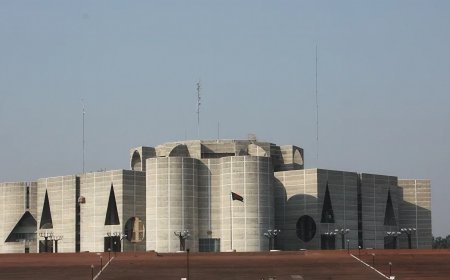
At the highest levels of the BNP, Jamaat, and NCP, there seems to be an informal understanding that this Parliament must work, at least for the first few years, both to stabilize the country and to show the public that politicians have absorbed a lesson from the mass uprising: The zero-sum, my-way-or-the-highway conduct among party leade

At the highest levels of the BNP, Jamaat, and NCP, there seems to be an informal understanding that this Parliament must work, at least for the first few years, both to stabilize the country and to show the public that politicians have absorbed a lesson from the mass uprising: The zero-sum, my-way-or-the-highway conduct among party leaders cannot continue as before.

Jamaat and NCP have also maintained a courteous tone in Parliament. One session is too little to judge them fully, although their limitations are already evident: Both parties have some miles to travel before becoming an effective parliamentary opposition bloc. Figures such as Hasnat Abdullah and Nahid Islam have impressed as first-time parliamentarians, while the opposition as a whole still has much to learn about how Parliament is meant to function.

There are many issues on which they could challenge the BNP government more concretely, including the pace of reforms, the administration’s handling of the July Charter, and the trade deal with the United States. Their frustration over delays and hesitation on reforms is justified.

To build credibility, however, they will need to challenge the government point by point through parliamentary language, procedure, and a stronger awareness of constitutionalism.

On the flipside, Mr. Rahman’s own speeches in Parliament have showcased his individual attributes: Composed, calm, focused on the national interest, and wary not to personalize or glide into long-winded speeches about himself or his family.

He has avoided the partisan rhetoric that poisoned Parliament in the past. Perhaps he understands the value of fostering something Bangladesh has long lacked: A Parliament that evolves into the heart and soul of policymaking, an opposition that contests the government as a government-in-waiting from inside the chamber, and a Prime Minister who treats disagreement as part and parcel of democratic life rather than as a threat to his authority.

Where the BNP Government Has Fallen Short

The BNP government has given the country ample grounds for criticism too. Its performance so far has been bumpy. Unsurprisingly, the party has looked like one still relearning how to steer the ship of state after two decades out of power, and still readjusting to the complexity of managing the civil service. In some areas, its record has been plainly troubling.

Take, for example, the many card-based social policy schemes the government has rolled out. How these cards are being funded, why so many separate cards are needed, why they have not been consolidated into a single delivery vehicle of the kind used in many liberal democratic welfare systems, who will receive the resources, and whether implementation will be fair and efficient all remain open questions.

The government deserves at least until the 2026 budget before any conclusive judgment is reached on whether these social policy instruments have been properly thought through. The real value of these cards to citizens will become obvious only over time. Until then, the question remains whether these ambitious policies will become a net benefit for Bangladeshis or simply another layer of bureaucratic red tape.

On a more contentious issue, there has been no effort to explain how Dr. Khalilur Rahman made the cut for Cabinet after serving in the interim government, especially when the BNP itself had demanded his resignation during that period. The concern is not his competence for the role, rather the absence of a transparent political explanation from the BNP.

The government has also invited legitimate criticism through partisan appointments to institutions that need to remain above party politics, including Bangladesh Bank and the Bangladesh Cricket Board. Even where individual appointments may have defensible explanations, the perception of politicization has been damaging.

Its communication on the ongoing energy crisis has fallen short. The government has mishandled public messaging around fuel shortages, offering mixed signals at a time when people were looking for direction. That confusion, in turn, helped fuel panic buying.

A similar weakness is visible in its response to the measles outbreak. Perhaps more surprisingly, there has been almost no explanation from the highest levels of government, including the Prime Minister, on the trade deal with the United States, which a majority of domestic experts have described as unfavourable to Bangladesh.

The BNP administration has also failed to clarify whether the interim government consulted the party before signing the agreement only two days before the election. Regardless, the BNP’s silence on the trade deal raises an obvious question of whether Bangladesh has moved from being under Indian hegemony during Ms. Hasina’s rule to being under American hegemony under Dr. Yunus, and now under Mr. Rahman.

Another concern lies elsewhere: The continued extortion and strongman behaviour of grassroots BNP activists. The law and order situation may be broadly stable, but the political environment is not as healthy as citizens expect. In too many cases, BNP activists are behaving as though electoral victory has underwritten their ownership of the country.

Arrests and intimidation over criticism of BNP leaders remain a worry. Mr. Rahman has said that such arrests must not happen and that the government has no policy of enabling them. The fact that they are happening at all demands explanation and action.

Bottom line: The BNP needs to do more to clean up its own house and take a hands-on role in ensuring that the law enforcement culture of sycophancy toward the party in power recedes.

The government’s handling of the July Charter and the reform process also deserves scrutiny. Its attempts to push reforms further back reveal a familiar reflex in Bangladeshi politics: Embrace reform while outside government, then decelerate it once in power.


Beyond the problems outlined above, and there are more failures to consider as the government’s honeymoon period ends, four early readings can be drawn from the Prime Minister’s individual conduct.

First, Mr. Rahman has shown little disposition so far to govern with authoritarian tendencies. His conduct has been, by and large, refreshingly democratic in nature.

Second, he has acknowledged that Bangladesh’s transition from authoritarianism to democracy cannot revolve around him alone. He needs goodwill and buy-in from rival political actors, non-political stakeholders, and the public if the vision he has set out for the country is to take root.

Third, his priorities are concentrated in three sectors: Education, health, and sport. There are no major successes to point to on any of these files yet, although the policy direction is sound.

Fourth, he appears concerned about a profound and difficult problem: The hostility with which citizens who hold different beliefs or worldviews speak to one another, the divisive and polarized character of public life, the threat that a chaotic information ecosystem poses to children and social harmony in Bangladesh, and the wider deterioration of civic culture.

The Prime Minister is trying, however imperfectly, to bring others into the governing process rather than reduce the state to an extension of his own authority. That was the message of his speech in Parliament on the final day of the first sitting, a speech that anyone interested in Bangladesh’s future needs to hear.

In essence, it was a timely and well-articulated message, a call to action of sorts from Mr. Rahman to the country: Lower the rhetorical temperature, disagree and debate courageously and openly, and do so with respect for one another.

All things considered, Mr. Rahman receives a “meets expectations” grade. The BNP government, as a team, receives a “needs improvement” grade, but not a failing one.

Bangladesh wishes its Prime Minister the very best, with an equal promise to hold him and his government accountable every step of the way.

Mir Aftabuddin Ahmed is a Canada-based public policy columnist with more than 140 published articles across Bangladeshi and Canadian media and policy outlets. He currently serves as a Policy Development Officer with the City of Toronto. 

What's Your Reaction?

like

dislike

love

funny

angry

sad

wow

Mir Aftabuddin Ahmed Mir Aftabuddin Ahmed is a Canada-based Public Policy Columnist with more than 140 published articles across Bangladeshi and Canadian media and policy outlets. He currently serves as a Policy Development Officer with the City of Toronto. He can be reached at [email protected]. The views expressed are his own.